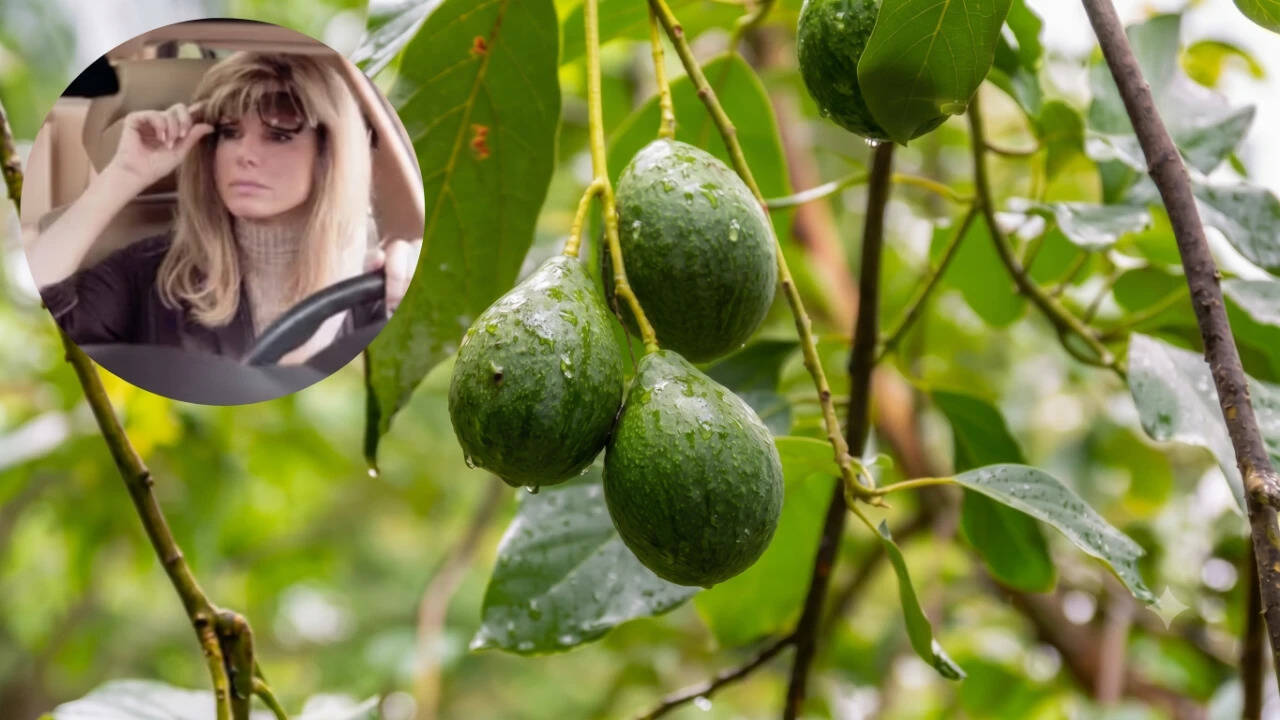
Celebrity real estate headlines love a clean narrative. A famous actor buys a sprawling plot of land, spends years tending to the soil, and eventually flips the property for a multi-million-dollar profit. When Sandra Bullock offloaded her 91-acre Valley Center ranch in San Diego County for $5.6 million, the coverage followed a predictable script. Glossy real estate blogs touted the scenic mountain vistas, the adobe-style main house, and the roughly 1,200 organic avocado trees dotting the hillsides.
The casual observer reads those figures and imagines an effortless windfall. After all, she purchased the sprawling acreage in 2007 for roughly $2.725 million and parted with it for more than double that sum. Strip away the Hollywood gloss, however, and agricultural real estate in Southern California tells a far more grinding, capital-intensive story. Managing a commercial orchard is not a passive hobby. It is an exposed, high-risk venture against drought, volatile market prices, and relentless operating costs.
To understand why a celebrity would spend fifteen years holding and working an agricultural compound, one has to look past the marquee value and examine the brutal economics of small-batch farming in the American Southwest.
The True Cost of Cultivating Organic Acres
Farming in San Diego County is a lesson in resource management. Water is scarce, expensive, and heavily regulated. When acreage transitions from conventional citrus or fruit production to certified organic management, the operational hurdles multiply. Synthetic pesticides and conventional fertilizers are out, replaced by labor-intensive soil health management, natural pest control, and strict documentation.
University agricultural extensions have long tracked the financial realities of running an orchard in this region. Yields for organic avocado groves frequently run lower than their conventional counterparts during the initial transition phases, while labor costs required to manually prune, weed, and harvest roughly 1,200 trees remain stubbornly high. Every irrigation cycle from March through November requires careful calculation to avoid root rot while keeping parched soil alive under punishing inland heat.
When an estate sells for $5.6 million after a $2.7 million entry point, the gross margin obscures the steady capital hemorrhage of fifteen years of property taxes, specialized farm equipment maintenance, insurance, payroll for orchard managers, and ongoing water district fees. Real estate appreciation in coastal and near-coastal California does the heavy lifting in these transactions, while the agricultural component acts more like a massive, living overhead item than an immediate cash cow.
Why Celebrities Hide Out in Valley Center
Valley Center is not Malibu or Beverly Hills. It sits tucked away in the backcountry north of San Diego, characterized by rolling topography, horse properties, and agricultural plots where privacy is absolute. For high-profile individuals constantly stalked by long-lens photographers in urban centers, rural acreage offers a rare commodity: complete operational anonymity.
Reports from local real estate insiders note that this specific compound remained largely insulated from the prying eyes of the tabloid press during its tenure. That kind of sanctuary carries an intrinsic value that cannot be quantified on a balance sheet. When a performer spends decades stepping onto film sets under microscopic scrutiny, owning a tract of land where daily interactions consist of checking beehives, maintaining chicken coops, and monitoring irrigation lines provides an essential psychological anchor.
The architectural updates executed on the property reflected this desire for seclusion and utility. The estate blended historical character with modern infrastructure, incorporating extensive outdoor living spaces, guesthouses for visiting family, and sustainable additions like solar capabilities. It was built to be lived in, not merely photographed for a luxury portfolio.
The Liquidation Phase
The decision to list the ranch for $6 million in late 2022 and ultimately close at $5.6 million signals a strategic realignment rather than a distressed exit. Life changes, geographic priorities shift—in this case, toward the East Coast to be closer to family—and maintaining a massive agricultural operation from across the country becomes logistically untenable.
Avocado groves require constant oversight. Trees drop fruit, irrigation lines fracture under shifting soil, and market shifts demand active management. Leaving an asset like this to remote management rarely pencils out over the long term. Selling the property transferred a massive operational responsibility to a new buyer willing to take on the daily grind of the backcountry harvest.
The romanticized view of celebrity farming will always play well in glossy magazines. Yet the reality left behind in Valley Center is one of heavy capital, rigorous physical maintenance, and the quiet luxury of absolute isolation.
Sandra Bullock’s 91-acre California ranch with 1,200 avocado trees sells for $5.6M
This video provides an overview of the Valley Center property and the real estate market context surrounding its multi-million dollar sale.