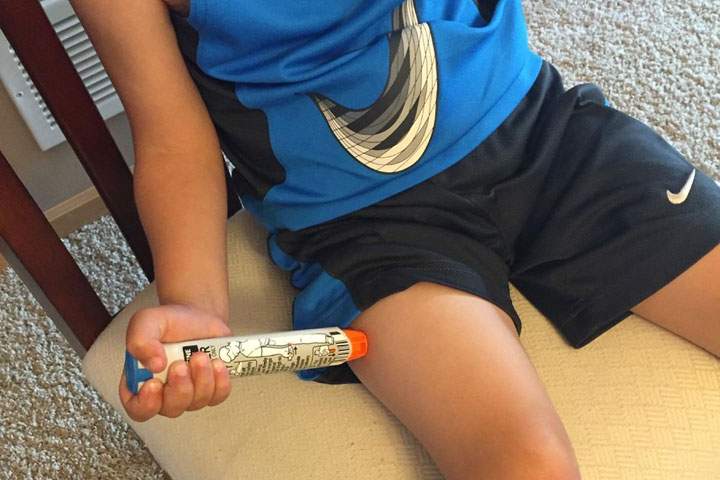
Every September, school hallways fill with the sharp scent of newly sharpened pencils, fresh paper, and invisible terror. For roughly eight percent of American children, the return to class transforms a routine educational milestone into an exercise in high-stakes survival. Doctors routinely step forward at the end of summer to repeat a familiar mantra: food allergy education is a must. They hand out pamphlets. They advise parents to double-check epinephrine auto-injector expiration dates. They urge teachers to remain vigilant.
Yet, this ritualized advice masks a systemic failure. The institutional approach to managing pediatric food allergies in educational settings remains broken, fragmented, and fundamentally ill-equipped for the realities of modern classrooms.
The Illusion of Preparedness
Surface-level compliance passes for safety in most school districts. Administrators check the mandatory boxes. They designate a peanut-free table in the corner of a crowded cafeteria, hang colorful symptom charts in the nurse's office, and file emergency action plans in a metal cabinet.
These measures offer psychological comfort to parents, but they provide a fragile shield against a volatile medical crisis. Up to one-quarter of all initial food allergy reactions occurring at school happen to children who have no prior clinical diagnosis. No designated table, no precautionary warning label, and no generalized awareness campaign can protect a child experiencing their very first systemic immune response to a hidden protein.
The medical mechanism is swift and unforgiving. When a sensitized child ingests an allergen, antibodies trigger a massive release of histamine and other chemical mediators throughout the body. Smooth muscles contract, blood vessels dilate, and airways constrict. Anaphylaxis can progress from mild hives to cardiovascular collapse in minutes.
Expecting an overworked teacher or a part-time school nurse to reliably navigate this medical cliff while managing twenty-five other children is a structural absurdity. Training programs for non-medical school personnel vary wildly by zip code. Substitute teachers, bus drivers, and cafeteria staff frequently receive zero mandatory instruction on recognizing early anaphylactic symptoms or deploying an auto-injector correctly.
The Failure of Blanket Restrictions
For decades, the standard institutional reflex to rising allergy rates has been the blanket ban. Entire grade levels or schools outlaw peanuts, tree nuts, and occasionally sesame.
This strategy breeds a false sense of security. Total bans foster community complacency. Parents and students begin to believe that the four walls of the school building are chemically sterile, eroding the hyper-vigilance required of allergic children and their peers.
Furthermore, rigid bans collapse under the weight of human behavior. Teenagers trade snacks in locker rooms. Baked goods slip past security for birthday celebrations. Cross-contamination occurs effortlessly on shared playground equipment or library computers.
Consider a hypothetical scenario in a middle school cafeteria. A student with a severe dairy allergy sits at a designated allergen-free table, believing they are safe. Another student, who consumed yogurt during first-period study hall, touches a shared handrail, which the allergic student grabs ten minutes later before eating an apple. The resulting emergency stems not from institutional malice, but from the systemic failure to teach true risk management rather than reliance on artificial segregation.
The Burden of Isolation and Surveillance
Living with severe dietary restrictions exacts a heavy toll long before a child ever steps foot near a school bus. Studies show that roughly one-third of children with food allergies report experiencing direct bullying because of their condition. They are targeted not just with verbal harassment, but with weaponized exposure, where peers deliberately threaten them with the allergen.
Schools rarely treat food allergy bullying as a severe disciplinary infraction. Instead, the burden of adaptation falls squarely on the victim. Allergic children learn to police their own existence at an age when fitting in is a biological imperative. They inspect ingredient labels with microscopic precision, decline birthday treats brought by well-meaning classmates, and sit apart from their peers during social milestones.
This dynamic creates a profound psychological strain. Chronic anxiety spikes at the start of every academic year, triggering stress responses that can actively complicate immune system regulation. Attendance rates drop for vulnerable students, and a significant percentage of families ultimately abandon traditional schooling entirely, opting for home-schooling out of sheer terror for their child's safety.
Shifting from Compliance to Competence
Real reform requires abandoning the comfort of bureaucratic checklists.
First, systemic education must pivot from passive awareness to active competence. Every adult employed by a school district, from the principal to the custodial staff, should undergo mandatory, hands-on training with trainer auto-injectors annually. Memorizing a poster is insufficient; muscle memory saves lives during a crisis.
Second, schools must dismantle the counterproductive practice of isolation. Singling out allergic children at separate tables marginalizes them socially while doing little to prevent environmental exposure. Inclusive safety models teach the entire student body how to respond, how to recognize symptoms, and how to protect one another. Programs that train children to be active defenders rather than passive bystanders yield far better safety outcomes than arbitrary food bans.
Third, lawmakers and health agencies need to streamline access to emergency medication. Stock epinephrine laws remain inconsistent across jurisdictions. Every educational facility should be legally mandated to maintain unassigned, emergency epinephrine supplies in multiple accessible locations throughout the campus, ensuring that treatment is never more than thirty seconds away.
The annual cycle of back-to-school advice will continue next autumn. Doctors will issue warnings, parents will purchase epinephrine twin-packs, and administrators will file their paperwork. Unless the underlying architecture of school safety evolves past superficial compliance, the crisis will persist in the shadows of the classroom.