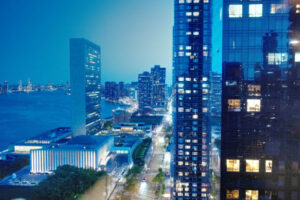
The United Nations is quietly running an election to choose its next leader, but the transparency theatricality displayed on public webcasts hides a brutal backroom reality. While the public watches televised "interactive dialogues" with candidates, the real selection is happening through a cynical game of vetoes and political trades among five permanent members of the Security Council. Multilateralism is facing its deepest insolvency and credibility crisis in history, yet the system is designed to reject true visionaries in favor of the least offensive bureaucrat available.
The race to succeed António Guterres as U.N. Secretary-General has officially broken into the open, but the glossy public relations campaign masks a structural sickness. The U.N. Charter stipulates that the Secretary-General is appointed by the General Assembly upon the recommendation of the Security Council. In practice, this means the P5—the United States, China, Russia, France, and the United Kingdom—hold absolute dictatorial control over the selection.
A series of public hearings held in late April offered a facade of open democracy. Candidates like International Atomic Energy Agency (IAEA) chief Rafael Grossi and UNCTAD head Rebeca Grynspan delivered polished vision statements to the General Assembly, answering curated questions from civil society. Do not be fooled. These public spectacles have virtually zero impact on the final outcome. The real decision-making process will occur in June and July during closed-door, informal "straw polls" inside the Security Council, where the P5 will use color-coded ballots to systematically murder candidacies that threaten their national interests.
The Geography Myth and the Veto Trap
For decades, the selection of the Secretary-General has been governed by an unwritten rule of regional rotation. By all traditional metrics, 2026 belongs to the Latin American and Caribbean Group (GRULAC). This explains why the early field of official nominees is heavily weighted toward the region. Alongside Grossi and Grynspan, former Ecuadorian Foreign Minister María Fernanda Espinosa Garcés recently jumped into the race with the backing of Antigua and Barbuda.
Yet regional rotation is a luxury tolerated only when it aligns with big-power realpolitik. The escalating proxy conflicts across Europe, the Middle East, and the South China Sea mean that the P5 are more hyper-sensitive than ever about who commands the 38th floor of the Secretariat.
- The Russian Bottleneck: Moscow remains deeply embittered by Western alignment over the war in Ukraine. Any candidate perceived as too close to Washington or Brussels will face an immediate, unceremonious Russian veto.
- The Washington Litmus Test: The United States will block any figure who appears sympathetic to Chinese infrastructure hegemony or unsupportive of Israel in multilateral forums.
- The Beijing Filter: China is quietly scrutinizing every candidate's past statements on Taiwan and human rights, determined to ensure the next U.N. chief will not use the bully pulpit to critique sovereign overreach.
This dynamic creates an inevitable race to the intellectual bottom. A candidate with a bold, transformative plan to restructure the Security Council or enforce peacekeeping mandates against the wishes of major powers is dead on arrival. The system rewards strategic blandness. The ideal winner, from the perspective of the P5, is a competent clerk who knows how to keep the lights on without making troublesome headlines.
The Broken Gender Promise
The United Nations has never had a female Secretary-General. In 1946, the General Assembly established that "a man of eminence and high attainment" should hold the post. Eighty years later, that outdated phrasing remains a stain on the organization's self-proclaimed progressive values.
The 2026 cycle was supposed to rectify this historical failure. High-profile female leaders were heavily pushed by civil society networks, but the early momentum has already begun to fracture under domestic and geopolitical pressures.
The Rise and Fall of Michelle Bachelet
The most striking example of this fragility is the sudden collapse of Michelle Bachelet’s candidacy. Jointly nominated in February by Chile, Brazil, and Mexico, the former Chilean President and U.N. Human Rights chief possessed the exact mix of domestic executive experience and multilateral authority the role demands.
Her campaign lasted less than two months. Following a political shift in Santiago, the new Chilean administration under José Antonio Kast officially withdrew its backing for Bachelet in late March. Without home-country support, a U.N. candidacy is practically hollowed out from within.
| Candidate | Nominating Country | Current/Past Core Role | Key Vulnerability |
|---|---|---|---|
| Rafael Grossi | Argentina | Director General, IAEA | Perceived by some as too technocratic; highly visible nuclear diplomacy has created friction with Iran and its allies. |
| Rebeca Grynspan | Costa Rica | Secretary-General, UNCTAD | Deeply embedded in the U.N. bureaucracy; faces skepticism over whether an insider can implement radical reform. |
| María Fernanda Espinosa | Antigua & Barbuda | Former President of U.N. General Assembly | Lacks the explicit, unified backing of her home country (Ecuador), relying instead on a Caribbean proxy nomination. |
| Macky Sall | Burundi (Nominated) | Former President of Senegal | Nominated by a foreign state rather than his own; lacks official, unified African Union endorsement. |
The Financial Insolvency Choking the Secretariat
Whoever inherits the office on January 1, 2027, will not be stepping into a position of global authority. They will be taking over a bankrupt organization.
The U.N. is currently facing its worst liquidity crisis in decades. Dozens of member states, including some of its wealthiest contributors, are routinely late in paying their assessed regular budget contributions. The regular budget is depleted, forcing the Secretariat to implement strict austerity measures: freezing recruitment, restricting official travel, throttling translation services, and even turning off escalators at the New York headquarters to save on utility bills.
This financial starvation is a deliberate political tool. By keeping the U.S. dollar pipeline constrained, powerful member states ensure the Secretariat remains compliant.
A weak Secretary-General spends half their time begging for cash and the other half managing structural decline. The candidates are currently making grand promises in Geneva, London, and New York about achieving the Sustainable Development Goals or deploying new digital governance frameworks. These pledges are disconnected from economic reality. Without a massive overhaul of how the U.N. funds its core operations, the next Secretary-General will merely be an elite liquidator managing a decaying brand.
The Illusion of Reform
The introduction of General Assembly Resolution 69/324 in 2015 was heralded as a historic breakthrough. It brought about the joint invitation letters, public vision statements, and televised town halls that characterized the selection of António Guterres in 2016 and continue today.
But this transparency is an illusion designed to appease the 188 non-permanent member states. While civil society organizations score the candidates based on their performance in the April interactive dialogues, the P5 are looking at an entirely different scorecard.
Consider the campaign of Rafael Grossi. As head of the IAEA, Grossi has spent years navigating high-stakes nuclear standoffs in Ukraine and Iran. His supporters argue this proves he has the operational grit needed to handle a fractured world. His detractors inside the U.N. apparatus whisper that his high-profile style is precisely what the P5 do not want. They remember Dag Hammarskjöld, the fiercely independent second Secretary-General who died in a 1961 plane crash while pursuing peace in Africa against the wishes of colonial powers. The P5 learned their lesson from Hammarskjöld. They do not want an independent actor; they want a coordinator.
The ultimate tragedy of the U.N. selection process is that the world desperately needs an assertive, courageous global advocate, but the rules of the game make it structurally impossible for such a person to be chosen. The next Secretary-General will not be the best leader available. They will be the survivor of an exhausting, cynical elimination contest designed to strip away any shred of genuine independence before the oath of office is even administered.