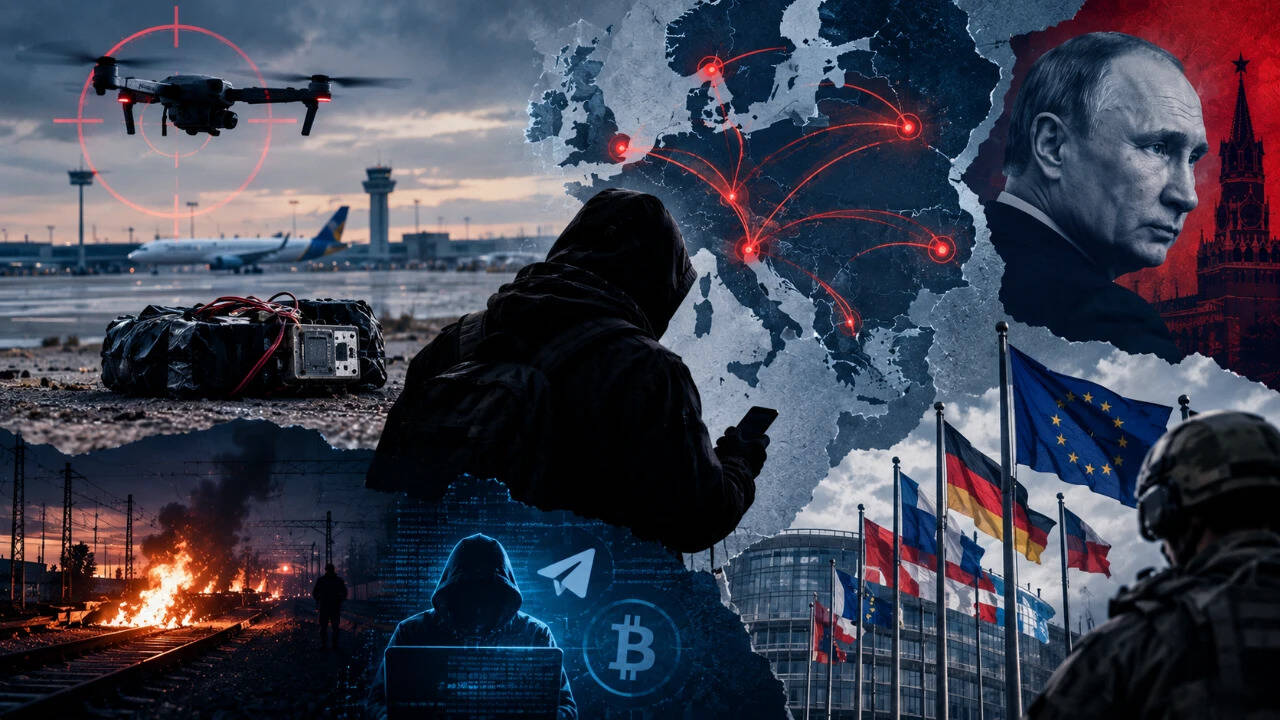
European intelligence services are tracking an unprecedented wave of state-sponsored arson, infrastructure probing, and clandestine logistics disruption orchestrated by Russian military intelligence across the continent. Moscow's covert campaign, driven largely by specialized directorates like Unit 29155, has expanded from isolated cyber intrusions into physical sabotage targeting logistics hubs, military transit lines, and critical manufacturing facilities.
The operational blueprint relies heavily on deniability. Rather than dispatching credentialed intelligence officers under diplomatic cover, handlers recruit third-country proxies, local criminals, and marginalized individuals through encrypted online channels. These operatives receive instructions via messaging applications and instructions paid out in cryptocurrency to carry out low-level fires, plant dummy devices, or execute reconnaissance missions against strategic supply chains.
This decentralized structure presents an immense challenge for traditional counterintelligence frameworks. Security structures designed to monitor known diplomats or track suspicious travel paths struggle to flag a petty criminal hired in one member state to drop an incendiary package into a logistics pipeline destined for another.
The Mechanics of Proxy Subversion
The anatomy of a modern sabotage operation reflects a calculated evolution in tradecraft. Handlers sitting safely within Russian or Belarusian territory segment their operations into hyper-compartmunalized tasks. One individual is paid to rent a storage locker. Another is contracted to transport an innocent-looking crate. A third receives cryptocurrency to ignite a warehouse timer.
Many of these foot soldiers never realize they are working for a foreign intelligence apparatus. They view the transaction as a freelance gig, a quick way to settle debts or make fast cash through underground forums.
This compartmentalization shields the Russian state from immediate attribution. When a warehouse burns down in Poland or an electrical substation malfunctions in the Baltics, local police investigators initially treat the event as an industrial accident or ordinary criminal mischief. Only after financial forensics trace digital asset transfers across multiple blockchains do counterintelligence analysts piece together the foreign military nexus.
The choice of targets underscores a strategic calculus aimed at exhaustion rather than outright annihilation. By striking civilian logistics networks, rail junctions, and secondary manufacturing plants, Moscow forces European governments into an impossible security dilemma. Protecting every mile of railway, every municipal water facility, and every commercial warehouse is financially and logistically impossible.
The Escalation Ladder and the Threat of Kinetic Violence
The risk profile shifted dramatically following specific interdictions at key logistical nodes. When security forces recovered an explosive-laden drone near a cargo aircraft at Leipzig/Halle Airport, the discovery shattered any remaining illusions that the covert campaign would restrict itself to minor nuisance actions.
Western security officials view these incidents as stepping stones on an escalation ladder. Intelligence assessments indicate that proxy networks have tested air-cargo routes with hidden incendiary devices designed to ignite mid-flight, carrying the horrific potential for mass civilian casualties. Had those payloads detonated over populated landmasses or international waters, the political shockwaves would have fundamentally altered the European security architecture.
Beyond cargo disruption, the threat vector extends to targeted violence against defense industry executives and senior government officials. Foiled plots targeting key figures in European arms manufacturing demonstrate that the Kremlin views the industrial base supplying Ukraine as a legitimate battleground.
Senior defense leaders now travel under heightened personal security details. Routine commutes are scrutinized. Residential perimeters are fortified. The invisible boundary separating a geopolitical conflict in Eastern Europe from the daily lives of Western corporate executives has effectively evaporated.
The Alliance Response Dilemma
For NATO and the European Union, formulating an effective counter-strategy remains an agonizing exercise in risk management. Traditional deterrence theory relies on the threat of overwhelming retaliation. Yet, how does an alliance of democratic nations retaliate proportionately against a campaign fought entirely in the gray zone, executed by unwitting proxies, and shielded by plausible deniability?
Heavier economic sanctions, while punishing, have failed to alter the Kremlin's operational calculus. Diplomatic expulsions and the closure of specific consular outposts serve as necessary administrative rebukes, but they do little to dismantle decentralized online recruitment rings operating across encrypted networks.
Hardline security analysts argue that Western democracies must abandon their strategic patience. Proponents of this view advocate for offensive counter-cyber operations, aggressive financial tracking of illicit state assets, and public exposure of covert networks before they strike.
Conversely, cautious policymakers fear that a tit-for-tat escalation spiral could cross an invisible threshold, dragging nuclear-armed adversaries into open kinetic conflict. This fear of escalation acts as an invisible shield for Moscow, granting clandestine operators wide latitude to probe defenses without triggering a decisive collective military response.
As European intelligence agencies issue fresh warnings regarding active preparations for future attacks on defense infrastructure, the continent finds itself locked in a silent war of attrition. The challenge is no longer merely about intercepting a drone or extinguishing a warehouse fire. It is about preserving internal political cohesion across allied nations while managing a persistent, sub-threshold campaign designed to make daily security impossible to guarantee.