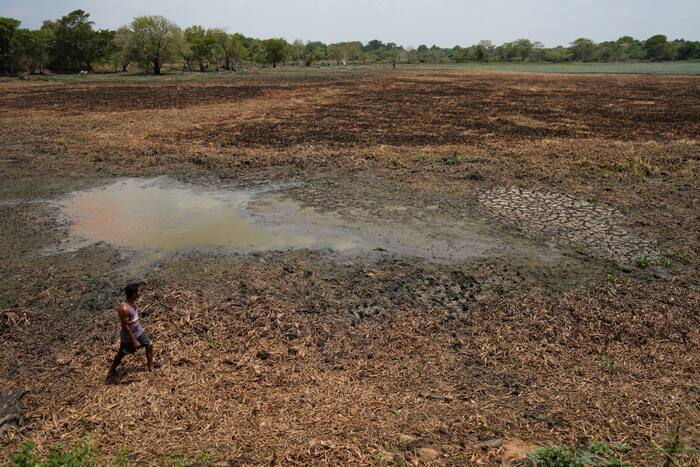
The ground across Sri Lanka's agricultural dry zone does not merely feel dry; it feels exhausted. In rural sectors like Medirigiriya and the fringe communities bordering sprawling protected sanctuaries, the monsoon rains failed to arrive with their historic reliability. Rice paddies that traditionally mirror the sky have hardened into cracked clay flats. Household wells, dug deep into the earth by generations who understood the rhythm of seasonal scarcity, now pull up nothing but dust or saline sludge.
This acute meteorological shock has triggered a dual emergency. Rural smallholders watch their investments wither alongside their crops while apex predators, elephants, and herds of spotted deer converge on shrinking, muddy water holes. The crisis exposes the fragile fault lines between rural agrarian survival and wildlife conservation under extreme climate volatility. For a different perspective, read: this related article.
The Mechanics of Agricultural Collapse
For a smallholder farmer managing an eight-acre plot of rice, okra, or eggplant, a failed monsoon is an immediate financial execution order. Agriculture in these regions depends heavily on ancient networks of man-made irrigation tanks that store water during wet cycles for controlled release. When those reservoirs evaporate under prolonged heatwaves exceeding thirty-five degrees Celsius, the hydrological safety net vanishes.
Farmers routinely secure high-interest loans for seeds, fuel, and fertilizers ahead of the planting season. When the crops fail before reaching maturity, the debt remains. Families find themselves trapped in cycles of compounding arrears, forced to rely on emergency water deliveries trucked in by the government and charitable organizations. Plastic jerrycans and barrels line dirt tracks as villagers wait hours for tanker arrivals. Related coverage on this trend has been published by BBC News.
The psychological toll matches the economic devastation. Daytime heat makes manual labor in the open fields nearly impossible. Domestic electric fans offer minimal relief, circulating air that feels like it originates from an oven. As household incomes drop to zero, rural migration toward urban centers accelerates, leaving behind aging populations and abandoned homesteads.
The Wildlife Pressure Cooker
Just beyond the perimeter fences of national parks like Yala, the same dry conditions compress human-animal interactions into volatile encounters. Natural ponds and streams inside the reserves have dried into baked crusts. Elephants, water buffaloes, crocodiles, and troops of monkeys must travel dangerous distances to locate remaining moisture.
Park authorities and conservation officers have resorted to emergency interventions, deploying water tankers to manually refill artificial watering holes within the reserves. Hoses snake across parched earth to sustain isolated pools, attempting to mitigate severe heat stress and dehydration among vulnerable fauna. Yet, concentrating wildlife around a handful of artificial wet spots creates a secondary ecological hazard.
Predators and poachers recognize these choke points. Historical precedent shows that desperate actors sometimes utilize poison at dwindling water sources to harvest bushmeat or eliminate perceived agricultural pests. These indiscriminate toxins wipe out entire family groups of non-target species, from endangered primates to endemic birds. The concentration of animals also escalates human-wildlife conflict as starving elephants breach agricultural boundaries in search of succulent vegetation, destroying what little remains of rural livelihoods.
Structural Failures and the Policy Gap
Emergency water trucking and temporary park closures offer immediate triage, but they fail to address structural vulnerabilities. Sri Lanka’s water resource management requires a fundamental shift from reactive crisis management to proactive climate adaptation.
Traditional cascading tank systems, engineered centuries ago to capture and retain monsoon runoff, suffer from systemic neglect, silt accumulation, and poor maintenance. Rehabilitating these ancient hydrological networks combined with modern rainwater harvesting techniques could significantly buffer rural communities against prolonged dry spells. Furthermore, groundwater extraction lacks rigorous monitoring. Unregulated deep boreholes draw down aquifers faster than seasonal rains can recharge them, accelerating salinization in vulnerable zones.
Without inter-disciplinary coordination between agricultural ministries, wildlife authorities, and local water boards, relief efforts will remain piecemeal. The dry zone is not experiencing an anomalous single-year weather event; it is enduring a shifting climatic baseline. Until policy shifts toward long-term watershed restoration and climate-smart agricultural diversification, farmers will continue watching their wells run dry while wildlife fights for the last drop.
The video below shows the dry landscape and wildlife gathering around shrinking water holes.