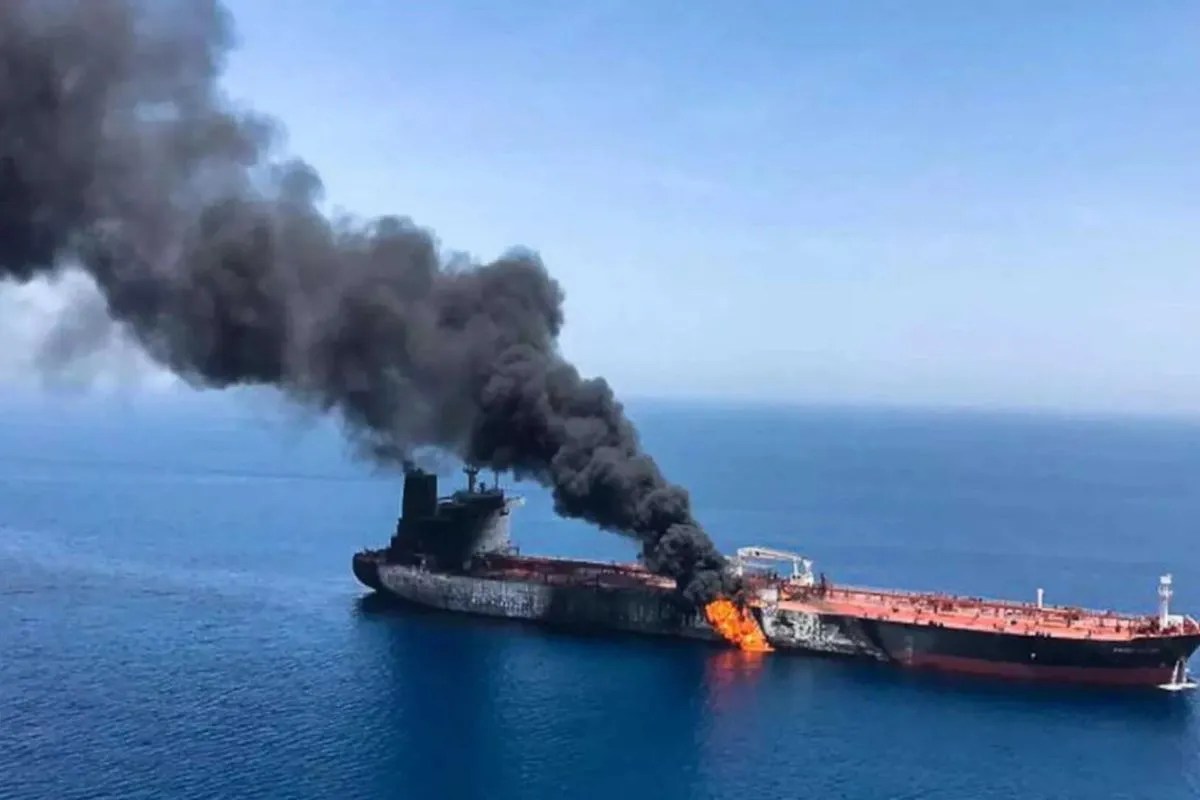
The fatal strike on a commercial vessel reported by the United Kingdom Maritime Trade Operations (UKMTO) is not an isolated maritime mishap; it is a predictable casualty of a systemic security collapse in one of the world's most vital energy corridors. When two lives were abruptly extinguished in the choke point connecting the Persian Gulf to the open ocean, global news agencies treated it as a breaking news anomaly. Decades of observing naval escalations in the Middle East tell a far more grim, structural reality. The Strait of Hormuz has transformed from a heavily monitored commercial transit lane into an active theater of attrition, where international shipping companies bear the human and financial cost of an unacknowledged proxy war.
To understand why commercial vessels continue to burn in these waters, one must look past the immediate wreckage and examine the mechanics of modern maritime deterrence. The narrow passage, flanked by Oman and Iran, handles roughly a fifth of the world’s petroleum consumption. When regional tensions boil over into direct confrontations between Washington and Tehran, naval mines, unidentified projectiles, and asymmetric drone incursions turn routine transit into a high-stakes gamble. Shipowners face an impossible economic equation: idle multi-million dollar assets or risk running a gauntlet where maritime safety organizations issue retrospective warnings long after the smoke has cleared.
The primary driver behind these recurrent tragedies is the erosion of a unified security architecture. For years, coalition escorts and regional patrols provided a thin veneer of stability, assuring ship captains that hostile vectors would be intercepted. That baseline has fractured. As regional actors implement aggressive enforcement measures, blacklist commercial carriers, and contest traditional transit corridors, the margin for error has vanished. A minor deviation from established shipping lanes or a delayed response from monitoring centers leaves civilian crews exposed to kinetic strikes.
Consider the operational reality for the mariners trapped in this theater. These are multinational crews—engineers, navigators, and deckhands—operating supertankers and container ships without combat insurance or military-grade defense systems. When an explosion rips through a hull, the immediate response relies on fragmented alerts from bodies like UKMTO or Indian shipping authorities. By the time advisories are broadcast, the damage is done. The human toll, measured in lost lives and critical injuries, rarely halts the flow of crude for more than a few hours. Global markets absorb the shock, recalibrate insurance risk premiums, and send the next vessel into the crosshairs.
The broader geopolitical calculus guarantees that these waters will remain volatile. Neither economic sanctions nor naval escort operations have established a durable deterrent against asymmetric harassment. Tehran maintains its strategic leverage through geographical dominance, treating the waterway as a zone of sovereign enforcement, while Western coalitions struggle to maintain an open-ended defensive posture over thousands of square miles of ocean.
Until major stakeholders fundamentally restructure how cargo moves through this disputed corridor, maritime workers will remain the frontline casualties of a geopolitical stalemate. The next maritime disaster is not a matter of if, but when, written cleanly into the logbooks of ships sailing through the dark.