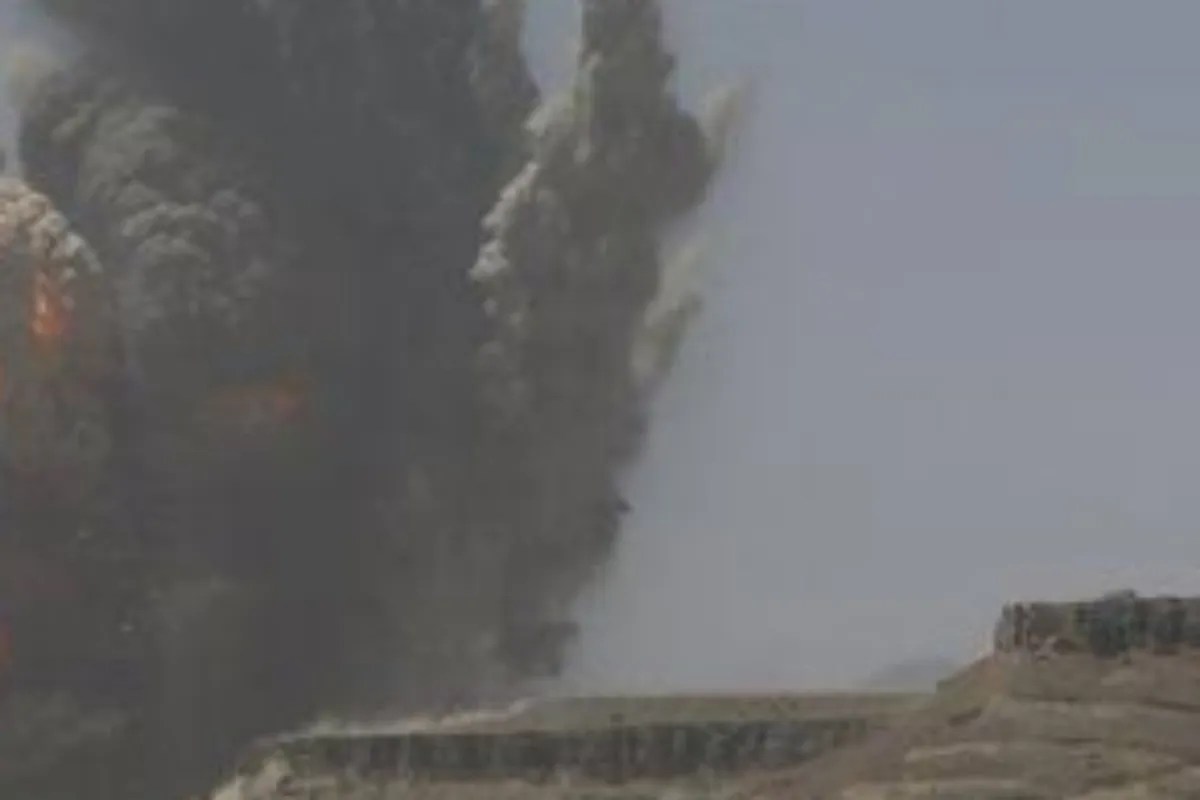
Nine airstrikes by Yemeni forces hit Houthi positions in and around Taiz, forcing civilians to flee the city as frontline violence flared once again. That bare headline captures the immediate shock of another escalation in one of Yemen's most contested provinces. Yet treating nine strikes as an isolated tactical burst misses what actually drives combat around Taiz, why civilians are repeatedly uprooted, and how warring factions turn geography and supply lines into leverage.
After years on conflict desks and regional beats, I have learned to distrust round numbers in war reporting. Nine strikes can mean nine precision hits on command nodes, nine artillery-and-air salvos along a ridge line, or nine moments of terror in dense neighborhoods where military targets sit uncomfortably close to homes, markets, and clinics. When civilians flee Taiz after strikes on Houthi positions, they are reacting not just to a single day of ordnance, but to a recurring cycle of encirclement, shelling, and sudden shifts in frontline pressure.
To understand what happens when airstrikes hit Houthi positions around Taiz, you have to look at the terrain and the political stalemate behind it. Taiz is not a simple front line. It is a fractured puzzle of high ground, mountain passes, contested urban districts, and strained humanitarian corridors.
Why Taiz Remains a Pressure Cooker
Taiz sits in southwestern Yemen between the highlands and the Red Sea coast, giving whoever controls its approaches strategic reach over movement and trade routes. For years, rival Yemeni forces and the Houthis have locked eyes across shifting lines in and around the city. Even during prolonged lulls or diplomatic pushes elsewhere in the country, Taiz rarely enjoys quiet stability.
Control over elevated positions around the city changes everything on the ground. Whoever holds the ridges can observe troop movements, direct mortar or artillery fire, and threaten supply routes linking Taiz to surrounding districts and coastal corridors. Airstrikes aimed at Houthi positions frequently target launchers, staging areas, observation posts, or mobile units positioned near these tactical chokepoints.
Geography alone does not explain the persistence of the fighting. Political fragmentation inside Yemen complicates every military calculation. Pro-government forces, local brigades, tribal alignments, and external backers often operate with overlapping or competing priorities, while the Houthis maintain entrenched networks and deep experience fighting in rugged terrain.
In protracted civil conflicts, front lines harden into economies of survival where every ridge, road, and checkpoint carries both military and political weight.
When nine airstrikes hit Houthi positions, the immediate military goal is usually to degrade offensive capability or disrupt an impending push. Yet airstrikes rarely settle urban or mountain warfare on their own. Ground realities quickly reassert themselves once the smoke clears.
Terrain Turns Tactical Strikes into Civilian Crises
High ground around Taiz creates a stark problem for anyone trying to separate combatants from non-combatants. Hillsides and valleys sit close to populated areas, and road networks funnel both fighters and families through narrow corridors. When strikes land near contested approaches, fear spreads faster than verified damage reports.
Civilians do not wait for official briefings when aircraft pass overhead or blasts echo off valley walls. Past experience teaches residents that a localized strike can precede ground clashes, retaliatory shelling, or road closures. Leaving early is often a rational survival calculation rather than panic.
Consider a hypothetical example of how a family in an outer neighborhood makes that decision. A household hears repeated impacts on a nearby hill where Houthi positions are rumored or known to operate. Even if the strikes do not hit their street directly, stray shrapnel, power outages, water disruptions, and the risk of getting trapped if roads close push them to pack a few essentials and head toward relatives or safer districts.
What Displacement Actually Means on the Ground
Headline counts of people forced to flee often sound abstract, like statistics moving from one column to another. On the ground in Yemen, displacement is a physical and financial shock that compounds years of economic strain. Families leave behind livelihoods, rented rooms, school routines, and fragile community support networks.
Displacement rarely follows a neat straight line. Some residents move only a few kilometers to stay with extended family in safer pockets, while others join longer streams of internally displaced people stretching toward safer towns or informal shelters. Each move drains savings that were already thin.
Basic services buckle under sudden movement. Clinics in receiving areas face higher demand with limited supplies, schools struggle to absorb displaced children, and local markets strain under transport bottlenecks. Aid agencies and local councils frequently end up chasing needs that shift faster than funding or access permits.
| Dimension of Impact | Immediate Effect After Strikes | Longer-Term Consequence |
|---|---|---|
| Civilian safety | Fear of follow-on shelling, clashes, or falling debris | Prolonged trauma and risky return decisions |
| Mobility and access | Route closures, checkpoints, and transport spikes | Isolation of neighborhoods and higher food prices |
| Household economy | Lost daily wages and abrupt travel costs | Depleted savings and rising debt |
| Local infrastructure | Damaged power lines, water pipes, or clinics | Overburdened host communities and service gaps |
One overlooked factor in displacement waves is the cost of secondary movement. Many families fleeing a fresh round of strikes around Taiz have already been displaced once or twice over the course of the war. Serial displacement erodes resilience far more severely than a single upheaval.
The Strategic Logic Behind Airstrikes and Counter-Moves
Whenever Yemeni forces strike Houthi positions, observers naturally ask what the strikes accomplish strategically. Airpower can destroy exposed equipment, disrupt logistics, and signal resolve. It can also impose temporary costs on an adversary's forward elements.
Yet air operations carry built-in limits in asymmetric and entrenched conflicts. Dispersed fighters, hardened cover, and mobile assets adapt quickly after initial strikes. If ground forces cannot consolidate gains or hold key terrain, tactical hits may reset the board without permanently altering control.
There is also a counter-argument worth taking seriously. Critics of heavy strikes in contested environments warn that escalations risk civilian harm, harden local grievances, and derail fragile de-escalation efforts elsewhere. Even when targets are military, collateral effects on infrastructure or nearby homes can generate political blowback that outlasts any tactical advantage.
The Houthis, for their part, have long treated attrition and asymmetric pressure as core strengths. When pressured on one front or targeted from the air, armed groups often look for ways to absorb the hit, disperse forces, or shift pressure elsewhere. Airstrikes rarely produce a clean knockout blow in rugged, contested territory.
Information Fog in Fast-Moving Escalations
Covering strikes and displacement in Yemen requires constant caution around claims and numbers. In the first hours after an escalation, warring sides often release conflicting accounts of what was hit, who suffered casualties, and who holds which point. Rumors travel fast on social media and messaging apps, amplifying anxiety among residents trying to figure out which roads are open.
Verified casualty and displacement figures typically lag behind the events themselves. Access restrictions, communications blackouts, and danger along front lines slow independent verification. Good reporting separates confirmed facts from unverified claims and states clearly what remains unknown.
Regional Stakes and Diplomatic Friction
Events around Taiz do not exist in a vacuum. Yemen's internal conflict intersects with broader regional rivalries, maritime security concerns, and diplomatic tracks aimed at stabilizing the country. Escalations in one area can ripple into talks happening far from the frontline.
When fighting flares around a major urban center like Taiz, confidence in ceasefires and de-escalation promises takes another hit. Local grievances mix with national power struggles, making compromises harder to sell to constituencies that feel they have already sacrificed too much.
At the same time, international attention often swings sharply toward maritime shipping or high-profile regional exchanges, leaving chronic ground fronts like Taiz under-examined. That imbalance matters because enduring stability inside Yemen depends heavily on resolving local flashpoints and opening safe movement for civilians.
Practical Ways to Track Developments Accurately
Following news from Taiz without getting swept up in sensationalism takes a disciplined approach. Readers can cut through noise by focusing on verifiable indicators rather than dramatic phrasing alone.
- Check multiple independent sources when reports cite exact strike counts, target types, or casualty numbers, especially during the first 24 hours.
- Watch movement and access updates from humanitarian agencies and local monitors to see whether roads, markets, and clinics are actually closing or staying open.
- Distinguish tactical events from territorial shifts by looking for sustained ground changes rather than brief exchanges of fire.
- Keep the human toll in focus by tracking displacement trends, service disruptions, and household conditions rather than treating conflict purely as a map game.
Nine airstrikes on Houthi positions and families fleeing Taiz tell a story that is both urgent and familiar. Until the underlying military stalemate and civilian protection challenges around Taiz are addressed, every flare-up will keep forcing ordinary people to choose between staying under threat and running into uncertainty.


