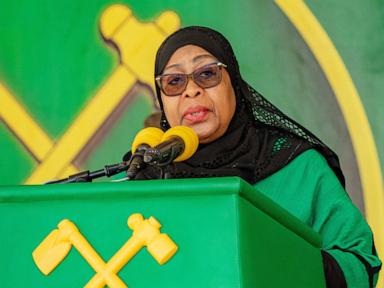
Tanzania is waking up to an unprecedented constitutional rupture. Vice President Emmanuel Nchimbi has announced his resignation and total withdrawal from active politics, barely ten months after taking office. This stunning exit marks the first time a vice president has voluntarily quit the post since the nation's independence in 1964. Stepping down effective September 4, Nchimbi pointed to an irreconcilable divergence with President Samia Suluhu Hassan, claiming he was honoring an earlier private pledge to step aside if she desired a different deputy. Behind the diplomatic phrasing lies a deep institutional crisis. East Africa's democratic experiment is undergoing a brutal stress test, and the fault lines run directly through the ruling Chama Cha Mapinduzi party.
The Anatomy of a Sudden Exit
Power in Dodoma rarely shifts quietly. When Nchimbi took his oath last November, he stepped into a pressure cooker. That election cycle had already left deep scars across the public consciousness, marked by violent unrest and fierce international scrutiny over electoral integrity. Nchimbi was viewed by many internal factions as a modernizing influence, someone capable of bridging the widening chasm between an increasingly defensive administration and an exhausted citizenry demanding accountability and expanded media freedoms. Don't forget to check out our recent coverage on this related article.
Yet, institutional friction inside the executive branch proved fatal to his tenure. Political survival in Tanzania demands absolute alignment, or at least the public performance of it. Nchimbi chose a different path. By explicitly stating that he recognized President Hassan's desire for a different partner at the helm, he shattered the traditional facade of unbroken internal harmony. It was an extraordinary public admission of executive dysfunction.
Behind Closed Doors
To understand why this resignation matters, look past the official press releases. Authoritarian tendencies rarely announce themselves with a coup; instead, they hollow out institutions from within until the structural integrity fails under ordinary weight. Nchimbi's departure follows months of low-burning friction regarding civil liberties, press censorship, and the handling of dissent. If you want more about the history of this, Al Jazeera provides an excellent breakdown.
When a high-ranking official walks away rather than rubber-stamp policies they disagree with, it signals that internal reform channels are completely blocked. The ruling apparatus operates on strict hierarchy, and dissent is treated as betrayal. Nchimbi calculated that quiet compliance would destroy his long-term credibility, choosing instead a dramatic exit that forces the administration into an uncomfortable defensive posture. Yet, by retiring entirely from public service, he also neutered any immediate threat he might have posed as an opposition figure, leaving a vacuum where constructive internal critique used to reside.
The Democratic Toll
Tanzania's fragile democratic standing now faces its most severe test in decades. The social contract between the state and the people is fraying. Citizens watched hundreds die during post-election crackdowns, and the subsequent promises of national healing have rung hollow as state control tightens.
Foreign investors and regional partners watch these developments with growing apprehension. Stability in East Africa relies heavily on Tanzania acting as a steady anchor. When the second-highest executive official abruptly abandons his post amid whispers of ideological warfare and policy paralysis, that anchor drags. Markets despise unpredictability, and political institutions despise sudden vacuums at the top.
President Hassan now faces a stark choice. She can use this vacancy to consolidate power entirely around a loyalist faction, effectively transforming the executive branch into an echo chamber. Or she can appoint a figure capable of national reconciliation, signaling to a skeptical public that the government hears their grievances. History suggests the former is far more likely, but the audacity of Nchimbi's departure proves that absolute control is becoming harder to maintain.
The machinery of the state moves forward, but the friction is louder now. Democracy in Tanzania is not dying in a sudden explosion; it is being negotiated away in backrooms, one resignation at a time.
Emmanuel Nchimbi resigns as Tanzania's Vice President
This short video captures the breaking news announcement regarding Emmanuel Nchimbi's departure from office and public service.