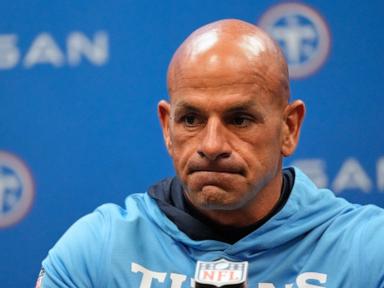
The Tennessee Titans have turned late-game execution into a recurring liability, extending a brutal streak without consecutive victories while cementing a reputation for letting tight contests slip away in the final minutes. When a franchise cannot string together back-to-back wins in the same season, the story is rarely a single blown assignment or an unlucky bounce. It is a structural pattern that exposes how a roster is built, how game plans shift when pressure peaks, and how thin margins punish hesitation in the National Football League.
Fans often point to the final two minutes and see heartbreak. Veteran observers see a culmination of earlier compromises. If you found value in this piece, you might want to look at: this related article.
A fourth-quarter collapse rarely begins in the fourth quarter. By the time the clock dips under five minutes in a one-score game, a coaching staff has already spent three quarters negotiating around its roster's flaws. If a team cannot run the ball cleanly on early downs without telegraphed formations, its late-game playbook shrinks to predictable passing situations. If a defense relies on heavy blitz packages to mask coverage vulnerabilities, late-game fatigue turns aggressive calls into high-risk gambles that seasoned quarterbacks dissect with ease.
Why Consecutive Wins Expose Deeper Flaws
Winning one game in the NFL can happen through variance. A turnover swing, a special teams spark, or an opponent's unforced error can carry a flawed team across the finish line on a Sunday afternoon. Winning two straight requires repeatability. It demands that a group show up the following week—often with shorter rest, travel, scouting adjustments, and heightened expectations—and execute the same foundational principles under fresh pressure. For another look on this development, refer to the latest update from NBC Sports.
Consider a hypothetical example of a franchise stuck in an every-other-week rhythm. In Week 1, the offense thrives because the opposing defensive coordinator plays a base zone and allows short completions underneath. Seven days later, the next opponent watches the tape, brackets the primary receiver on third down, and forces the quarterback to hold the ball a fraction of a second longer against a four-man rush. Suddenly, the rhythm disappears, drives stall near midfield, and the defense spends the second half on the field trying to protect a narrow lead.
That cycle is unforgiving. In a league built on parity, teams do not need to be dominant to win consecutive games, but they do need a reliable baseline. When a team's baseline is volatile, every victory feels like an uphill climb rather than a stepping stone.
Late-game woes magnify that volatility because high-leverage snaps strip away margin for error. A false start on second-and-short turns a manageable down into an obvious passing situation. A missed tackle in the flat turns a three-yard gain into a first down that drains another forty seconds off the clock. Over a full sixty minutes, those small breakdowns accumulate until the final drive carries the weight of the entire afternoon.
The Myth of Pure Bad Luck
Whenever a team loses close games repeatedly, the temptation is to treat the record as a statistical anomaly. Coin flips go tails five times in a row, the argument goes, and regression will eventually balance the ledger. Sometimes there is truth in that. Ball bounce matters. Kicks hook wide. Referees swallow whistles or throw flags at awkward moments.
Still, relying solely on luck as an explanation lets decision-makers off the hook too easily. Close games in the NFL are rarely pure coin flips; they are stress tests of situational discipline. Teams that routinely win tight contests tend to do a few unglamorous things well: they manage the play clock without burning early timeouts, they tackle cleanly in open space when legs are tired, and they avoid self-inflicted penalties in their own territory.
When a club repeatedly falters late, it is worth asking whether the late-game decisions are actually symptoms of earlier strategic choices. Play-calling becomes conservative out of fear of turnovers. Conservative play-calling leaves points on the board or keeps an opponent within striking distance. Then, when the opponent mounts a late push, the trailing or barely leading side suddenly has to play faster and riskier than its personnel prefers.
Clock Management and Situational Friction
Late-game football is a chess match played at sprint speed. Every timeout, every out-of-bounds completion, and every substitution package alters win probability in ways that casual viewers sometimes overlook. A coach who holds two timeouts into the final ninety seconds only to burn one on a defensive alignment issue has quietly surrendered leverage before the decisive snap even occurs.
On offense, late-game friction often shows up in tempo and personnel choices. Hurrying to the line sounds decisive, yet rushing without clear communication can lead to misaligned routes, hot reads that neither quarterback nor receiver anticipated, or protection breakdowns against simulated pressures. Conversely, milking the clock too aggressively can stall momentum and hand the ball back with enough time for a methodical two-minute drive.
There is also a psychological layer that stats cannot always capture. Players feel the weight of past disappointments. When a locker room has seen fourth-quarter leads evaporate or late drives stall near the red zone, tension creeps into execution. A wide receiver presses slightly on a timing route. A cornerback peeks into the backfield for half a beat too long. A lineman lunges instead of anchoring.
None of that requires a lack of effort. In fact, trying too hard is one of the most common culprits late in games. Players start hunting for the single play that will end the drought rather than trusting the structure of the call.
Roster Construction Under Late-Game Pressure
Coaching gets the loudest headlines when late-game losses pile up, yet roster construction sets the ceiling on what any staff can call in crunch time. A pass rush that requires exotic blitzes to generate pressure struggles when the offense drops seven or eight players into coverage to protect against explosive plays. A receiving corps without reliable separation against man coverage faces rough sledding when the defense knows a throw is coming.
Depth matters just as much as top-end talent. By the fourth quarter, depth charts are tested. Injuries from earlier in the season or bumps absorbed during the first three quarters force rotational players into high-leverage matchups. If the gap between starters and backups is wide at key spots like offensive tackle, edge rusher, or boundary cornerback, late-game situational football becomes a targeted hunt by the opposing play-caller.
Front offices evaluating a streak without consecutive wins have to separate effort from fit. A player can play hard on every snap and still be miscast for the role demanded in the final four minutes of a tight game. Fixing that requires honest evaluation of skill sets rather than sentimentality or sunk costs.
What Tape Reveals About Late-Game Stalls
Watch enough fourth quarters of a struggling team and distinct visual patterns emerge. On third-and-medium with the game hanging in the balance, routes often cluster in the same yardage window, making life easy for underneath defenders. Early-down runs may hit a wall because defenders recognize blocking cues or stack the box without fear of getting beaten over the top.
Red-zone efficiency is another frequent pressure point. Moving the ball between the twenties is one challenge; operating in compressed space where angles shrink and blitzers have fewer grass lanes to cover is another. Settling for field goals instead of touchdowns keeps opponents alive, turning a two-score cushion into a single possession that can vanish in ninety seconds.
Defensive late-game stalls often look different. Soft zone coverage designed to prevent big plays can invite death by a thousand paper cuts, allowing methodical marches down the field while draining the clock. Switching to tight man coverage solves one problem while creating another if cornerbacks lack safety help over the top. Every choice involves a trade-off, and late in games, opponents punish whichever side of the trade-off is weaker.
The Cost of Chasing Quick Fixes
When a season's narrative turns sour around late-game collapses and an inability to build winning momentum, external pressure mounts for drastic changes. Fans demand sweeping scheme overhauls or immediate lineup swaps. Yet knee-jerk adjustments often add confusion rather than clarity.
Changing terminology midstream or altering core blocking rules on short notice can trip up players who are already navigating tough matchups. Real progress usually starts with narrowing the focus: identifying the three or four situational calls that consistently break down and fixing the underlying mechanics or personnel usage behind them.
Consistency is built in practice habits, film study accountability, and clear communication between sidelines and coordinators—not in grand speeches after a tough loss. Until a team proves it can execute its core identity cleanly when fatigue and pressure peak, late-game drama will remain an uphill battle.
Every Sunday offers a fresh reset on paper, yet the clock never lies about what a team is actually equipped to handle when the stakes are highest.