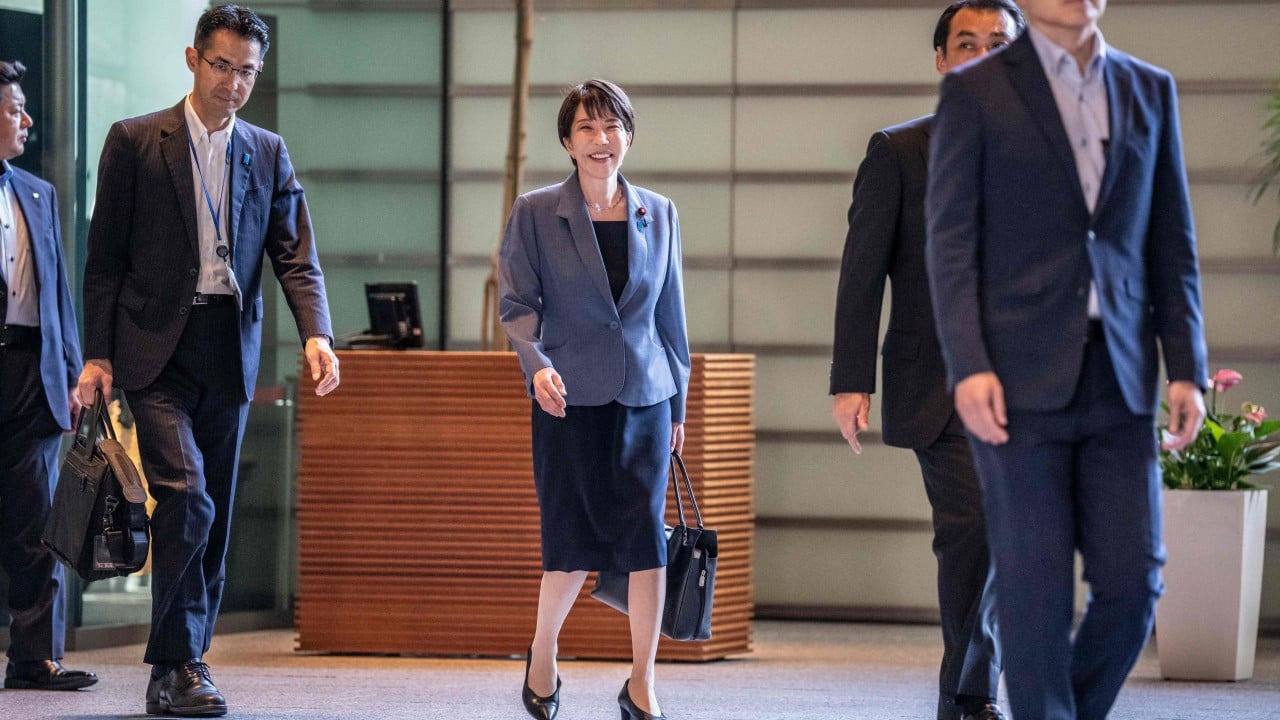
Japanese Prime Minister Sanae Takaichi is preparing a calculated overhaul of her Cabinet and ruling Liberal Democratic Party executive lineup for late September. The primary driver behind this impending purge and promotion cycle is not administrative renewal, but pure political survival as Takaichi maneuvers to secure her reelection in the 2027 party leadership contest. By timing the changes around an extraordinary parliamentary session, a major tax reform package, and her scheduled trip to the United Nations General Assembly, Takaichi aims to neutralize internal opposition and consolidate factional backing.
The Arithmetic of Survival
Power in Nagatacho is measured in factions, debts, and procedural control. When Takaichi assumed office last October, she inherited a party fractured by leadership race rivalries and deep ideological friction. Her administration now faces a severe test over economic policy, specifically a controversial proposal to reduce the consumption tax rate on food and beverages down to one percent.
This fiscal maneuvering has created strange bedfellows and dangerous enemies. Former Prime Minister Taro Aso, who controls the last standing formal heavyweight faction within the LDP, views the deep consumption tax cut with intense skepticism. Yet, Takaichi relies heavily on Aso's institutional backing. Retaining LDP Secretary-General Shunichi Suzuki—Aso's brother-in-law—serves as an olive branch to the party's old guard, even as policy friction grows between the executive office and the party headquarters.
The upcoming personnel shifts will test whether Takaichi can manage the ambitions of the men she defeated in last year's presidential election.
Managing the Presidential Rivals
A premier who keeps defeated rivals inside the tent invites constant subversion. Defense Minister Shinjiro Koizumi, Internal Affairs Minister Yoshimasa Hayashi, Foreign Minister Toshimitsu Motegi, and policy chief Takayuki Kobayashi all harbor aspirations for the top office.
Consider a hypothetical scenario to understand the internal calculus. If a sitting prime minister leaves a high-performing rival in charge of a critical security portfolio, that rival gains public visibility and institutional loyalty from career bureaucrats. Conversely, stripping them of office entirely frees them to organize open opposition from the backbenches.
Hayashi, for instance, is widely rumored to want out of the current ministerial lineup precisely to position himself for the next leadership ballot. Meanwhile, Koizumi has navigated his tenure at the Defense Ministry with relative public success, but he faces grueling parliamentary battles this autumn over a massive defense budget increase and impending national security strategy documents. Takaichi must decide whether Koizumi is an asset to keep close or a threat to neutralize by shifting him sideways.
Coalition Realignment and Public Pressure
Beyond the internal LDP machinations, Takaichi is looking outward to fortify her legislative base. Plans are underway to invite a member of the Japan Innovation Party, the ruling bloc's junior partner, directly into the Cabinet. This move is designed to institutionalize policy cooperation and insulate the government against populist attacks from opposition forces like the Democratic Party for the People, which has sought to outmaneuver the LDP on tax relief.
At the same time, public fatigue is real. Persistent inflation and the complex mechanics of rolling out a multi-tiered consumption tax reduction mean ordinary households feel squeezed. The administration cannot afford structural gaffes from key spokesmen. This explains why Chief Cabinet Secretary Minoru Kihara, Takaichi's trusted conservative ideologue and right-hand man, is widely expected to stay put. Continuity at the core is the price of experimentation at the margins.
The upcoming reshuffle is a high-stakes gamble. If Takaichi miscalculates her distribution of portfolios, she risks turning passive legislative compliance into active rebellion. The autumn Diet sessions will reveal whether her tactical appointments bought her peace or merely postponed an inevitable reckoning.
The Dilemma Facing America's Allies! | Japan's Cabinet Reshuffle
This video provides additional context on the regional diplomatic tensions and domestic political calculations surrounding the Japanese leadership's current strategic choices.
http://googleusercontent.com/youtube_content/1