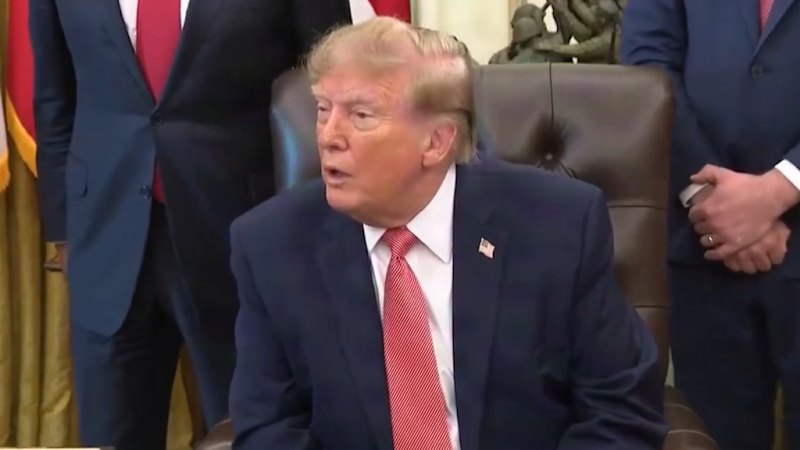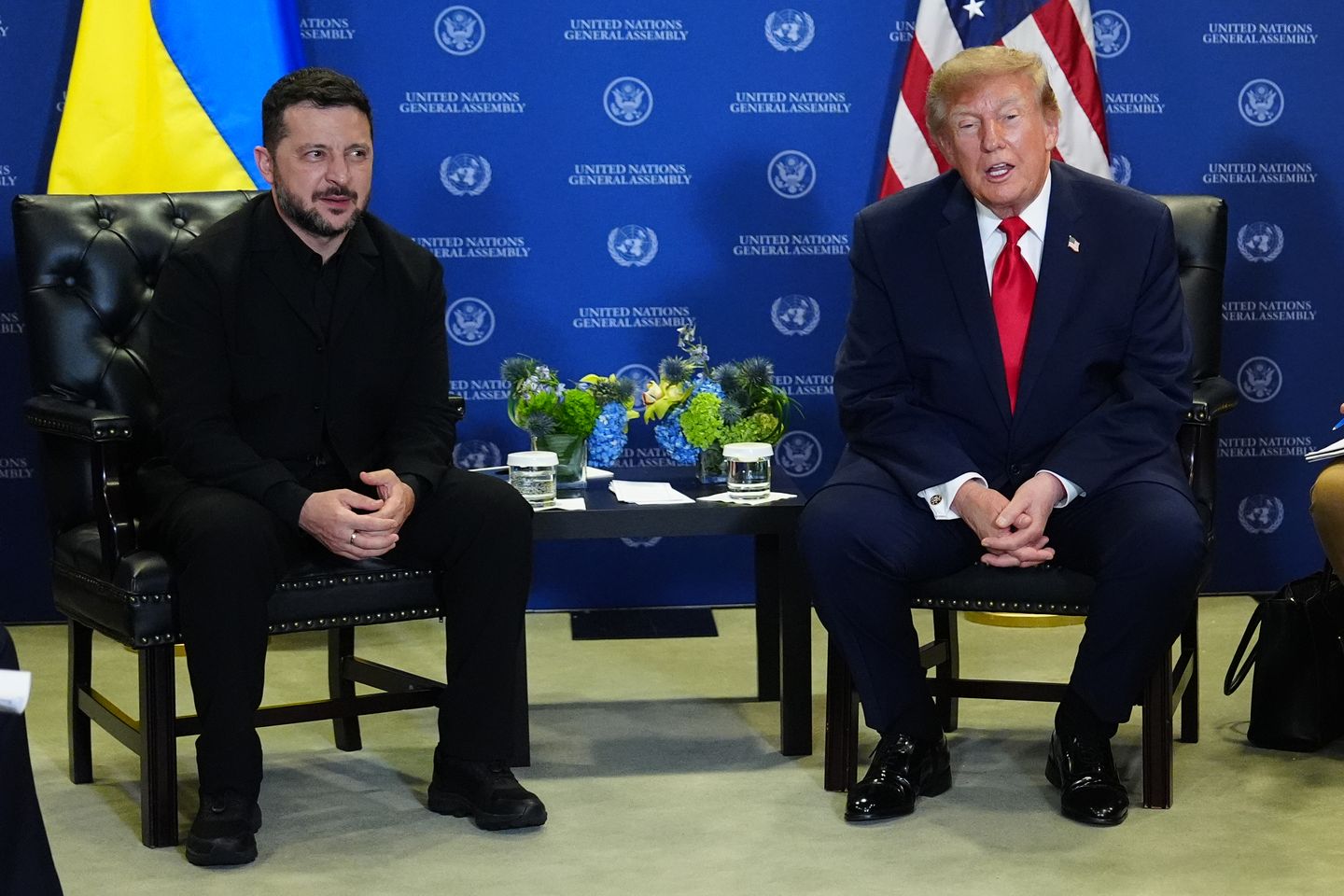
President Donald Trump has publicly pressed Ukrainian President Volodymyr Zelenskyy to strike a settlement with Moscow, warning that if Kyiv refuses to make a deal, the war is "just going to get worse." At face value, the warning reads like blunt transactional diplomacy from a leader impatient with a grinding European conflict. Look closer at the backchannels from Oslo to Abu Dhabi and Berlin, and a harsher reality takes shape. Washington is no longer treating Ukraine's survival as an open-ended strategic obligation; it is treating a rapid freeze as a political exit ramp, even if that shortcut hands Moscow leverage over Ukraine's sovereignty and Europe's security architecture.
Competitor coverage tends to stop at the soundbite, framing the clash as a simple showdown between Trump's urge to close a deal and Zelenskyy's stubbornness. That surface reading misses the real fight. Negotiations over territory, security guarantees, sanctions relief, and continental order are colliding on the ground while missiles still hit cities and power grids. In other developments, we also covered: Tougher Protest Laws After Milan Riots Won't Restore Order They Will Manufacture Martyrs.
The Transactional Logic Behind the Ultimatum
Spend enough years covering foreign policy and you learn to watch where the leverage actually sits before listening to the speeches. Trump has repeatedly argued that American taxpayers are exhausted by sending billions in aid with little tangible return, while pointing to Russia's larger population, industrial scale, and slow territorial grind as proof that time favors Moscow. When a superpower leader frames an ally's defense as a bad balance sheet, every diplomatic meeting becomes a pressure campaign to lower the asking price.
That pressure has not stayed confined to Oval Office remarks. Washington has dispatched envoys—including Steve Witkoff and Jared Kushner—into high-stakes talks with Ukrainian, European, and Russian officials, while floating broader frameworks that touch on sanctions relief, security arrangements, and talks with Moscow and Beijing. From the White House perspective, forcing Kyiv to move fast looks like tough-minded realism designed to halt mounting casualties and fiscal drain. The New York Times has also covered this important subject in great detail.
Yet transactional speed carries a steep hidden cost when one side smells desperation. If Moscow believes Washington wants a signature settlement more than it wants to defend Ukraine's red lines, Russian negotiators have little incentive to compromise early. Why concede ground or accept verifiable guardrails when holding out might extract structural concessions across the wider negotiating table?
Why Kyiv Fears a Yalta-Style Settlement
For Zelenskyy, the threat is not merely losing another strip of land in an exhaustion war. It is being locked into a security arrangement that leaves Ukraine exposed while redrawing European rules without Ukraine's consent. He has warned directly against anything resembling a new Yalta, where great powers carve out spheres of influence and treat smaller nations as bargaining chips rather than sovereign actors.
Ukrainian leaders have spent years arguing that a hasty truce without ironclad enforcement is just a pause for Russian rearmament. Even when talks shift toward technical tracks—such as prisoner exchanges, Black Sea shipping, energy infrastructure strikes, or territorial lines—the central question remains unresolved. A deal that freezes the front without credible deterrence invites the next round of coercion on weaker terms.
A settlement signed under duress only works if the aggressor respects the ink—and Moscow has given Kyiv no reason to trust promises over power.
Critics of a rushed agreement also point to a basic mismatch between rhetoric and reality. While diplomats trade proposals in capitals and summit rooms, strikes on Ukrainian cities and energy systems continue, reminding Kyiv that negotiations under fire tilt heavily toward whoever can endure the worst punishment.
The Security Guarantee Trap
One of the sharpest selling points floated by U.S. officials is the idea of Western or American security guarantees modeled loosely on NATO's Article 5, paired with keeping Ukraine outside formal NATO membership. On paper, that sounds like a clever diplomatic compromise meant to give Kyiv protection while giving Moscow a face-saving exit on alliance expansion.
In practice, security guarantees are only as strong as the political will behind them when the shooting starts. Article 5 itself does not automatically force every member state into identical military action, and modern conflict blurs the line between a conventional invasion, drone swarms, cyber disruption, and sabotage. If a future U.S. administration—or a future Congress—hesitates to enforce a bilateral or multilateral pledge, a paper guarantee becomes a dangerous illusion.
Consider a hypothetical example to see how fragile such a guarantee can be. Suppose a ceasefire halts major tank advances along a negotiated line, and Ukraine receives a pledge of "strong defensive backing" short of NATO membership. Two years later, unidentified sabotage knocks out power substations and border clashes flare up in disputed zones while Moscow denies ordering the escalation. Without automatic tripwires, joint command, and pre-positioned air and missile defense stocks, Kyiv could find itself arguing over definitions while its grid goes dark.
That is why European leaders have pressed to stay visibly at the table and urged heavier air-defense and interceptor support. European capitals know that a deal negotiated over their heads—or built on vague assurances—will land squarely on Europe's doorstep.
Europe Caught Between Washington and Moscow
Europe's position in these negotiations is awkward, fractured, and consequential. Some European leaders have welcomed renewed U.S. diplomatic pushback as a way to force movement toward ending the war, while others have chafed at a messy patchwork of bilateral calls, envoy shuttles, and trilateral sessions that risk sidelining European voices.
Competing Priorities Across the Table
| Actor | Primary Objective | Core Leverage | Biggest Blind Spot |
|---|---|---|---|
| Washington | Rapid settlement and reduced U.S. burden | Aid, diplomatic weight, sanctions posture | Underestimating long-term instability from a weak deal |
| Kyiv | Sovereignty, credible deterrence, real security | Battlefield resilience and domestic legitimacy | Limited material independence without sustained ally backing |
| Moscow | Territorial gains, veto over security order, relief | Attrition capacity and escalation pressure | Overplaying its hand and prolonging economic strain |
| European Allies | Continental stability and voice in settlement | Economic weight, sanctions, defense industrial base | Fragmented unity and lagging munitions output |
Look closely at that table and you see why talks keep stalling and restarting across different cities. Each side is optimizing for a different outcome. Washington wants closure; Kyiv wants survival with teeth; Moscow wants structural concessions; Europe wants order without paying an unmanageable bill.
When French and other European officials push to ramp up interceptors, air defenses, and sanctions—and even reopen questions around Ukraine's NATO path in response to maximalist Russian demands—they are signaling that peace cannot be bought by hollowing out deterrence. Yet Europe's own defense production and political cohesion still face real limits whenever energy costs, budgets, or domestic politics tighten.
The Counter-Argument for Pressing Kyiv
To treat Washington's push purely as bad faith would miss a sober counter-argument that seasoned analysts take seriously. War has a brutal arithmetic of its own. After years of heavy losses, infrastructure damage, and economic strain, waiting indefinitely for a decisive battlefield breakthrough can carry catastrophic costs for Ukraine's population and state capacity.
From that viewpoint, pressing Zelenskyy to negotiate urgently is not necessarily a betrayal; it can be an attempt to force hard choices before Ukraine's bargaining position erodes even further. If external support is politically vulnerable in Washington, pretending endless backing is guaranteed can be a trap rather than a kindness.
Even so, urgency is not a strategy. A clock ticking down on Kyiv without matching pressure on Moscow only rewards delay and brinkmanship. Real diplomatic leverage requires pairing deadlines with credible consequences if Russia stonewalls—not putting all the heat on the country fighting to keep its borders.
What Actually Determines Whether a Deal Holds
Headlines about a "big agreement" or a stern warning from the Oval Office make for dramatic reading, but durable settlements are built on boring, verifiable mechanics. Any agreement that lasts beyond a photo op has to answer four hard questions:
- Verification and monitoring: Who watches the line of contact and infrastructure truces, and what happens the first time violations occur?
- Deterrence teeth: What specific military hardware, air defenses, and intelligence capabilities stay in place to punish a renewed offensive?
- Territorial and legal status: How are disputed areas treated so that neither side treats the text as a license for permanent conquest or endless revanchism?
- Sanctions and economic levers: Are sanctions lifted in stages tied to verified compliance, or surrendered upfront for promises that are hard to reverse?
Until those mechanics are nailed down, urging Zelenskyy to make a deal is only half the equation. A fast agreement that leaves Ukraine defenseless will not end the crisis—it will simply set the stage for a far bloodier reckoning.