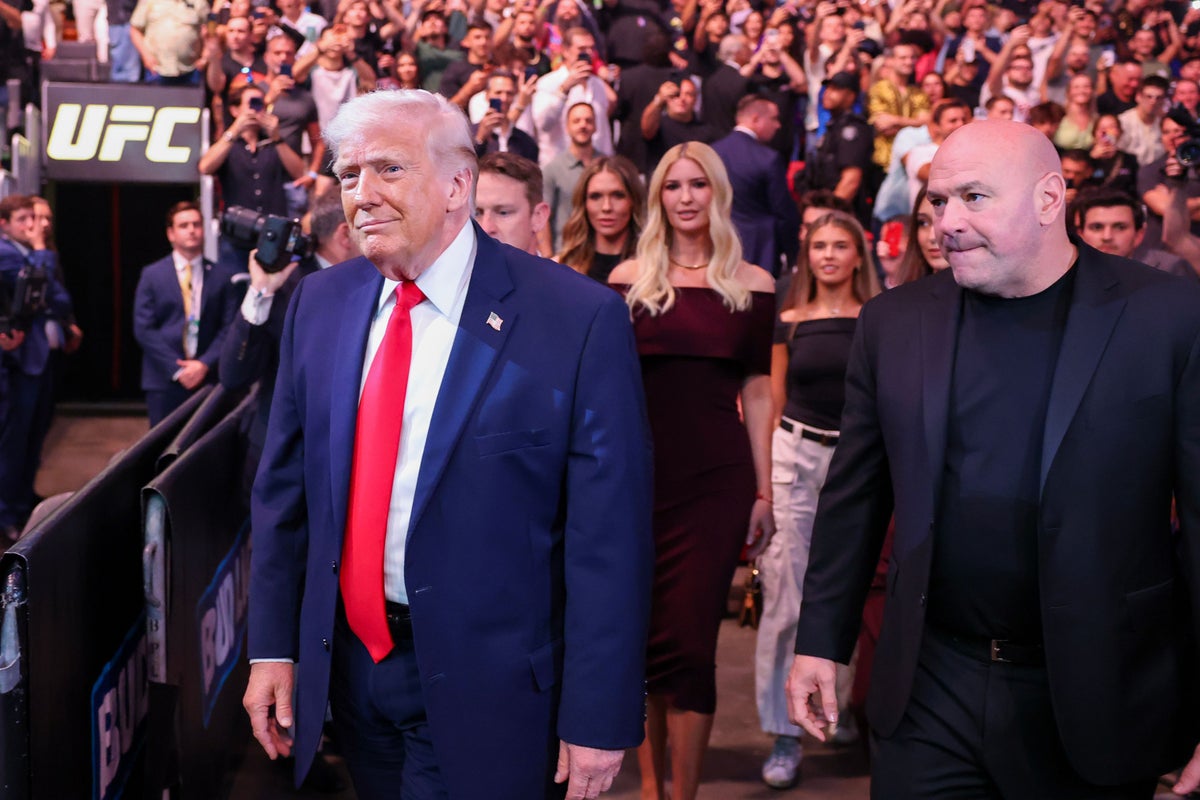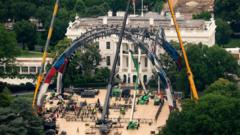
Heavy machinery rolled onto the South Lawn of the White House this week, tearing up the manicured turf to erect a 4,300-seat steel arena for UFC Freedom 250. The event, scheduled for June 14, represents the first time a professional, full-contact combat sports event will take place on the executive mansion's grounds. Organized as a dual celebration for the nation’s semiquincentennial and the president's 80th birthday, the fight card features lightweight champion Ilia Topuria against Justin Gaethje. While the spectacle promises a visual unlike anything in sports history, a deeper look into the operational logistics, regulatory gaps, and unprecedented corporate underwriting reveals an event testing the boundaries of federal ethics and executive power.
Behind the patriotic marketing and the promise of a free 85,000-person fan fest at the neighboring Ellipse, an intricate web of corporate influence and logistical headaches is quietly unfolding in the nation's capital.
The Sixty Million Dollar Birthday Party
Staging a world-class mixed martial arts production inside a high-security federal fortress is an astronomical financial undertaking. Industry sources confirm that the projected budget for UFC Freedom 250 has ballooned past $60 million, comfortably eclipsing the $21 million spent on the promotion's highly complex production at Riyadh Season Noche UFC inside Las Vegas's Sphere.
UFC CEO Dana White has repeatedly insisted that corporate entities are footing the entire bill, stating that the promotion and its parent company, TKO Group Holdings, are absorbing the financial risk. To mitigate the steep costs, the organization is relying on a massive $30 million corporate sponsorship drive.
UFC FREEDOM 250 FINANCIAL BREAKDOWN
+-----------------------------------+-------------------+
| Projected Event Production Costs  | $60,000,000+      |
+-----------------------------------+-------------------+
| Targeted Corporate Sponsorships   | $30,000,000       |
+-----------------------------------+-------------------+
| Ticket Sales Revenue              | $0 (Invited Only) |
+-----------------------------------+-------------------+
| Taxpayer-Funded Security Costs    | Undisclosed       |
+-----------------------------------+-------------------+
This structural setup introduces an unprecedented ethical grey area. Corporate sponsors are effectively financing a massive production on federal property that serves as a backdrop for a sitting president’s milestone birthday celebration. While the 4,300 seats are officially reserved for invited dignitaries and members of the military, the proximity between corporate money, private sports entertainment, and the executive branch has raised alarm bells among government oversight groups.
The public will not be completely shut out, but their access is strictly segregated. An estimated 85,000 fans will watch the broadcast on massive screens erected at The Ellipse park across the street, while the select few rub shoulders with executives and politicians directly outside the Oval Office.
The Regulatory Black Hole on Federal Land
One of the most overlooked aspects of the White House card is the complete absence of state athletic commission oversight. Because the South Lawn is sovereign federal land, the District of Columbia Boxing and Wrestling Commission possesses zero jurisdictional authority over the event.
This creates a significant legal and athletic conundrum. Without an official regulatory body to oversee weigh-ins, drug testing, and referee assignments, the six scheduled bouts technically cannot be recorded on the fighters' official professional records. A loss or a win in the shadow of the Washington Monument would normally exist in a statistical vacuum.
To bypass this issue and maintain a veneer of competitive legitimacy, the UFC took the unusual step of inviting the Association of Boxing Commissions to serve as independent regulatory advisors. However, advisory status is not the same as statutory authority. The lack of an independent state commission means the promotion itself retains ultimate control over the operational environment, medical protocols, and fighter safety standards for an event featuring elite, high-risk heavyweight clashes like Alex Pereira versus Ciryl Gane.
Logistical Gridlock and The Claw
The physical construction of the arena has turned the heart of Washington, D.C., into a sprawling logistical bottleneck. Crews are currently assembling a massive, European-imported steel dome framework known internally as "The Claw." The structure is designed to suspend lighting rigs and audio systems over the Octagon without requiring a traditional, sightline-blocking roof.
The footprint of this heavy industrial project extends far beyond the South Lawn fence line. The neighboring Ellipse has been transformed into a staging ground, forcing historic local events to alter their operations. Parents of participants at the annual Scripps National Spelling Bee, which was forced to relocate nearby, reported that children and families had to navigate complex security fences and heavy equipment detours just to reach their venue.
Security for the event is being coordinated directly through the Secret Service, bringing a level of scrutiny typically reserved for a presidential inauguration or a Super Bowl. While the UFC maintains it is paying for the physical infrastructure, the cost of deploying hundreds of federal agents, locking down the National Mall, and managing the airspace over the capital will inevitably fall squarely on the American taxpayer.
The Permanent Precedent of Private Spectacle
Long after the temporary steel stands are dismantled and the South Lawn sod is replaced, the precedent set by UFC Freedom 250 will linger over the presidency. Transforming the executive mansion into a privately funded, corporate-sponsored sports arena blurs the line between public infrastructure and personal entertainment.
The UFC is seizing a historic marketing opportunity that money simply cannot buy anywhere else on earth. By successfully embedding a violent, highly lucrative commercial sport into the physical fabric of American governance, the promotion isn't just staging a fight card. They are proving that with enough capital and the right political connections, even the most secure, historic lawn in the world can be converted into a pay-per-view stage.