International bodies monitoring civil rights consistently flag Pakistan for systemic failures in protecting minority populations, specifically targeting the Ahmadiyya community. The mechanism of this persecution is not merely social friction or sporadic mob violence; it is codified within the state's legal framework, bureaucratic procedures, and institutional incentives. To understand why international interventions yield negligible behavioral changes from domestic authorities, one must deconstruct the architecture of legal disenfranchisement, the economic toll of targeted marginalization, and the political utility of state-sanctioned discrimination.
The Legal Architecture of Disenfranchisement
State-sponsored exclusion operates through deliberate legislative mechanisms rather than administrative oversights. The foundation of this system rests on constitutional amendments and penal code additions that criminalize identity.
The primary legal instrument is Ordinance XX, promulgated in 1984, which amended Pakistan's Penal Code. This statute directly prohibits members of the Ahmadiyya community from practicing, preaching, or outwardly identifying as Muslims. The operational constraints imposed by this law touch every aspect of daily existence:
- Religious nomenclature restriction: Ahmadis are legally barred from using Islamic terminology, greeting phrases, or designations for their places of worship.
- Electoral segregation: The state maintains separate voter rolls or requires specific declarations that effectively isolate Ahmadi citizens from the broader political franchise, forcing individuals to sign derogatory declarations regarding their faith to register to vote.
- Criminalization of expression: Publishing, disseminating, or possessing literature that defines Ahmadi beliefs in Islamic terms constitutes a criminal offense punishable by imprisonment.
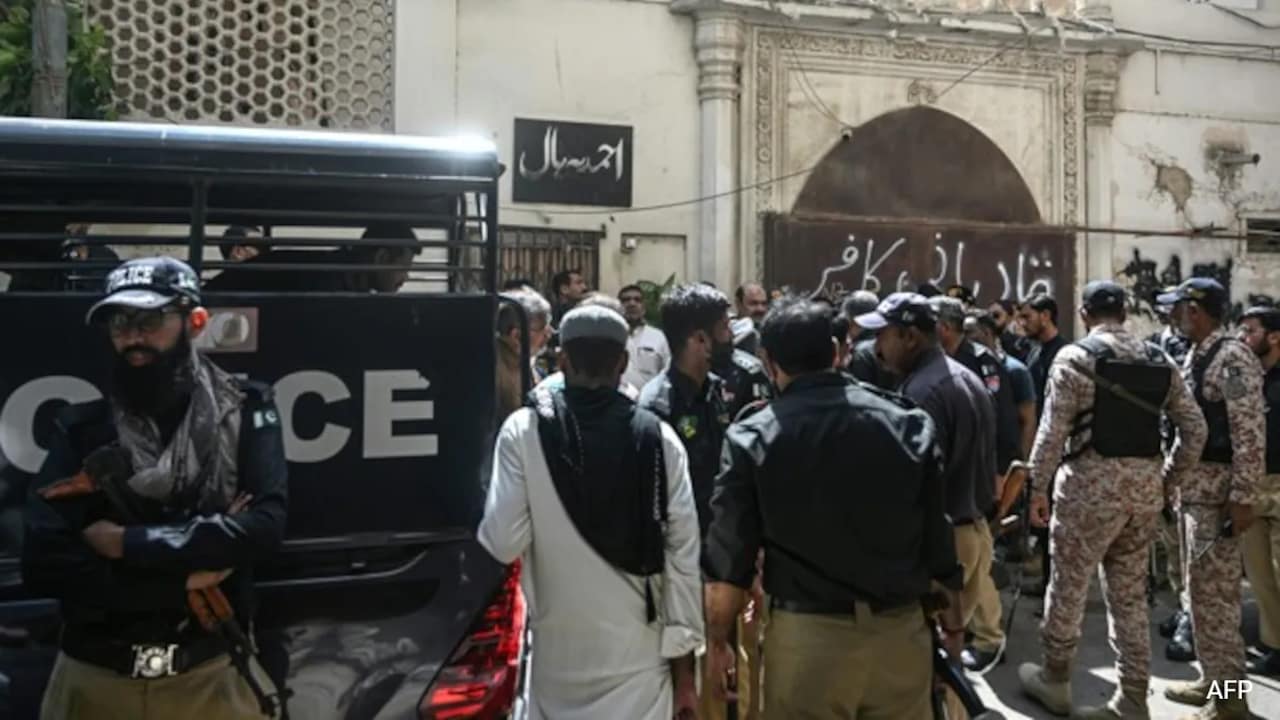
This legal framework creates an environment where state institutions act not as neutral arbiters of public safety, but as enforcers of doctrinal orthodoxy. When police intervene in disputes involving Ahmadis, their operational mandate under these laws frequently prioritizes prosecuting the minority group for blasphemy or "posing as Muslims" rather than protecting them from violence.
The Cost Function of Social Marginalization
Institutional discrimination generates measurable economic and social friction. Economically, a targeted minority faces restricted market participation, reduced capital accumulation, and employment discrimination masked by bureaucratic inertia.
The security deficit operates as a direct tax on the community. Places of worship, educational institutions, and commercial establishments require disproportionate private security investments. The constant threat of localized riots, orchestrated property destruction, and targeted assassinations elevates the cost of capital for Ahmadi-owned enterprises.
Socially, the mechanism of exclusion relies on institutionalized ostracization. Educational curricula in public schools reinforce sectarian divides from an early age, framing minority sects as existential threats to national ideology. This ideological framing lowers the social barrier to violence. When perpetrators of mob violence against Ahmadi properties or individuals operate with near-total impunity, the judicial system signals that such actions carry zero legal cost.
The Political Utility of State-Sanctioned Discrimination
Why do successive Pakistani administrations maintain these policies despite international condemnation from United Nations human rights experts? The answer lies in political economy and the calculus of legitimacy.
Radical religious groups hold disproportionate veto power over legislative and executive policy. For political parties navigating weak democratic institutions, concessions to religious hardliners serve as a low-cost mechanism to secure domestic stability or neutralize opposition. Protecting minority rights carries immediate political costs—mobilization of hostile religious blocks and accusations of apostasy—while the benefits of international compliance remain abstract and diffuse.
Consequently, human rights appeals issued by international bodies function within a misaligned incentive structure. UN experts issue statements documenting violations, domestic authorities issue perfunctory denials or bureaucratic delays, and the underlying legal framework remains untouched because its structural utility to domestic power brokers is high.
Bureaucratic Complicity and Judicial Bottlenecks
The enforcement of discriminatory laws relies on a compliant bureaucracy and an overburdened judiciary. Local law enforcement officers often face immediate career risk or physical intimidation if they refuse to register blasphemy charges against Ahmadis. False accusations serve as instruments for property disputes, business competition, or personal vendettas, weaponizing the penal code against a vulnerable population.
Once a case enters the judicial pipeline, procedural delays function as punishment. Defendants face prolonged pre-trial detention, while judges frequently defer to public pressure rather than strict evidentiary standards. The systemic bias ensures that even when higher courts occasionally overturn lower court convictions, the psychological and financial attrition exacted on the accused achieves the functional goal of intimidation.
Operational Assessment for Intervention
International advocacy groups and foreign policy makers frequently misdiagnose the problem as an enforcement failure rather than a design feature of the political system. Traditional diplomatic engagement, consisting of periodic condemnations and diplomatic demarches, fails because it targets the symptoms of state policy rather than its structural drivers.
Effective pressure requires altering the cost-benefit analysis of the ruling elite. This necessitates tying trade preferences, international financial assistance, and diplomatic cooperation to concrete legislative reforms, specifically the repeal of Ordinance XX and the establishment of independent judicial protections for religious minorities. Until international actors impose tangible costs for institutionalized discrimination, the legal and physical vulnerability of the Ahmadiyya community in Pakistan will persist unabated.