The operational mechanics of modern theater-level air defense rely on a distinct mathematical asymmetry: the defender must maintain a near-perfect interception rate while facing variable volumetric saturation, whereas the aggressor incurs minimal marginal costs per vector launched. When the United States Central Command announced that air defense systems intercepted multiple ballistic missiles fired by the Islamic Revolutionary Guard Corps in an attempted surprise strike against regional American installations, public reports focused primarily on the binary outcome of success or failure. This framing ignores the structural economic friction governing the conflict. The strike terminated a multi-day operational lull that had accompanied diplomatic mediation efforts, highlighting a persistent strategic reality. Kinetic exchanges in the Persian Gulf theater are downstream of a much larger structural conflict regarding maritime transit control, supply chain choke points, and the marginal cost of regional power projection.
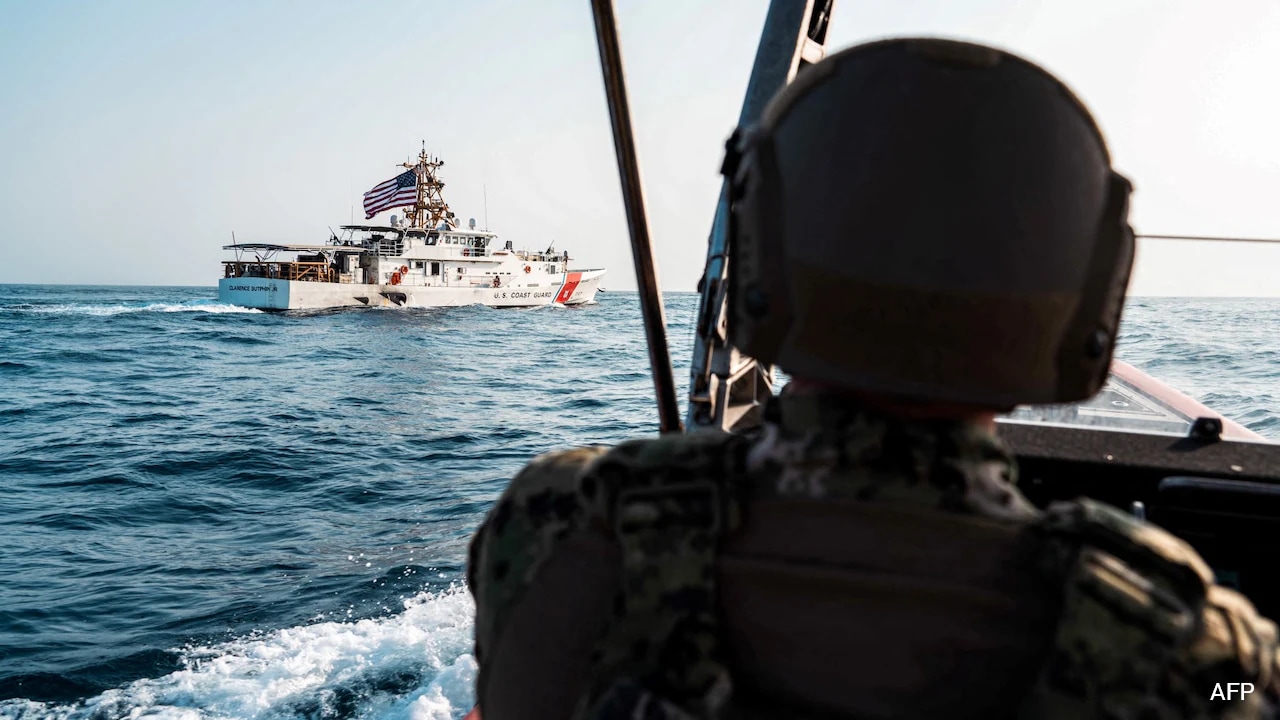
To understand why localized missile engagements recur despite diplomatic pauses, one must examine the cost function of maritime logistics in the Strait of Hormuz. Approximately twenty percent of globally traded petroleum flows through this narrow waterway. When active hostilities commenced, Iran attempted to impose a functional closure of the passage by targeting commercial freighters and compelling maritime traffic toward its internal coastal waters under threat of levy or interdiction. In response, United States naval forces established an overwatch architecture, shifting commercial transits toward a southern corridor along the coast of Oman.
This creates a direct operational bottleneck. The strategic value of the Strait of Hormuz to Tehran relies on its ability to impose a risk premium on global energy transit. When naval escorts and overwatch operations successfully depress that risk premium, the economic leverage held by the Iranian state diminishes. The kinetic launch cycle observed by Central Command is therefore not an isolated tactical escalation, but a retaliatory variable in an ongoing contest over maritime access economics.
The mechanics of the recent engagement involve specific technical parameters regarding reaction time and tracking architecture. A ballistic missile launch originating from mainland territory toward a regional host nation requires early-warning satellite constellations and ground-based phased-array radars to classify trajectory, velocity, and predicted impact points within seconds of booster burnout.
[Launch Origin: Iran]
       │
       ▼
[Boost Phase & Radar Acquisition]
       │
       ▼
[Mid-Course Tracking & Interceptor Cueing]
       │
       ▼
[Terminal Phase Interception Vector]
The defense architecture must execute three distinct phases under compressed timelines:
- Acquisition and Discrimination: Separating active warheads from decoys or discarded booster debris using thermal and radar cross-section signatures.
- Fire Control Allocation: Calculating intersection vectors and assigning interceptor assets based on inventory depth and battery positioning.
- Terminal Interception: Executing hit-to-kill or proximity-fuze detonations within the atmosphere or exoatmospheric flight path.
While Central Command confirmed that all incoming projectiles were successfully neutralized, the recurrence of these salvoes introduces a severe logistical strain on interceptor missile inventories. Interceptor missiles are expensive, specialized assets manufactured in finite quantities. Conversely, regional missile production lines maintain a significantly higher output velocity relative to the complex supply chains required for advanced guidance systems and solid-fuel rocket motors. Over extended operational timelines, this creates an asymmetric attrition rate where the defender expends high-value strategic resources to neutralize lower-tier tactical munitions.
Beyond the immediate theater of the Persian Gulf, this dynamic radiates outward into proxy-managed friction points across the Middle East. Simultaneous reports from regional defense ministries indicate that air defense batteries in neighboring nations have engaged incoming unmanned aerial systems launched from secondary territories, targeting petroleum processing infrastructure and maritime assets in parallel waterways such as the Bab el-Mandeb strait. These synchronized vectors serve a clear systemic purpose: they test the spatial distribution of defensive assets, forcing regional commanders to fragment their radar coverage and interceptor allocations across multiple non-contiguous fronts.
The limitation of current overwatch strategies lies in their reactive posture. Protecting commercial shipping lanes and fixed military installations requires maintaining a permanent high-readiness posture across multiple land and naval nodes, exposing forces to persistent saturation tactics. Unless maritime enforcement mechanisms alter the baseline calculus for state-backed maritime coercion, low-cost missile and drone salvoes will remain a structurally efficient tool for contesting geopolitical chokepoints. Diplomatic pauses and ceasefire negotiations frequently stall because neither party has shifted the underlying economic incentives that make regional disruption viable in the first place. The strategic imperative moving forward requires decoupling critical energy supply lines from the localized range of shore-based anti-ship and ballistic missile batteries through autonomous convoy protection and expanded allied mine-countermeasure deployments, neutralizing the leverage derived from chokepoint geography.