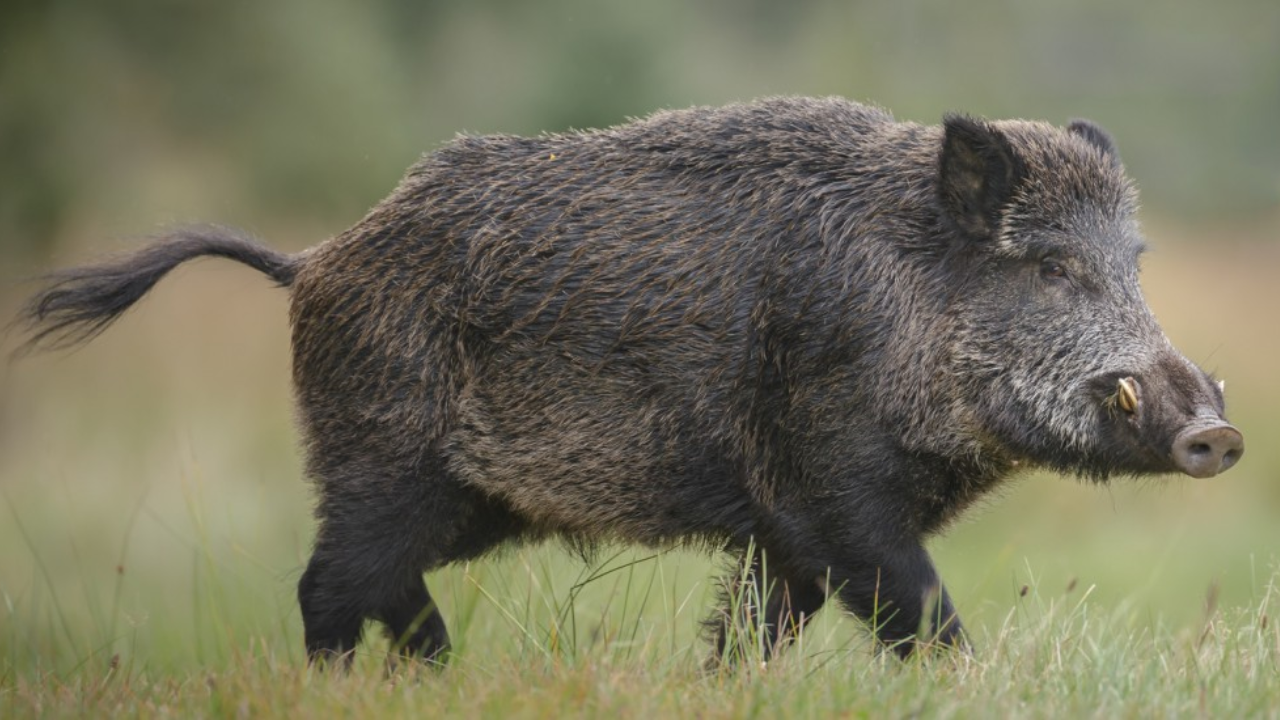
The American feral swine epidemic is a multibillion-dollar failure of containment, a biological wildfire sparked by the vanity of a single man. In 1912, George Gordon Moore, a businessman with a penchant for high-stakes recreation, imported 14 purebred Russian wild boars to a private hunting preserve on Hooper Bald in the North Carolina mountains. He sought an exotic challenge. He succeeded, though not in the way he intended. By the early 1920s, these animals had breached their enclosures, escaped into the rugged wilderness, and begun the process of transforming the Appalachian ecosystem into a permanent laboratory of destruction.
These are not just pigs. They are apex survivors, intelligent, aggressive, and prolific. A single sow can produce two litters of four to six piglets annually, meaning a small group can explode into an uncontrollable population within a few years. When these imported boars interbred with escaped domestic swine, they created a hybrid strain that combined the survival instincts of a wild beast with the reproductive capacity of a farm animal. The result is a creature that weighs up to 600 pounds, possesses no natural predators in the region, and treats the landscape as its personal pantry.
The math of this disaster is simple and sobering. Across the United States, invasive feral swine now cause an estimated $1.5 billion in damages each year. This is not just a nuisance. It is an economic hemorrhage. Agricultural sectors—including grain, livestock, and specialty crops—suffer more than $800 million of that total directly. The rest of the bill covers the endless, often futile, costs of containment, disease mitigation, and infrastructure repair. When a sounder of pigs descends on a field, they do not merely eat the crop. They root, turning pristine acreage into a churned, muddy wasteland that invites invasive weeds and soil erosion.
The crisis is exacerbated by a dangerous misconception: the belief that sport hunting acts as a viable population control measure. Decades of data prove otherwise. Amateur hunting typically focuses on the largest boars, leaving the reproductive sows and their young to continue breeding. Worse, the thrill of the hunt has historically encouraged people to illegally transport and release swine into new areas to establish fresh hunting grounds. Every time a new population is seeded, the cycle of environmental degradation begins anew.
The true frontline of this war is not the hunting stand. It is the sterile, methodical science of whole-sounder removal. Experts have identified that the only way to shrink the population is to remove every member of a social group simultaneously. This requires advanced corral trapping. By using specialized gates and sensors, agencies can capture an entire sounder in a single event. This is the only method that prevents the remaining survivors from learning to fear humans, a process that makes future eradication efforts infinitely more difficult.
For landowners, the reality is a constant, high-stakes battle against an animal that effectively monitors their movements. Pigs are biologically wired to exploit resources and move when threatened. If you use a pressure-based approach, like intermittent shooting, you are not managing the population. You are merely refining the survivors, turning them into nocturnal, trap-shy ghosts that will continue to wreak havoc under the cover of darkness.
Biosecurity remains the most overlooked aspect of this disaster. These animals are moving reservoirs of disease. They carry more than 30 bacterial and viral pathogens, along with a host of parasites that can be transmitted to livestock, domestic pets, and even humans. The threat of an outbreak, such as foot-and-mouth disease, poses a dormant but existential risk to the entire American meat industry. A single infected animal interacting with a commercial farm could trigger a catastrophic quarantine that would shutter markets and devastate local economies overnight.
Government task forces, such as the North Carolina Feral Swine Task Force, have shifted their focus to a more granular, integrated approach. They emphasize reporting, mapping, and technical support over the outdated concept of bounty hunting. The objective is to contain the spread, prevent further illegal releases, and treat the swine like the invasive pathogens they are. Success in this effort requires a level of coordination that transcends county lines and property fences.
If you are a landowner grappling with these animals, the first step is to stop treating them as a target for your weekend hobby. Start treating them as an architectural flaw in your land management strategy. Contact the local wildlife helpline, secure a proper trapping permit, and prioritize the removal of entire sounders. The goal is not to have a trophy; the goal is to prevent the next century of environmental decay.
The history of the North Carolina boars serves as a dark reminder of how quickly an environment can be permanently altered by human ego. What started as 14 animals for the entertainment of a few has metastasized into a permanent, destructive fixture of the landscape. Nature rarely forgets, and it never forgives a mistake of this scale. The pigs are here to stay, but the scope of their damage depends entirely on how quickly we abandon traditional ego-driven hunting in favor of cold, calculated eradication.