The Ghost of the Tanker Wars
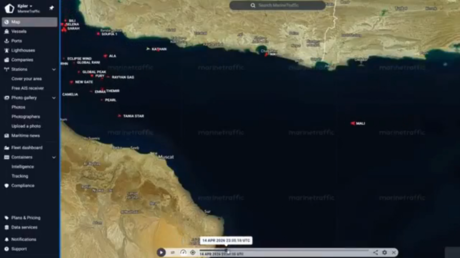
Thick, humid air clings to the skin of a merchant mariner standing on the deck of a VLCC—a Very Large Crude Carrier. He is drifting through the Strait of Hormuz, a narrow strip of water that looks insignificant on a map but carries the weight of the global economy on its back. To his left, the jagged coastline of Iran. To his right, the jagged coastline of Oman. Between them lies a shipping lane only two miles wide.
Everything you own, from the plastic in your keyboard to the fuel in your tank, likely has a connection to this twenty-one-mile-wide throat. When the throat constricts, the world chokes.
For decades, the threat was simple: Iran would shut it down. They would mine the waters, swarm tankers with fast boats, and turn the global energy market into a chaotic, burning wreck. But something shifted. The "Tanker War" of the 1980s, where hundreds of ships were attacked, felt like a distant, dusty memory until the geopolitical thermostat began to climb again.
Then came the unexpected pivot. Instead of a fist, there was a nod.
The Geography of Anxiety
In the high-rise trading floors of London and New York, "Hormuz" is a word that causes sweat. Traders watch the tickers with a bird-like intensity. When news broke that Iran would keep the Strait open, the reaction wasn't just a sigh of relief. It was a market-wide collapse of fear.
Oil prices didn't just drop. They cratered.
Consider the physics of a price floor built on anxiety. For years, a "risk premium" has been baked into every barrel of oil. You aren't just paying for the extraction, the refining, and the transport; you are paying for the possibility that a stray missile might turn a million barrels of crude into a maritime bonfire. When the President of the United States publicly thanks a long-standing adversary for keeping the gates open, that premium evaporates.
The numbers on the screen turn red. Tens of billions of dollars in valuation vanish in an afternoon. But for the person filling up their sedan at a gas station in suburban Ohio, that red screen is a victory. It’s the difference between a sixty-dollar fill-up and an eighty-dollar one.
A Hypothetical Walk Through the Supply Chain
Let’s look at Elias. He’s a fictional composite of a thousand independent truckers. Elias doesn't care about the intricacies of the Joint Comprehensive Plan of Action or the subtle diplomatic maneuvers between Washington and Tehran. He cares about the "deadhead" miles—the distance he drives with an empty trailer.
When oil prices are in a freefall, Elias’s overhead drops. The razor-thin margins of his small business suddenly have room to breathe. He can afford the new tires he’s been putting off. He can take an extra day off to see his daughter’s soccer game.
This is the human face of a geopolitical "freefall." We often talk about markets as if they are weather patterns—vast, impersonal, and unstoppable. They aren't. They are the sum total of millions of individual decisions influenced by the feeling of safety.
The Strait of Hormuz is the world's carotid artery. When the tension in that artery relaxes, the pulse of global commerce slows to a steady, healthy beat.
The Irony of the Open Gate
There is a profound irony in the way power is projected in the modern era. For years, the United States used its naval presence to ensure the "freedom of navigation." It was a posture of strength through confrontation.
Yet, the most significant movement in oil prices in recent history didn't come from a carrier strike group or a new set of sanctions. It came from a moment of public, almost jarring, gratitude. By thanking Iran for "opening" or keeping open the waterway, the administration flipped the script of the last forty years.
It was an admission of a shared interest that neither side likes to talk about. Iran needs to sell its oil to survive. The world needs that oil to move to keep prices stable. They are two men on opposite ends of a seesaw, both terrified of the ground.
When the threat of a blockade is removed, the "scarcity" of oil is revealed to be a myth. There is plenty of oil. There is just a shortage of stability.
The Invisible Stakes
Why does a photo of a tanker passing through a calm sea matter? Because that image represents the absence of a catastrophe. It is the dog that didn't bark.
We are addicted to the "event"—the explosion, the protest, the declaration of war. We are poorly equipped to process the "non-event"—the peaceful passage of a ship, the downward trend of a commodity graph, the quiet afternoon in a port.
But the non-event is where life happens.
If the Strait had closed, the ripples would have turned into a tsunami. It wouldn't just be "expensive gas." It would be a fertilizer shortage that leads to a crop failure in the Midwest. It would be a plastic shortage that delays the production of medical devices in Germany. It would be a systemic shock that tips a fragile economy into a dark, cold winter.
The "freefall" of oil prices is the sound of a bullet missing its mark.
The Long Memory of the Water
The water in the Strait is deep and dark. It has seen the shadow of British frigates, the wake of Soviet subs, and the constant, rhythmic churning of the world's merchant fleet. It is a place where a single mistake—a misunderstood radio transmission or a nervous finger on a trigger—can change the course of a century.
The current calm is not a permanent state. It is a fragile equilibrium.
The President's "thank you" was a calculated move in a high-stakes game of poker. It was a public acknowledgment that, for this moment, the gate is open. The tension has been bled out of the system. The tankers can move.
Elias, our trucker, pulls into a rest stop. He looks at the digital sign over the pumps. The price has dropped another four cents since his last stop. He doesn't know about the diplomatic cables or the specific maneuvers of the Fifth Fleet. He just knows that for the first time in months, the pressure in his chest is a little lighter.
The world moves on. The tankers continue their slow, heavy crawl through the heat haze of the Persian Gulf. They are the steel blood cells of a global body, and as long as the Strait remains open, the heart continues to beat.
The real story isn't the oil. It’s the peace that comes when we stop holding our breath.



