A single degree of rudder rotation in the middle of the night can change the price of your morning coffee three weeks from now.
Most of us don't think about the Strait of Hormuz when we wake up. We think about the commute, the weather, or the persistent hum of the refrigerator. But that refrigerator is powered by a grid that breathes because of a narrow, jagged strip of water tucked between the Persian Gulf and the Gulf of Oman. It is the world’s jugular vein. Twenty-one miles wide at its narrowest point, it carries one-fifth of the world’s total oil consumption and a massive portion of the liquefied natural gas that keeps Europe from freezing and Asia from grinding to a halt.
Now, imagine a captain standing on the bridge of a Very Large Crude Carrier (VLCC). Let’s call him Elias. Elias has spent thirty years at sea. He knows the smell of salt air and the way the steel vibrates under his feet. But lately, the vibration feels different. It feels like a target.
When a government—any government—starts talking about "coalitions" and "maritime security," they aren't just discussing ink on parchment. They are talking about Elias. They are talking about whether he can sail through those twenty-one miles without a drone swarm or a limpet mine turning his ship into a funeral pyre. The Trump administration’s push to build a new international coalition to reopen and protect this waterway is a desperate attempt to keep the world’s pulse steady.
The Geography of Anxiety
To understand the stakes, you have to look at the map. The Strait is a tactical nightmare. On one side, you have the rugged coastline of Iran; on the other, the Musandam Peninsula of Oman. Ships don't just wander through; they follow strictly defined shipping lanes.
If you’re a military strategist, this is a "chokepoint." If you’re a global economist, it’s a single point of failure. The administration’s pitch to allies is simple: we cannot patrol this alone, and we shouldn't have to. But the subtext is far more jagged. It is a request for partners to put their own "skin in the game" in one of the most volatile patches of water on Earth.
The tension isn't just about ships being seized. It’s about the "war risk" premiums. When insurance companies see a tanker on fire or a drone shot down, they don't just wring their hands. They raise their rates. Those costs don't stay at sea. They migrate. They crawl into the cost of plastic, the price of shipping a container from Shanghai to Long Beach, and the digits on the gas pump in a small town in Ohio.
The Ghost in the Machine
We often talk about "the market" as if it were a sentient god, but the market is really just a collective expression of human fear and greed. Right now, fear is winning.
The administration’s call for a "Sentry" program or a maritime coalition is designed to replace that fear with a visible show of force. The logic is grounded in the "Tanker War" of the 1980s, a brutal period where hundreds of merchant vessels were attacked. Back then, the U.S. began re-flagging Kuwaiti tankers and providing direct naval escorts. It was a massive, expensive, and dangerous undertaking.
But 1987 is not 2026. The tools of disruption have changed.
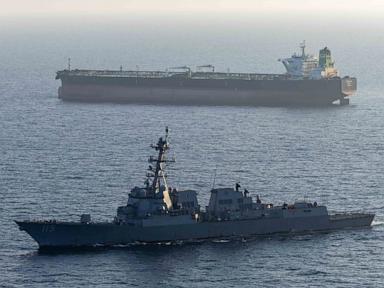
Today, a "closed" Strait doesn't necessarily mean a physical blockade of sunken ships. It means "gray zone" warfare. It means GPS jamming that makes a navigator think he’s in Omani waters when he’s actually drifting into Iranian territory. It means small, fast-attack craft that can swarm a vessel before a destroyer three miles away can even chamber a round.
Consider the hypothetical—but statistically likely—scenario of a mid-sized shipping firm based in Greece. They have three ships currently heading for the Strait. If the coalition fails to materialize, their insurers might simply refuse to cover the transit. The ships stop. They sit in the water, burning fuel, waiting for a signal that may never come. Multiply that by a hundred firms. That is how a global recession begins: not with a bang, but with a series of quiet phone calls from insurance brokers in London.
The Reluctant Allies
The pitch to join this coalition is a hard sell because it forces nations to choose sides in a regional cold war that shows no sign of thawing. For Japan or South Korea, the Strait is a lifeline. They get the vast majority of their energy from this single source. You would think they’d be the first to sign up.
But it’s never that simple.
Joining a U.S.-led military coalition is a provocative act. It signals a move away from diplomacy and toward confrontation. Many allies worry that by trying to "secure" the Strait, the coalition might actually provide the spark that sets it ablaze. It is a classic security dilemma: the actions you take to feel safer make your opponent feel more threatened, leading them to take actions that make you feel even less safe.
The administration argues that "freedom of navigation" is a universal right. It sounds noble. It is noble. But for a sailor like Elias, nobility is a distant second to the reality of a missile lock.
The Toll of Uncertainty
There is a psychological weight to this kind of geopolitical maneuvering. We see the headlines about "increased naval presence" and "diplomatic outreach," but we don't see the stress on the families of the merchant mariners. We don't see the frantic calculations of energy traders who are trying to guess if a single tweet or a stray mortar will wipe out their year’s margins.
The Strait of Hormuz is a mirror. It reflects the current state of global order. When the water is calm and the ships move freely, it means the world is in a state of tentative cooperation. When the talk turns to "coalitions" and "patrols," it means the mirror is cracking.
We are moving into an era where the old guarantees no longer hold. For decades, the U.S. Navy was the de facto guarantor of the world’s sea lanes. It was an invisible service, a gift of stability that allowed global trade to explode. That era of the "lone sheriff" is ending, either by choice or by necessity.
The Cost of the Guard
If the coalition is built, what does it look like? It’s not just more grey hulls on the horizon. It’s an integrated web of satellite surveillance, persistent drone patrols, and shared intelligence. It’s a technological shield.
But shields are heavy. They require constant maintenance. And they require a shared will that is increasingly hard to find in a fragmented world. The administration is asking for a commitment to a shared future, but many potential partners are still looking at the past, wondering if the cost of the guard is higher than the cost of the risk.
Meanwhile, the tankers keep moving. They move because they have to. The world’s hunger for energy doesn't pause for diplomatic negotiations.
Every night, Elias stands on his bridge, looking at the radar screen. He watches the little green blips that represent other ships, other lives, other stories. He knows that his safety depends on a complex web of decisions made in wood-paneled rooms thousands of miles away. He knows that his ship is a pawn in a game played with stakes so high they are almost incomprehensible.
The Strait is more than a waterway. It is a test of whether we can still work together to keep the lights on, or whether we are destined to retreat into our own corners, watching from a distance as the arteries of our civilization slowly constrict.
The tide is coming in, and the water is getting darker.



