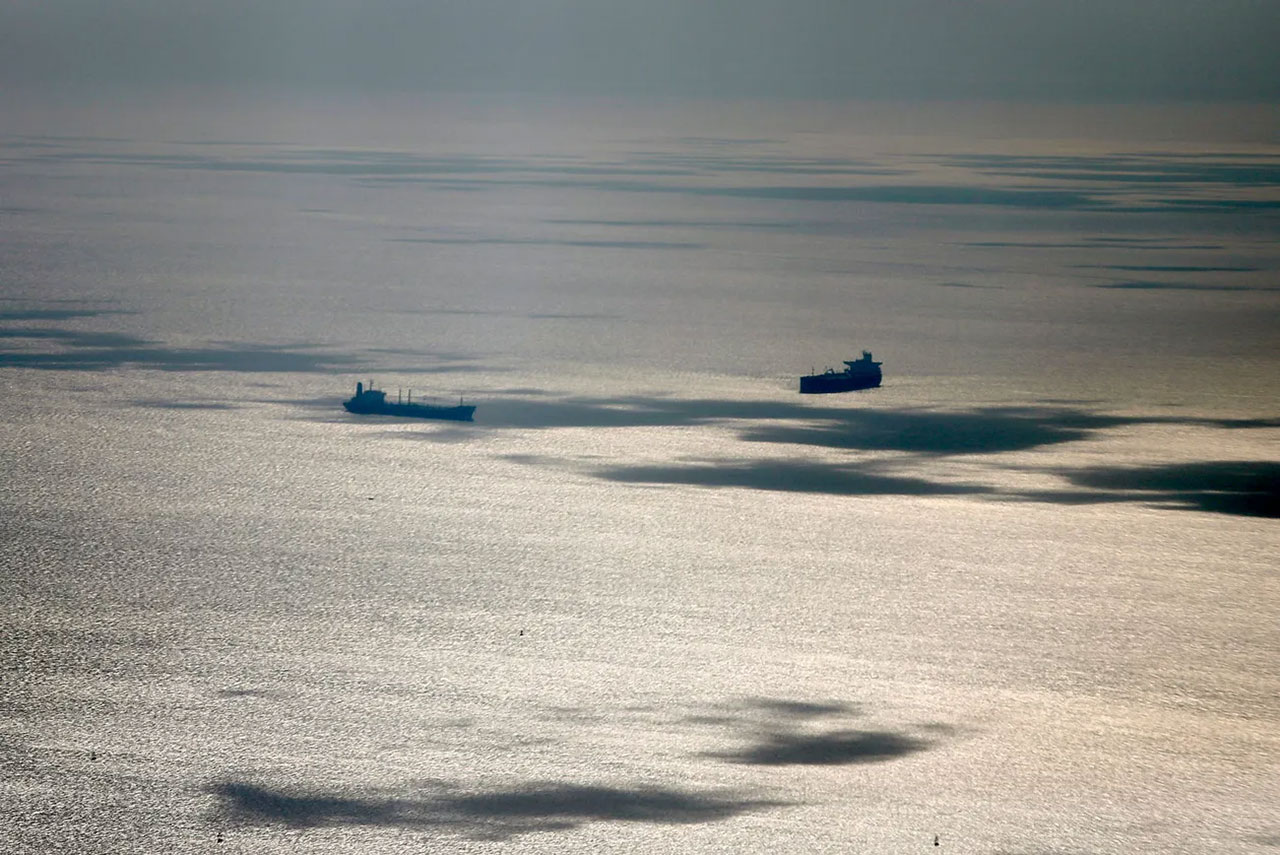
The steel hull of a semi-submersible is surprisingly thin. Inside, the air is a thick, humid soup of diesel fumes and human sweat. There are no windows. There is no GPS screen glowing with a friendly blue dot. Instead, four men sit in a space no larger than a walk-in closet, guided by a handheld compass and the rhythmic, terrifying thud of waves against a frame that was never meant to survive the open sea. They are the ghost pilots of the Pacific, and they are the reason why the most expensive border wall in history cannot stop a gram of cocaine from reaching a high school locker in Ohio.
Politics likes to speak in concrete. It speaks of walls, steel slats, and thermal imaging. It treats the flow of narcotics like a plumbing problem—if you just cap the pipe, the water stops. But the drug trade isn't water. It is a living, breathing organism with a survival instinct sharper than any policy memo. While Washington debated the budget for physical barriers along the southern border, the cartels shifted their gaze to the horizon. For a different view, check out: this related article.
They looked at the ocean. They looked at the sky. And they looked at the crushing reality of global logistics.
The Cat and Mouse of the Coastline
The logic of prohibition is simple: make the cost of doing business so high that the business dies. For decades, the United States has poured billions into the "Interdiction" strategy. This involves massive Coast Guard cutters, P-3 Orion surveillance planes, and high-tech radar arrays designed to spot the fast-moving "go-fast" boats that once dominated the Caribbean. Further reporting on this matter has been published by Reuters.
It worked. Or, rather, it worked well enough to force an evolution.
When the United States improved its radar tech, the cartels didn't quit. They went invisible. They began building "low-profile vessels" (LPVs). These aren't the sleek, cinematic speedboats of the 1980s. They are ugly, fiberglass coffins painted the exact color of a whitecap. They sit mere inches above the waterline, making them nearly impossible to detect with traditional radar, which often confuses the small protrusion of the cockpit with a stray wave or a cluster of sea foam.
Imagine trying to find a single grey needle in a moving, blue haystack that spans six million square miles. That is the task of the U.S. Coast Guard. Even with satellite intelligence, the sheer volume of maritime traffic provides a perfect camouflage. For every "narco-sub" captured, intelligence analysts estimate that three or four more slip through, dumping their cargo at pre-arranged coordinates off the coast of Central America or Mexico, where the "last mile" logistics take over.
The Innovation of Desperation
The most dangerous mistake a strategist can make is underestimating the enemy's intellect. We often view drug smugglers as thugs, but in the context of global trade, they are some of the most agile R&D departments on the planet. They have no shareholders to answer to and no regulatory hurdles to clear. Their only metric is successful delivery.
When the traditional routes through the Caribbean became too "hot" due to increased patrols, the cartels executed a massive pivot to the Eastern Pacific. This route is longer, more dangerous, and requires more sophisticated navigation. In response, they didn't just build better boats; they built better supply chains.
Consider the "floating warehouse" tactic. Instead of a single boat making a treacherous journey from Colombia to Mexico, cartels now use a relay system. Commercial fishing vessels—legitimate boats with registered transponders—carry fuel and supplies out into the deep ocean. They wait at specific GPS coordinates, acting as mid-sea gas stations for the smuggling craft. This allows the smaller, harder-to-detect LPVs to travel thousands of miles without ever needing to dock.
But the real genius—the terrifying, cold-blooded genius—lies in the "disposable" nature of the tech. These semi-submersibles are built in the heart of the jungle, constructed from cheap fiberglass and wood, powered by standard commercial truck engines. They are designed to be used exactly once. Once the cargo is offloaded, the crew pulls a plug, the boat sinks to the bottom of the ocean, and the evidence vanishes into the abyss.
The cost of the boat is a rounding error. The profit from the cargo is astronomical.
The Human Toll of the Invisible Route
We talk about the "war on drugs" as a clash of civilizations, but for the men inside those boats, it is a desperate gamble against physics. Most of the "pilots" are not high-ranking cartel members. They are impoverished fishermen from coastal villages in Ecuador or Colombia. Their boats have been seized, their fish stocks depleted, and their families are hungry.
A cartel recruiter offers them $10,000 for a single trip. In a village where the average yearly income is less than $2,000, that isn't a job offer. It’s a lottery ticket.
They climb into a vessel that is effectively a floating gas tank. If the engine fails, they drift until they starve. If the hull cracks, they drown in minutes. If the Coast Guard spots them, they are instructed to scuttle the ship immediately, regardless of whether they can swim.
This is the "human element" the news reports miss. The border isn't just a line on a map in the Texas dirt. It is a shifting, liquid frontier where the "wall" is actually a game of high-stakes hide-and-seek played across thousands of miles of salt water. When we tighten the grip on the land, the pressure simply moves to the water. When we patrol the water, the smugglers move further out to sea.
The Drone Revolution and the Next Frontier
If you think the narco-sub is the peak of this evolution, you aren't paying attention to the sky. The same consumer drone technology that allows a hobbyist to film a wedding is being weaponized for logistics.
In the last three years, there has been a quiet surge in the use of "unmanned aerial vehicles" (UAVs) for short-range smuggling. These aren't the giant Reapers used by the military. They are small, quiet, and capable of carrying several kilograms of high-purity product across a fence or a river in minutes. They are launched from the back of a truck, flown via FPV (first-person view) goggles, and landed in a backyard miles away.
They are nearly impossible to hit with traditional ballistics. They are too small for most radar. And even if you shoot one down, the "pilot" is five miles away, already unboxing a replacement drone he bought on the internet for $800.
This highlights the fundamental flaw in the "static defense" mindset. A wall is a 12th-century solution to a 21st-century problem. We are fighting an enemy that utilizes decentralized networks, encrypted messaging apps like Signal and WhatsApp, and additive manufacturing. They are agile. We are heavy.
The Mirage of Control
Why do we keep focusing on the physical border? Because it’s easy to film. A photo of a helicopter hovering over a seized boat makes for a great press release. It provides the illusion of "doing something."
But the data tells a different story. Despite record-breaking seizures, the price of cocaine and fentanyl on the streets of American cities remains remarkably stable. In many places, it is falling. In the world of economics, if supply was truly being choked off, the price would skyrocket. The fact that it hasn't means that for every boat we catch, the "Invisible Fleet" is simply sending two more.
We are caught in a War of Mirrors. We build a better sensor; they build a darker paint. We deploy a new cutter; they move 200 miles further into the Pacific. We increase patrols in the air; they dive beneath the surface.
The stakes are not just about the drugs themselves. The stakes are the billions of dollars in "dark money" that these successful shipments generate—money that fuels corruption in every government from the Andes to the Potomac. This capital allows the cartels to buy the same technology the U.S. military uses: encrypted comms, night vision, and even their own signal-jamming equipment.
The Sound of the Engine
If you stand on a beach in Southern California or the coast of Oaxaca at three in the morning, you probably won't see anything. The ocean is a vast, empty blackness. But if the wind is right, you might hear it. A low, muffled chug. The sound of a diesel engine struggling against the current.
That sound is the heartbeat of a multi-billion dollar industry that treats the Pacific Ocean like a private highway. It is a sound that mocks the idea of "border security" as a simple matter of fences and boots.
The men in that boat are terrified. They are breathing fumes. They are praying to saints for a calm sea. They represent the absolute bottom of a global food chain, the disposable parts of a machine that never stops turning.
The machine doesn't care about the wall. It doesn't care about the "tough talk" on the evening news. It only cares about the destination. And as long as the demand remains high and the ocean remains deep, the machine will find a way to get there. It will evolve. It will shrink. It will dive. It will fly.
The sea is wide. The night is long. And the hull is just thin enough to let the sound of the water remind you that, out here, the rules of men matter very little compared to the rules of the hunt.


