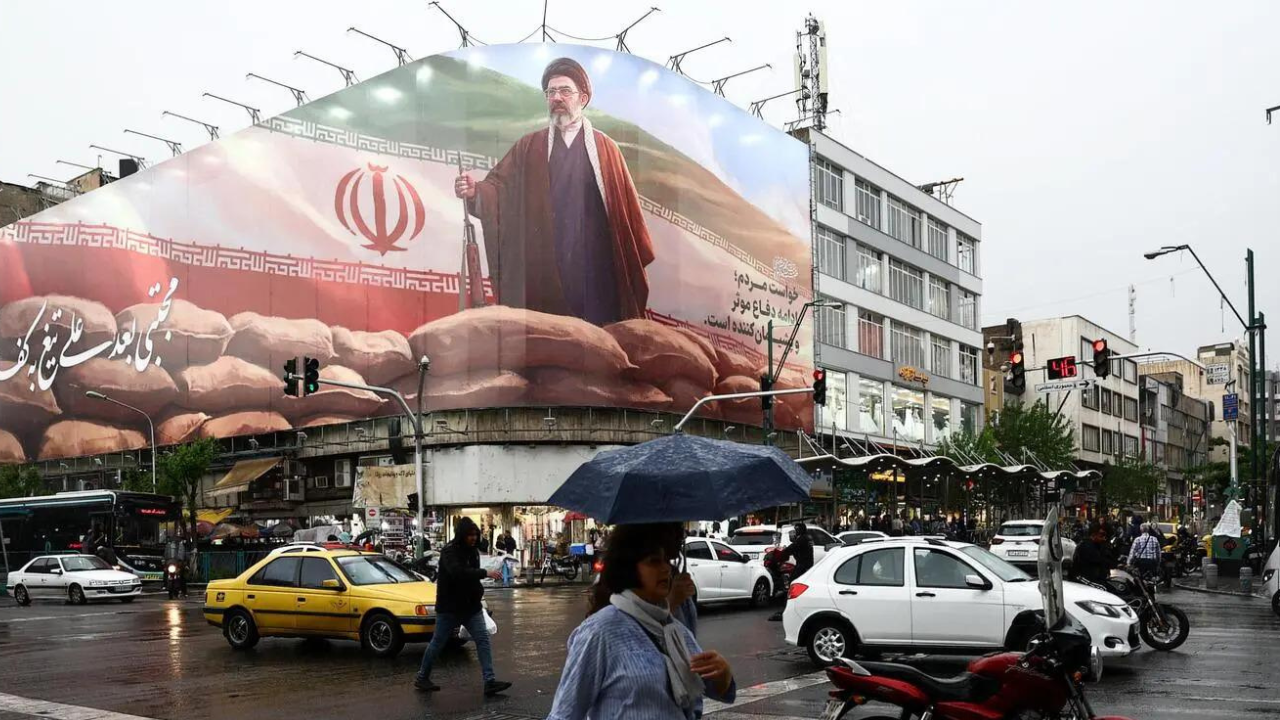
The seat of power in Tehran is currently occupied by a ghost. Since his elevation to Supreme Leader on March 9, 2026, following the assassination of his father, Mojtaba Khamenei has not been seen in the flesh. No televised addresses, no public prayers at the Imam Khomeini Musalla, and no grainy footage of him meeting with foreign dignitaries. For a regime that historically relies on the visible, stern authority of its patriarch, this vacuum of presence should be a terminal vulnerability. Yet, the Islamic Republic is not just surviving; it is adapting to a reality where the figurehead is an abstraction.
This strategic disappearance is the primary mechanism of regime continuity in a period of existential threat. By remaining invisible, Mojtaba Khamenei avoids the very real risk of a decapitation strike while allowing the surviving military and clerical apparatus to govern by proxy. The man has become a brand name for a collective leadership.
The Sanctity of the Bunker
Security is the most obvious catalyst for this withdrawal. The February 28 strike that killed Ali Khamenei proved that the "inner sanctum" in Tehran is no longer a sanctuary. For the new leader to walk into a public square would be a suicide mission. Intelligence circles suggest Mojtaba sustained injuries in that same strike, ranging from facial lacerations to a fractured foot. Whether he is convalescing or simply terrified is irrelevant to the state’s logic.
His absence creates a target problem for Western and Israeli planners. You cannot kill what you cannot find. By operating through a series of "improvised locations" and communicating via audio feeds or encrypted statements, the leadership has effectively decentralized its presence. The regime is betting that as long as the orders keep flowing—even if they are read by a news anchor rather than the Leader himself—the rank-and-file will remain in line.
Rule by Proxy and the Guard Corps
The true power shift is not from father to son, but from the pulpit to the barracks. With Mojtaba in hiding, the Islamic Revolutionary Guard Corps (IRGC) has stepped into the breach as the de facto executive. They are no longer just the praetorian guard; they are the architects of the state's daily survival.
The IRGC finds the "Invisible Leader" model highly convenient.
- Shielding from accountability: When unpopular decisions are made—like the use of live ammunition against protesters or the rejection of de-escalation proposals—they are attributed to the "Supreme Leader."
- Internal cohesion: The mystery surrounding Mojtaba prevents rival factions within the clergy from challenging his theological credentials. It is difficult to debate a man who isn't there to speak.
- Operational flexibility: Negotiation teams in places like Islamabad can claim their hands are tied by a leader they "cannot contact," using the communication lag as a stalling tactic.
This is a structural reconfiguration. The IRGC is increasingly organizing the system rather than just protecting it. They have spent decades building a "deep state" capable of functioning without a charismatic center. The current crisis has simply forced that deep state to become the only state.
The Theological Crisis of Hereditary Rule
Beneath the security concerns lies a profound legitimacy gap. The 1979 Revolution was built on the rejection of the Pahlavi monarchy. By installing Mojtaba, the Assembly of Experts has essentially returned Iran to a system of hereditary succession. This has not gone unnoticed by the Iranian public.
Chants of "Death to Mojtaba" have echoed from balconies in Tehran, not because of his policies—which remain largely unknown—but because of his last name. The Shia theological establishment is also fractured. Traditionalists argue that the Supreme Leader must be a Marja (a source of imitation), a level of scholarly prestige Mojtaba hasn't earned.
His absence from the public eye helps mask this lack of religious gravitas. If he were to give a sermon, his theological thinness would be on full display. In the shadows, he can remain a symbol of his father's legacy without having to prove he is his father's equal.
The Digital Mirage
State media has attempted to fill the void with technology, but the efforts have backfired. BBC Verify and other investigators have flagged AI-manipulated photographs and archival footage being presented as current. This "digital leader" strategy is a gamble. It keeps the image of the Leader in the living rooms of the loyalists, but it fuels cynicism among the youth.
The use of AI-generated content suggests a leadership that is either too physically damaged to be filmed or too paranoid to stay in one place long enough for a camera crew to set up. It reveals a regime that is technically proficient but narratively bankrupt.
The Command Breakdown
While the top-tier leadership projects a facade of "business as usual," the cracks are showing in the lower ranks. Western intelligence reports indicate that hundreds of IRGC and Basij personnel have deserted since the war intensified. Security checkpoints in major cities are increasingly manned by inexperienced volunteers because the veterans are avoiding their posts to escape potential strikes.
The lack of a visible commander-in-chief contributes to this erosion of morale. Soldiers generally don't want to die for a voice on a speaker. They want to see the face of the man leading the charge. The longer Mojtaba remains a ghost, the more the regime's muscle memory will start to fail.
The Islamic Republic is currently betting everything on the idea that the office is more important than the man. They are testing the limits of how long a revolutionary state can run on momentum and fear without a visible head. If the silence continues, the transition from a "Republic" to a military-clerical junta will be complete. The ghost in the bunker isn't just hiding from missiles; he is waiting to see if the machine his father built can finally run itself.
The survival of the regime depends on whether the Iranian people and the global community continue to respect the authority of a shadow.