Silence.
That is the first thing you notice when a true movie star walks into a crowded room, followed almost immediately by the sound of a hundred smartphones subtly tilting upward in unison, their lenses hungry for a fraction of a second of unscripted humanity. If you enjoyed this piece, you should look at: this related article.
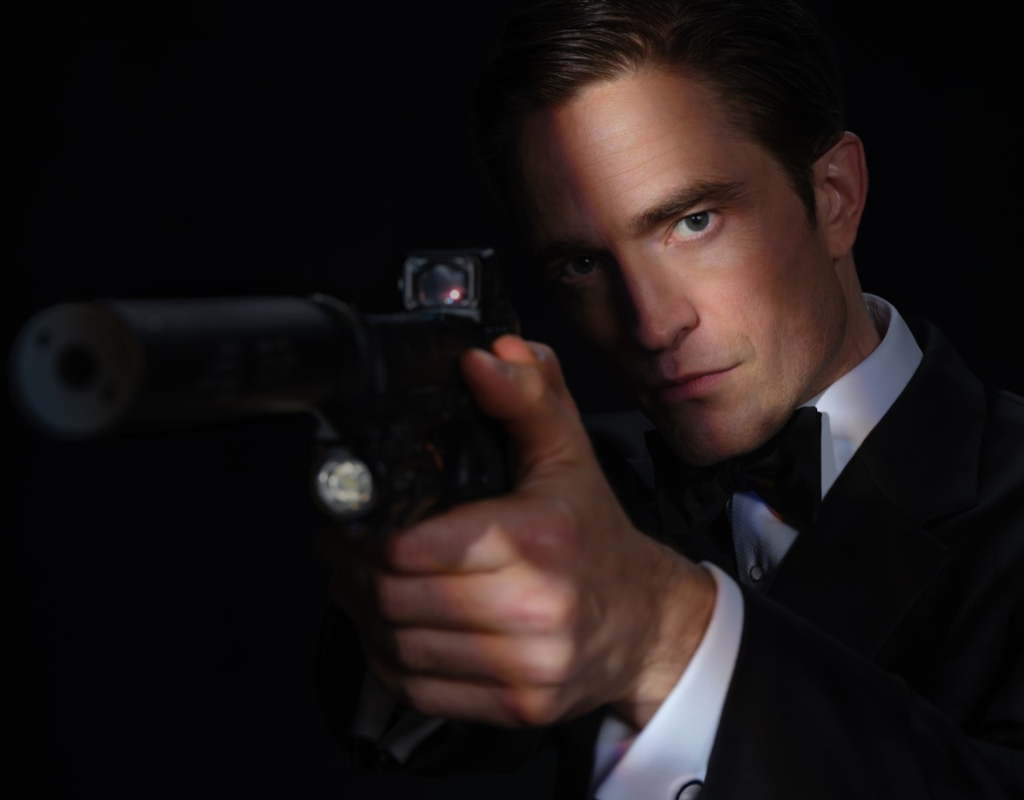
For years, the casting of the next James Bond has been treated like a royal coronation, a high-stakes parlor game played in pubs from London to Los Angeles where fans trade odds on jawline sharpness and tuxedo fit. We assumed the rules were simple. You find the best actor, you give him a Walther PPK, and you watch the box office numbers climb. Then came a quiet admission from the new custodian of the franchise, Jeff Bezos, that shattered the illusion of how modern stardom actually works. Robert Pattinson—the brooding, shapeshifting titan who survived Twilight to become one of cinema’s most daring chameleons—was passed over, or at least heavily complicated, not because he lacked the talent, the British passport, or the dark edge required for 007. He was too famous.
Let that sink in. For another angle on this development, see the recent update from Entertainment Weekly.
In an industry obsessed with metrics, algorithms, and pre-existing awareness, the single biggest threat to the world’s most famous fictional spy was an actor whose face is already burned into the global subconscious. When Bezos noted that Pattinson’s fame level was a genuine factor in the James Bond casting equation, he wasn't just dropping a piece of Hollywood trivia. He was exposing a silent, suffocating paradox at the heart of modern entertainment: the exact moment an actor becomes powerful enough to carry a billion-dollar franchise is often the exact moment they become too heavy to disappear inside it.
The Heavy Cost of Being Seen
To understand why a tech billionaire and a legacy studio would hesitate at the sight of a guaranteed box-office draw, you have to step out of the boardroom and into the dark of a movie theater.
Consider a hypothetical viewer—let’s call him Marcus—sitting in a velvet seat on a rainy Friday night in Manchester. Marcus has spent twelve bucks on a ticket and another twenty on stale popcorn because he wants to stop being Marcus for two hours and twenty minutes. He wants to be in a casino in Monte Carlo. He wants to feel the cold sweat on the back of a secret agent’s neck as a roulette wheel spins and a Russian operative reaches into a breast pocket.
Now, put an actor on that screen whose personal life, past roles, and meme-ified interviews occupy ten gigabytes of space in Marcus’s brain. When that actor orders a martini, Marcus doesn't hear James Bond. He hears Edward Cullen sparkling in the Pacific Northwest. He hears Bruce Wayne muttering in a rain-soaked Gotham alley. He remembers that bizarre, hilarious interview where the actor lied about inventing a microwave pasta dish just to see what would happen.
The spell breaks.
Fame, when it reaches the stratospheric altitude where Robert Pattinson currently resides, stops acting as a spotlight and starts acting as a brick wall. Every major franchise—from Harry Potter to The Batman—leaves a permanent watermark on a performer’s skin. For a character like Bond, who has survived six decades precisely because he is a blank canvas upon which every generation projects its own anxieties and desires, pre-existing baggage is poison. Sean Connery was a former milkman and bodybuilder before Dr. No. Daniel Craig was a respected, gritty character actor known mostly to British theatergoers and cinephiles when he walked out of the ocean in Casino Royale. Even Pierce Brosnan, famous from television’s Remington Steele, had never carried a global cinematic juggernaut on his back before stepping into the Aston Martin.
They were vessels. Pattinson is a monument.
Inside the Algorithm of Illusion
I remember sitting in a cramped screening room in Soho several years ago, watching an early cut of an independent thriller starring an actor who had just come off a massive superhero run. The performance was technically flawless. The lighting was moody, the dialogue sharp, the pacing tight. Yet ten minutes in, the room felt restless. Every time the actor furrowed his brow in despair, someone in the back row chuckled—not because the scene was funny, but because the expression was identical to the one plastered on cereal boxes and bus shelters three summers prior.
We talk about star power as if it is pure fuel, an infinite resource that guarantees success. In reality, it is closer to radiation. In small, controlled doses, it warms the room and illuminates the story. Beyond a certain threshold, it mutates everything it touches.
When Amazon acquired MGM in an $8.5 billion deal, bringing the Bond franchise under the umbrella of a company built on data, logistics, and customer obsession, industry watchers braced for a cold, mathematical approach to casting. We expected them to feed box-office receipts, social media engagement rates, and global Q-scores into a machine and spit out the most statistically bankable leading man on Earth. By every traditional metric, Robert Pattinson would have broken the scale. He possesses critical prestige from working with auteurs like Christopher Nolan, Bong Joon-ho, and the Safdie brothers, combined with the rabid, multi-generational fanbase of a mainstream icon.
Yet Bezos’s comment reveals a surprisingly human, almost old-fashioned understanding of theatrical magic. A spy cannot walk into a room if everyone already knows his name.
Think about what the job of James Bond actually requires. He is an assassin who must blend into high-society galas, dirty dockyards, and quiet alpine lodges without triggering an immediate alarm. The audience needs to believe that the villain across the baccarat table doesn't immediately recognize him as the guy who was just on the cover of GQ last Tuesday. When an actor’s fame precedes the character’s entrance, the suspension of disbelief—that fragile, invisible thread connecting the screen to the viewer’s imagination—snaps before the opening credits even finish rolling.
The Architecture of a Modern Myth
History shows us that the entertainment business has always wrestled with this tension, though rarely at the velocity we see today.
In 1939, producer David O. Selznick famously delayed production on Gone with the Wind because he knew casting an established mega-star like Bette Davis or Katharine Hepburn as Scarlett O'Hara would distract audiences from the story. He needed Vivien Leigh—talented, luminous, and largely unknown to American crowds—so that the character could breathe on her own. Decades later, George Lucas rejected big-name talent for Star Wars, opting for Mark Hamill, Harrison Ford, and Carrie Fisher precisely because he didn't want viewers thinking about their previous movies while watching a farm boy stare at twin suns.
Today, that challenge has multiplied exponentially. In the golden age of cinema, mystery was baked into the medium; you saw an actor once or twice a year in a dark room, and the rest of the time they vanished behind studio gates. Now, fame is an ambient noise that follows us into our beds. An actor’s every coffee run, red-carpet smirk, and red-eye flight is documented, dissected, and served back to us before breakfast.
For Robert Pattinson, this hyper-visibility has been both a shield and a cage. Since his early twenties, he has fought tooth and nail to dismantle his own celebrity, choosing bizarre, abrasive roles in films like Good Time and The Lighthouse specifically to scrub away the teen-idol sheen. He succeeded brilliantly. He earned the respect of the toughest critics in the world and proved he could disappear into grime, madness, and desperation.
Ironically, that very triumph made him too big for the tuxedo. By conquering both the arthouse and the multiplex—and then stepping into the boots of the Dark Knight—Pattinson became an institution unto himself. You do not hire Robert Pattinson to serve a brand. You hire him because he is the brand. And the Broccoli family, along with Amazon’s leadership, knows that James Bond only works when the number 007 is bigger than the name on the poster.
What Happens When the Mask Fits Too Tight
There is a quiet tragedy in this realization, though few in Hollywood would ever call it that. We spend our lives told that the goal of ambition is to become undeniable—to build a reputation so towering that every door swings open at your approach. Yet at the very summit of creative visibility, the air grows thin, and certain doors quietly lock from the inside.
Imagine being at the absolute peak of your craft, possessing the exact physical grace, wry humor, and coiled menace required to define an iconic role for the next fifteen years, only to be told that your own success has disqualified you. It is like an architect becoming so famous for designing cathedrals that no one will ever trust them to build a quiet, hidden cabin in the woods.
And what does this mean for the search that continues right now? If Pattinson’s fame level was a barrier, it draws a remarkably clear boundary around the kind of actor who will eventually inherit the Walther PPK. Look at the names that constantly swirl in the rumor mills—performers like Aaron Taylor-Johnson, Callum Turner, or Paul Mescal. They occupy a very specific sweet spot in the cultural ecosystem. They are proven, magnetic, and deeply respected within the industry, yet they still possess a vital buffer of anonymity. When they walk onto a soundstage, they do not bring a decade of franchise baggage with them. They bring blank space.
Still, I wonder if studios sometimes underestimate the audience’s capacity to forget. Great acting has a way of rewriting memory in real time. Heath Ledger was mocked as a romantic-comedy heartthrob before he painted his face white and made the world forget his real name within thirty seconds of appearing on screen. Michael Keaton was a comedic actor until he put on the cowl. Perhaps the fear of fame is really a fear of risk—a hesitation to bet hundreds of millions of dollars on the hope that a familiar face can still surprise us.
The Echo in the Empty Room
Strip away the corporate mergers, the multi-million-dollar contracts, and the endless speculation on social media, and the question of who plays James Bond comes down to a single, intimate transaction between two strangers in the dark.
One stranger stands on a screen, illuminated by twenty-four frames of light per second. The other sits in a chair, waiting to be fooled.
If the man on the screen is too famous, the trick fails. We see the seams of the suit. We see the publicist standing just off-camera. We see the bank balance, the tabloid headlines, and the ghosts of three other franchises crowding the frame until there is no room left for danger, no room for mystery, and no room for the thrill of not knowing what happens next.
Robert Pattinson will be fine; he has already escaped one gilded cage and turned his career into one of the most fascinating high-wire acts in modern cinema. He doesn't need a license to kill to prove his worth.
Meanwhile, somewhere in London, an actor whose name you barely know is likely sitting in a quiet audition room, reading a few lines of dialogue about a shaken martini, completely unburdened by the weight of the world knowing who he is—for just a little while longer.