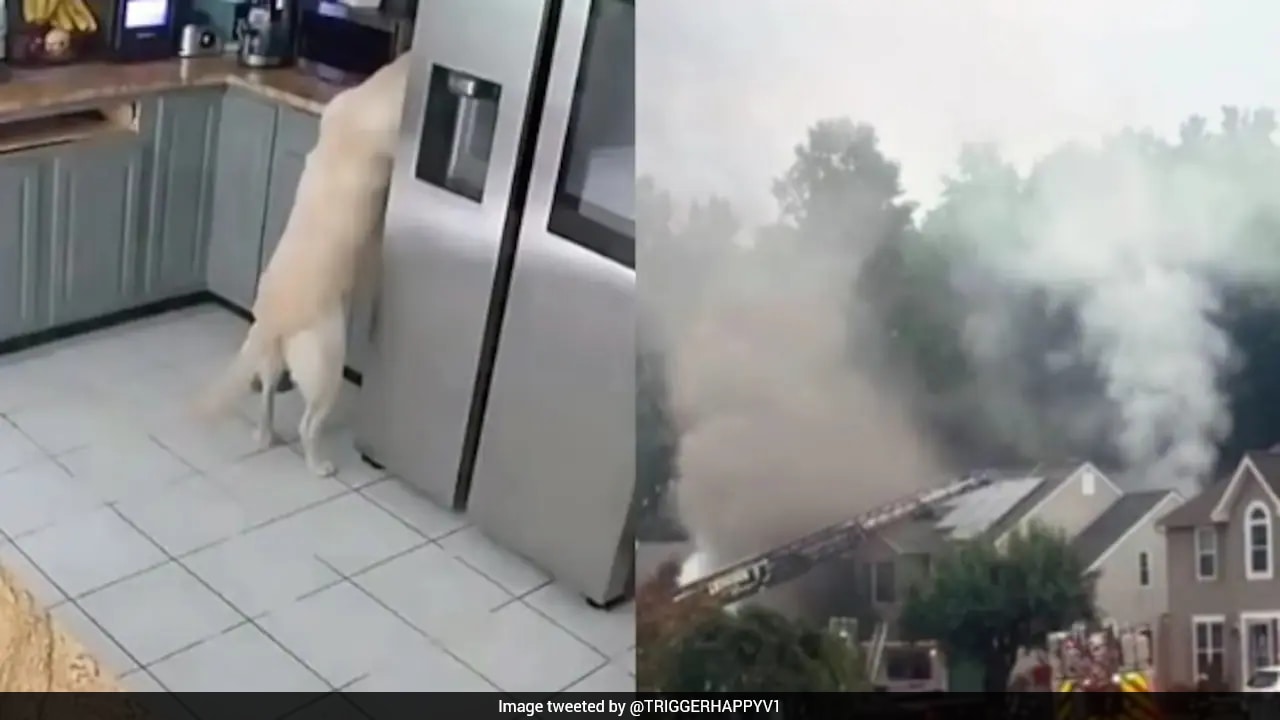
The kitchen was quiet, bathed in the soft, late-afternoon light of a warm Friday in July. On Foxglove Court in Belcamp, Maryland, the rhythm of a suburban neighborhood was winding down toward the weekend. Outside, lawns were freshly mowed, and cars sat in driveways. Inside one home, five family pets slept, waited, and occasionally wandered through the rooms, listening for the familiar sound of tires on gravel that signaled their humans were home.
They did not know that a silent countdown had already begun.
At 5:33 p.m., the home's security camera, a silent sentry mounted in the corner, captured a sequence of events so mundane it happens thousands of times a day in homes across the world. A dog named Bo, driven by curiosity, hunger, or perhaps just the sheer boredom of a long afternoon, stood up on his hind legs and hopped onto the kitchen counter.
Bo was looking for something. What he found was the lever of a toaster.
A single paw came down. A switch flipped. The heating elements inside the toaster began to glow, turning a deep, fiery orange. Under normal circumstances, this would mean a slice of bread turning golden brown. But there was no bread inside. Instead, close by on the counter sat everyday items—the kind of clutter that naturally accumulates in any active home. Within seconds, a corner of cardboard or a stray piece of plastic caught a spark.
A tiny wisp of smoke curled toward the ceiling. Then came the first flicker of yellow light.
The Speed of a Shadow
To understand a house fire is to understand that it is not a slow, creeping thing. It is an predator. It breathes, it grows, and it accelerates.
In less than three minutes, the small flame on the kitchen counter had fed on the oxygen and nearby materials, transforming into a thick, black column of smoke. The home’s smoke alarms began to shriek, their piercing, high-pitched wails filling the empty rooms. But there was no human hand to turn off the stove, throw a damp towel over the burner, or grab a fire extinguisher.
Only the pets remained.
For Dakota, another dog in the family, and the two resident cats, the sudden wall of heat and choking black smoke was terrifying and disorienting. Pets do not understand smoke inhalation. Their instinct is to hide—to seek refuge under beds, in closets, or behind furniture, hoping the danger will pass.
Outside, a neighbor noticed a strange, dark plume rising from the roofline. Almost simultaneously, the home's security monitoring company flagged an emergency and alerted dispatchers.
The neighborhood leaped into action. Knowing the family was out, neighbors rushed toward the house. Through a heroic, split-second effort, they managed to open a door and pull Bo—the very dog who had accidentally sparked the crisis—and another dog named Addie to safety.
But the smoke was too thick, the heat too intense, to go back inside.
Thirty firefighters from the Abingdon Fire Company arrived on the scene minutes later. They fought the blaze with aggressive, calculated precision, bringing the fire under control in roughly twenty minutes. But in the world of a house fire, twenty minutes is an eternity.
The damage was catastrophic. The physical loss was estimated at $200,000—$150,000 for the charred structure and another $50,000 for the ruined belongings inside.
But the true cost of the fire could not be measured in dollars.
While Bo and Addie survived, Dakota and the two cats did not make it out. They succumbed to the smoke. In a twist of quiet survival, the family's bearded dragon was rescued and rushed to critical care, hanging onto life after a grueling twenty-four hours of emergency treatment.
The Illusion of Safety
We tend to think of our homes as fortresses. We lock the doors, set the burglar alarms, and check the deadbolts. We buy smart cameras to watch our living rooms while we are away, convinced that visibility equates to control.
But the camera does not stop the fire. It only records the tragedy.
The footage from Belcamp, Maryland, is agonizing to watch because it reveals how incredibly fragile our safety margins are. A single, curious jump. A heavy paw. A misplaced toaster. This was not a case of neglect or malice; it was an accident of the most innocent kind, born from the natural behavior of a beloved family pet.
It is a scenario playing out with alarming frequency. Just weeks earlier, in June, a family dog in Connecticut jumped up to sniff the stove, nudging a control knob and igniting a burner that claimed the lives of multiple pets. According to the National Fire Protection Association, pets and wild animals are responsible for starting roughly 750 home fires every year.
The kitchen, the heart of the home, is also its most vulnerable point. We leave appliances plugged in because it is convenient. We keep paper towels, oven mitts, and wooden cutting boards on our counters because we use them daily.
But to a pet, a counter is just a high shelf waiting to be explored.
Redefining the Secure Home
This tragedy forces us to look at our living spaces differently. True home safety is not just about keeping the bad guys out; it is about protecting our homes from the accidents that happen within.
Consider the small, daily habits that could prevent a catastrophe:
- Unplug the Countertops: If an appliance is not actively being used—especially toasters, air fryers, and toaster ovens—unplug it. A dead appliance cannot be turned on by a stray paw.
- Guard the Knobs: Stove knob covers are inexpensive, simple plastic shields that prevent burners from being turned on accidentally by leaping pets or curious toddlers.
- Clear the Danger Zone: Keep a strict three-foot clear zone around all cooking surfaces. Never leave mail, cardboard boxes, or plastic bags on or near the stove and toaster.
- Monitored Alarms Save Lives: While the home on Foxglove Court suffered immense loss, the security company's swift notification prevented the fire from consuming the entire structure and threatening adjacent homes.
We live alongside creatures who do not understand our technology. They do not know that a metal box gets hot, or that a plastic bag can catch fire. They only know that we are gone, and they are waiting for us to come back.
The next time you walk out your front door, lock the deadbolt, and wave goodbye to the furry face watching you from the window, take one extra minute. Walk back into the kitchen. Look at the counters through their eyes. Unplug the toaster.
It is a tiny, silent action—but it is the difference between a quiet afternoon and a house that never feels like home again.