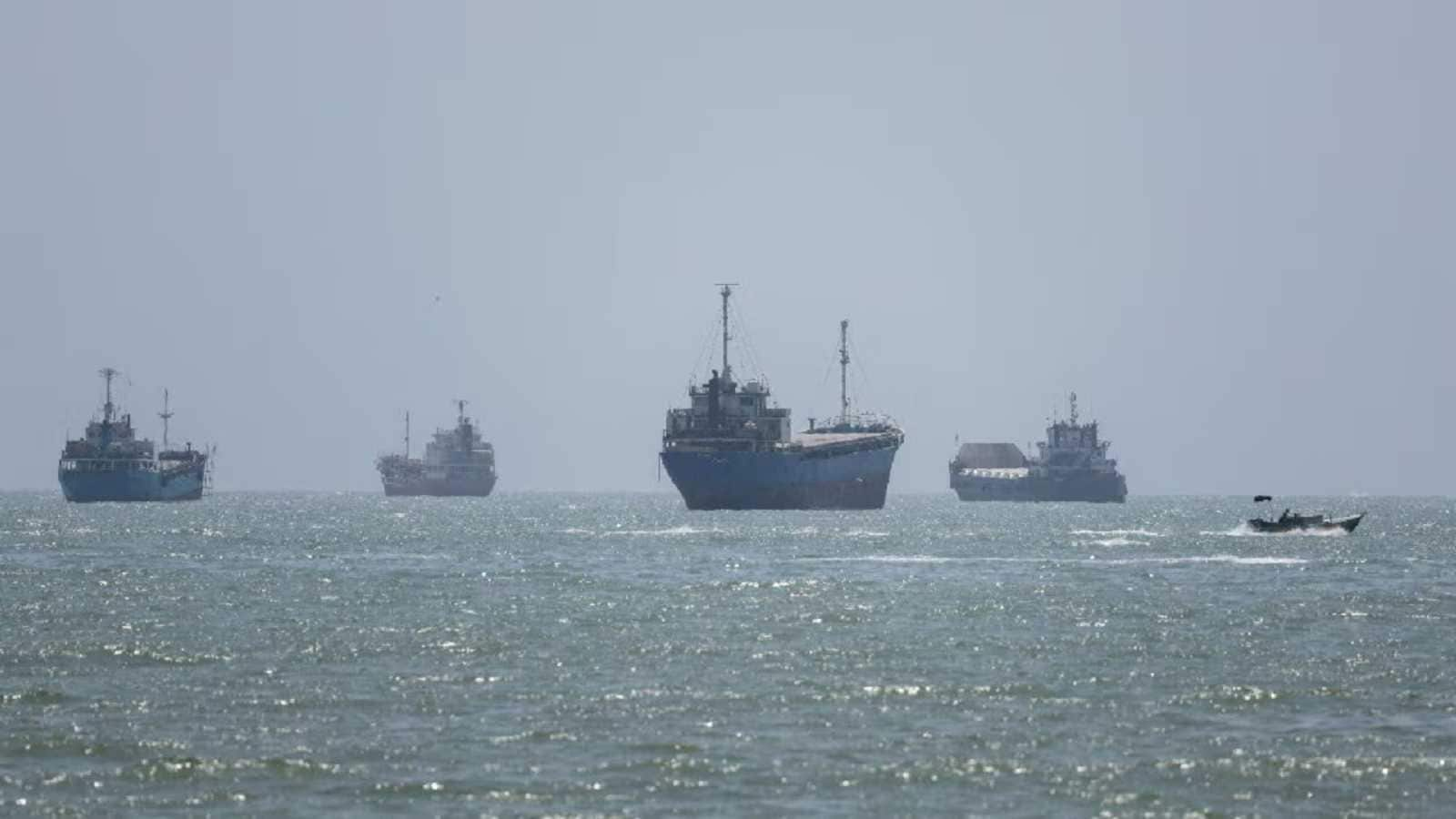
At 4:15 in the morning, before the neon signs of Gangnam have flickered off and before the first commuters descend into the Seoul Metro, a baker named Ji-hoon turns on his industrial ovens.
He does not think about naval destroyers. He does not check satellite telemetry of the Persian Gulf, nor does he lose sleep over the diplomatic tightrope walked by South Korea’s Ministry of National Defense. Ji-hoon thinks about yeast, flour, the price of electricity, and whether the delivery truck carrying his butter will arrive before the morning rush. Yet the heat radiating from his ovens, the diesel burning in that delivery truck, and the plastic wrapping around his croissants all share a single, terrifyingly fragile point of origin.
They begin in a twenty-one-mile-wide stretch of saltwater six thousand miles away.
When headlines announce that South Korea is deploying a military mission to keep the Strait of Hormuz open, the news usually lands with a dull, bureaucratic thud. We read about naval task forces, Cheonghae Unit deployments, anti-piracy mandates, and geopolitical posturing. It sounds distant. Abstract. Like a game of Risk played by men in gray suits using destroyers instead of plastic pieces.
That distance is an illusion.
If you want to understand why Seoul sends warships into one of the most volatile chokepoints on earth, forget the maps in war rooms for a moment. Look instead at your kitchen table, your smartphone battery, and the fluorescent lights humming above your desk.
The Anatomy of a Chokepoint
To appreciate the sheer vulnerability of modern civilization, picture a human heart. Now imagine the aorta—the main artery carrying oxygenated blood from the heart to the rest of the body—narrowed to the width of a drinking straw, running directly through a neighborhood where rival factions are tossing matches near open cans of gasoline.
That is the Strait of Hormuz.
Geographically, it is a curve of water wedged between Oman and Iran, linking the Persian Gulf with the Gulf of Oman and the Arabian Sea. At its narrowest point, the shipping lanes are just two miles wide in either direction, separated by a two-mile buffer zone. Through this slender aquatic corridor passes roughly one-fifth of the world’s total petroleum consumption and a massive share of its liquefied natural gas.
For South Korea, the numbers are not merely significant; they are existential.
South Korea is an economic miracle built on a geological void. It possesses virtually no domestic oil or natural gas reserves of its own. Every drop of crude that powers its petrochemical plants, every cubic meter of gas that heats its apartments through brutal winters, and much of the energy required to forge its steel and etch its semiconductors must arrive by sea. Over seventy percent of South Korea’s imported crude oil transits through the Strait of Hormuz.
Pause and let that number sink in. Seventy percent.
I remember sitting in a cramped maritime logistics office in Busan a few years ago during a spike in regional Gulf tensions. The air smelled of stale coffee and wet wool. On the wall hung a digital map showing dozens of tiny green triangles—Very Large Crude Carriers, each nearly the length of the Empire State Building, creeping across the Arabian Sea at twelve knots. A senior shipping coordinator pointed at a cluster of triangles bottlenecked near Fujairah. "If those stop moving for three weeks," he told me quietly, "the lights in Ulsan don't just dim. The entire industrial engine of this country seizes up like a car without oil."
He wasn't exaggerating. A prolonged closure of the Strait would not mean slightly higher prices at the pump. It would mean rolling blackouts, halted assembly lines, grounded cargo planes, and a cascading collapse across global supply chains that rely on South Korean memory chips, ships, and batteries.
Ghosts in the Water
Why does a twenty-one-mile strait require naval escorts in the first place? Because water, unlike land, cannot be fenced, and modern naval warfare no longer requires a fleet of battleships to bring global commerce to its knees.
Consider what happens when an asymmetric threat emerges in narrow waters. A single limpet mine attached to a hull beneath the waterline. A swarm of explosive-laden unmanned surface vessels skimming the waves at dusk. A seized commercial tanker diverted into territorial waters under the threat of heavy artillery.
In recent years, the waters around the Persian Gulf and the Gulf of Oman have ceased to be predictable highways of global trade. Tankers have been mysteriously damaged, commercial vessels boarded by armed commandos, and international crews held in limbo while diplomats argue over maritime law. Each incident sends an immediate shockwave through Lloyd’s of London, where war-risk insurance premiums for vessels entering the Gulf can skyrocket overnight by hundreds of thousands of dollars per voyage.
When insurance becomes too expensive, captains drop anchor. When captains drop anchor, refineries run dry.
This is the invisible crisis that forces a nation’s hand. South Korea’s decision to deploy military assets—typically leveraging the seasoned sailors and destroyers of its anti-piracy Cheonghae Unit, originally stationed off the coast of Somalia—is rarely born of a desire for military adventurism. Quite the opposite. For decades, Seoul has practiced a cautious, calibrated diplomacy in the Middle East, striving to maintain working economic ties with Iran while upholding its ironclad alliance with the United States.
Sending warships into the shadow of the Strait of Hormuz is what happens when diplomatic neutrality collides with physical necessity. It is the realization that goodwill does not escort a 300,000-ton supertanker through contested waters.
Life Aboard the Steel Wall
To understand the human reality of such a mission, step onto the deck of a KDX-II destroyer cutting through the humid, salt-crusted air of the Gulf of Oman.
Let us follow a hypothetical junior radar operator—we will call him Lieutenant Park—standing watch during the graveyard shift. Out here, the sea is not the postcard blue of vacation brochures; under the sodium lights of the superstructure, it is an oily, shifting black. The heat at midnight still clings to the skin like a wet blanket, carrying the faint, metallic tang of distant refineries and diesel exhaust.
Park’s world has shrunk to the green glow of a radar console and the steady, rhythmic thrum of gas turbines vibrating through the soles of his boots. His job is deceptively simple and overwhelmingly stressful: distinguish the benign from the lethal in one of the busiest maritime corridors on earth.
On his screen, hundreds of blips crowd the water. There are wooden dhows smuggling textiles, fishing trawlers dragging nets, massive container ships bound for Rotterdam, and slow, heavy tankers flying the South Korean flag. Mixed among them are fast-attack craft hugging the coastline, their transponders switched off, darting in and out of radar clutter.
"It is like trying to spot a pickpocket in a packed subway station while blindfolded, using only a stethoscope," a former naval officer once explained to me when describing Gulf patrols. You cannot shoot at every fast-moving boat; one mistake could spark an international incident or kill innocent fishermen. Yet if you hesitate for thirty seconds when a hostile craft closes distance, a multi-million-dollar merchant vessel—and the twenty-five civilian sailors aboard her—could be lost.
Behind the cold geopolitical headlines of "maritime security operations" are three hundred young sailors eating rationed kimchi in cramped mess halls, running endless damage-control drills in 110-degree engine rooms, and staring through binoculars until their eyes burn, all so that a tanker they will never board can safely deliver its cargo to a port they won't see for six months.
The Illusion of Isolation
There is a comforting myth many of us tell ourselves when we read foreign policy news: that regional conflicts stay regional. We assume that trouble in the Middle East stays in the Middle East, that tensions in East Asia remain neatly boxed inside the Pacific, and that our daily routines are insulated by oceans and treaties.
The global economy dismantled that myth decades ago, though we rarely notice until a gear slips.
Think about the phone resting beside you right now. The lithium-ion battery inside it likely contains cathode materials refined in South Korea. The DRAM memory chip allowing you to scroll through this article was almost certainly fabricated in a cleanroom in Hwaseong or Icheon. The container ship that carried your furniture across the ocean may well have been welded together in a shipyard on Geoje Island.
None of those industries can function without uninterrupted energy flows through the Strait of Hormuz.
When South Korea deploys a naval mission to safeguard freedom of navigation in the Gulf, it is not merely protecting Korean flags or Korean wallets. It is acting as an emergency stabiliser for a global supply chain that connects a refinery in Ras Tanura to a factory in Suwon, and from there to a retail shelf in Chicago, London, or Sydney.
Yet this deployment also carries profound risks, and pretending otherwise would be dishonest. Placing uniformed personnel in a contested waterway raises the stakes immediately. A miscalculation on the water can pull a reluctant nation directly into someone else’s conflict. Furthermore, heavy naval patrols are a bandage, not a cure. Warships can deter piracy and escort convoys, but they cannot permanently rewrite geography, nor can they eliminate the deep-seated regional rivalries that make the Strait of Hormuz so combustible in the first place.
That uncertainty is precisely why policymakers in Seoul agonize over every operational detail—whether to operate independently alongside international coalitions or integrate directly into command structures, how closely to approach Iranian waters, and how to signal defensive intent without provoking escalation. Every nautical mile matters. Every radio transmission is weighed like gold.
What Happens When the System Holds
The strange irony of successful deterrence is that when it works, nothing happens.
No dramatic footage airs on the evening news. No fiery explosions light up social media feeds. Instead, a rust-streaked supertanker glides quietly past the jagged cliffs of the Musandam Peninsula, escorted by a gray silhouette half a mile off her port bow. Radio frequencies crackle with routine maritime checks. Days later, that tanker slips into the harbor at Ulsan, hooks up to towering steel manifolds, and pumps millions of barrels of crude into storage tanks.
In Seoul, the clock ticks past 4:15 in the morning.
Ji-hoon flips the heavy iron switches on his bakery ovens. The heating elements glow orange. Outside, the delivery truck rumbles to a stop at the curb, its diesel engine idling smoothly in the cool dawn air while the driver unloads crates of butter and milk. Down the street, the first subway train slides into the station right on schedule, carrying nurses, engineers, students, and clerks toward another ordinary day.
None of them will ever know the names of the sailors standing watch in the dark waters six thousand miles away. They will never hear the hum of the destroyer's turbines or see the green blips crowding a radar screen off the coast of Oman. They will simply breathe in the warm smell of baking bread, step onto the train, and go to work—completely unaware of the thin gray line holding the world together.