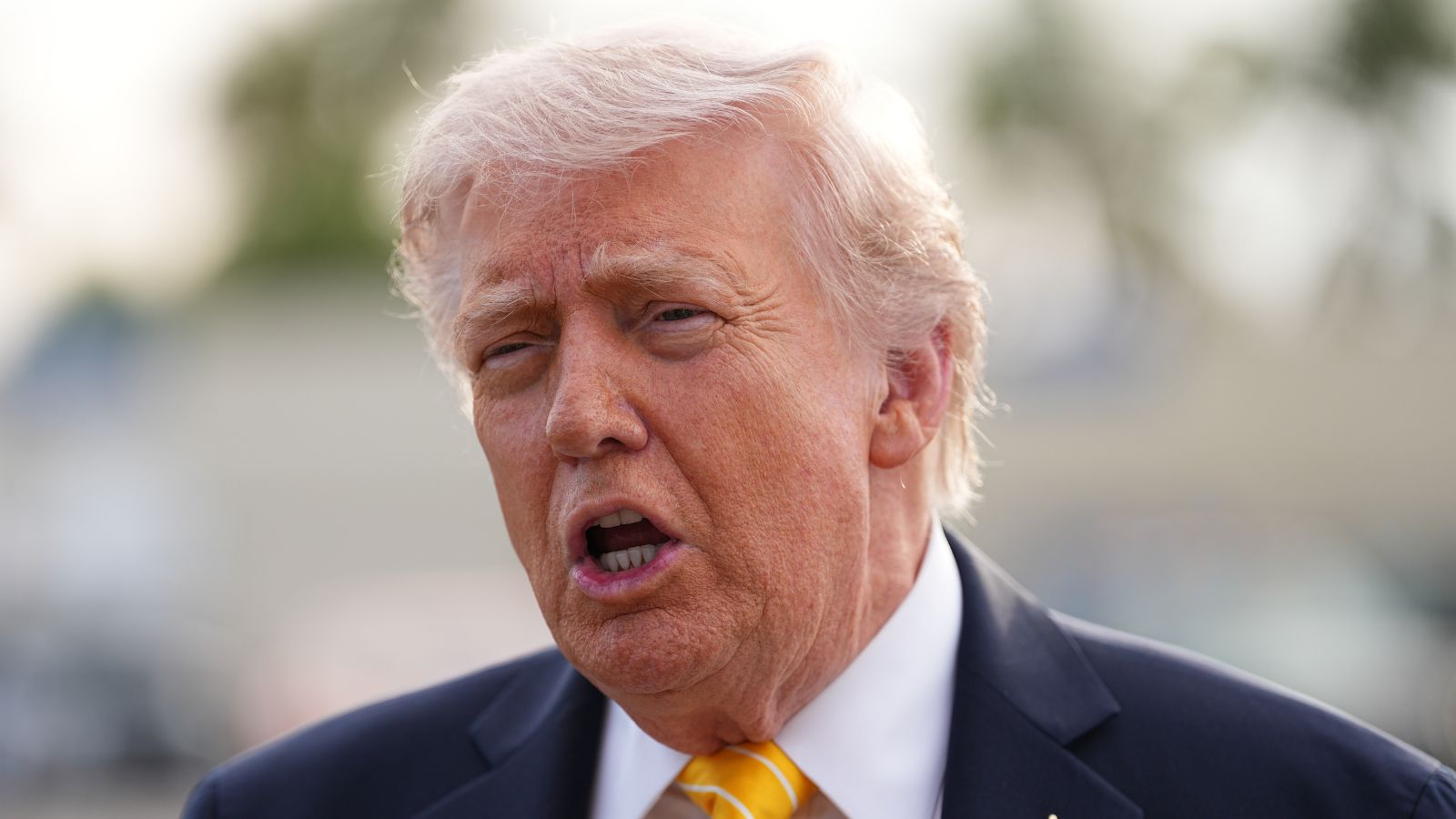
The headlines are predictable. They are lazy. They are designed to sell a specific brand of fear that hasn’t evolved since 1979. When Donald Trump or any other high-ranking political figure issues a "stark warning" about the possibility of direct military strikes on Iran if they "misbehave," the media treats it as a prelude to a decisive kinetic event. They paint a picture of a world on the brink, where a single button press flattens Tehran and solves the Middle East’s most enduring headache.
It’s a fantasy.
The consensus view—that the U.S. is itching for a direct confrontation to "reset" the region—misses the cold, hard reality of global energy markets and the logistical nightmare of modern asymmetric warfare. We aren't looking at a binary choice between "peace" and "war." We are looking at a permanent, managed state of tension that suits every major player except the people actually living in the crosshairs.
The Sovereignty of the Strait
The most common misconception is that a direct strike on Iranian nuclear or military infrastructure is a surgical procedure. It isn't. It’s an amputation performed with a chainsaw in a dark room.
The moment a Tomahawk missile touches Iranian soil, the global economy enters a cardiac arrest. The Strait of Hormuz is not just a geographic choke point; it is the jugular vein of the modern world. Roughly 20% of the world’s total oil consumption passes through that narrow strip of water.
Critics argue that the U.S. is now energy independent and could weather the storm. That is a fundamental misunderstanding of how global commodity pricing works. Oil is a fungible global asset. If supply drops in the Persian Gulf, prices skyrocket in Peoria. I have sat in rooms with energy analysts who have run the simulations: a total closure of the Strait for even thirty days sends Brent crude north of $200 a barrel.
Washington isn't afraid of the Iranian military. They are afraid of $7-a-gallon gas during an election cycle. The "stark warning" is the bark of a dog that knows its leash is bolted to the floor.
The Myth of the Surgical Strike
The media loves the term "surgical strike." It implies precision, minimal collateral damage, and a clear "mission accomplished" moment. In the context of Iran, the term is a lie.
Iran has spent three decades hardening its infrastructure. They aren't building sheds in the desert; they are boring into mountains. To actually "neutralize" the threat, you aren't looking at a weekend of bombing runs. You are looking at a sustained campaign that would require the kind of naval and air presence the U.S. currently lacks the appetite—or the budget—to maintain indefinitely.
The Asymmetric Trap
- Swarm Tactics: Iran’s navy doesn't try to match the U.S. Fifth Fleet ship-for-ship. They use hundreds of fast-attack craft. It’s death by a thousand cuts.
- Proxy Depth: You don't just fight Iran. You fight the network. A strike on Tehran triggers a coordinated response from Lebanon to Yemen to Iraq.
- The Cyber Front: This is where the "misbehave" rhetoric falls apart. Iran’s offensive cyber capabilities are top-tier. A kinetic strike would likely be met with the systematic dismantling of Western financial or power grids.
Why "Misbehavior" is the Goal
The status quo is actually quite profitable for the defense-industrial complex and the political elite. If Iran were to "behave"—meaning they fully integrated into the global community, stopped their enrichment programs, and ceased proxy support—the entire justification for massive arms sales to Gulf allies would evaporate.
We don't want a resolution. We want a boogeyman.
The rhetoric of "direct military strikes" serves as a pressure valve. It satisfies the domestic base that wants to look "strong," and it keeps the regional arms race at a fever pitch. If you look at the balance sheets of major defense contractors, stability is a risk factor. Managed volatility is the gold standard.
The Nuclear Paradox
The "People Also Ask" sections of the internet are obsessed with one question: When will Iran get the bomb?
Here is the brutal truth: Iran is already a threshold state. They have the knowledge, the material, and the delivery systems. The "warning" about military strikes is meant to prevent them from crossing the final one percent of the finish line, but the other 99 percent is already baked into the geopolitical cake.
Military strikes against a threshold state often have the opposite of the intended effect. It provides the ultimate moral and security justification for that state to go fully nuclear as a survival mechanism. We saw it with North Korea. Every time the rhetoric heated up, Pyongyang dug deeper.
The Logic of the Stalemate
If you want to understand the reality of the situation, stop listening to the televised warnings and start watching the movement of insurance premiums for commercial shipping. That is the only honest metric in the Middle East.
The "stark warning" is a performance. It is a tool of deterrence that relies entirely on the other side believing you are crazy enough to ruin your own economy to make a point. But the Iranians are sophisticated players. They know that the U.S. is currently overextended, weary of "forever wars," and hyper-focused on the Pacific theater.
They know the "possibility" of direct strikes is a low-probability event masquerading as an imminent threat.
The Unconventional Reality
The real threat isn't a direct strike. It’s the slow-motion decoupling of the Middle East from Western influence. While we are busy issuing warnings, Iran is busy joining the BRICS+ framework and strengthening ties with Beijing.
We are threatening them with a 1990s solution to a 2026 problem.
A kinetic strike would be the greatest gift the West could give to the emerging multipolar world. It would provide the perfect excuse for China and Russia to accelerate the creation of an alternative financial system that bypasses the dollar entirely.
If you think the "possibility of direct military strikes" is the lead story, you're reading the wrong book. The real story is the irrelevance of the threat itself. The U.S. is holding a royal flush in a game that everyone else has stopped playing.
The next time a politician tells you they are ready to strike, don't look at the bombers. Look at the price of oil, the strength of the dollar, and the total lack of a plan for the day after.
The "warning" isn't for Iran. It’s for us. It’s a sedative to make us feel like we still control a region that moved on years ago.
Stop waiting for the explosion. The collapse of Western hegemony in the Persian Gulf won't happen with a bang. It's happening right now, muffled by the sound of empty threats and the rustle of petrodollars moving East.