Tehran just drew a direct line from the Middle East conflict straight to Gloucestershire. When the Islamic Revolutionary Guard Corps declared that RAF Fairford is now a valid target for its military forces, it wasn't just standard geopolitical posturing. It explicitly put the UK in the crosshairs of a rapidly expanding war.
The threat is simple. Iran claims the US Air Force launched B-1 Lancer heavy bombing missions against its territory from British soil. Because of that, Tehran says those bases are fair game.
The British government quickly issued a boilerplate response about being ready 24/7 to protect the country with a layered air and missile defense system. But behind the brave public front lies a massive political and military headache for the newly minted Prime Minister, Andy Burnham.
Here is what is actually happening behind the headlines, why the threat isn't empty, and what it means for UK security.
The Gloucestershire Connection and the Logistics of Heavy Bombers
Most people think of modern wars as distant events managed by drones and naval fleets. But heavy strategic bombing requires serious infrastructure. The IRGC claims the US resorted to using B-1 bombers flying out of the UK because American warships in the Indian Ocean ran low on cruise missiles after consecutive nights of airstrikes.
Enter RAF Fairford. It is a vital forward operating location for US strategic bombers. The base features long runways capable of handling massive, heavily laden aircraft like B-1 Lancers and B-52 Stratofortresses. It lets the US project devastating airpower without relying exclusively on regional Gulf allies, who are increasingly terrified of Iranian retaliation.
But this convenience has a steep price. By hosting these operations, the UK essentially becomes a co-belligerent in the eyes of Iranian military planners. The IRGC explicitly stated that any facility used to prepare or facilitate attacks against Iran is a legitimate target.
Can Iran Actually Strike the UK Mainland
Let's look at the actual military math. RAF Fairford sits roughly 2,800 miles away from Tehran. Iran does not possess conventional ballistic missiles or suicide drones with the verified operational range to reliably hit the UK mainland from home soil.
But thinking the UK is safe because of distance is a massive mistake.
Iran has already proven it can hit British assets further afield. Back in March, an Iranian Shahed drone struck a hangar at the RAF Akrotiri base in Cyprus. Around the same time, Tehran fired two ballistic missiles at Diego Garcia, the joint US-UK naval facility in the Indian Ocean. One failed, but the other required interception by defensive systems.
Then there is the threat of asymmetric warfare. You don't need a multi-million dollar ballistic missile to disrupt a military base. Proxy networks, covert sabotage teams, or commercial drones modified for attacks present a nightmare scenario for British security services inside the UK.
The Tightrope of the New Prime Minister
This escalation drops a massive crisis right onto the desk of Andy Burnham. Just last week, the new Prime Minister was briefed on and signed off on extending the existing agreement that lets the US launch operations from British bases.
The official UK position attempts to draw a very fine legal line. The government claims it permits the US to use these bases strictly for defensive operations—specifically to degrade missile sites used by regional forces to attack commercial shipping in the Strait of Hormuz. The UK insists it refuses to assist in offensive strikes directly targeting Iranian territory.
Good luck explaining that legal nuance to the IRGC. To Tehran, a B-1 bomber taking off from England to hit targets associated with its military structure is an act of war, period.
Burnham wanted to reset the transatlantic partnership after relations between Washington and the previous government grew strained over the management of the conflict. By doubling down on the base sharing agreement, he chose solidarity with Washington. Now, he has to deal with the immediate fallout, including the total withdrawal of British diplomatic staff from Tehran due to deteriorating safety conditions.
What Happens Next for UK Security
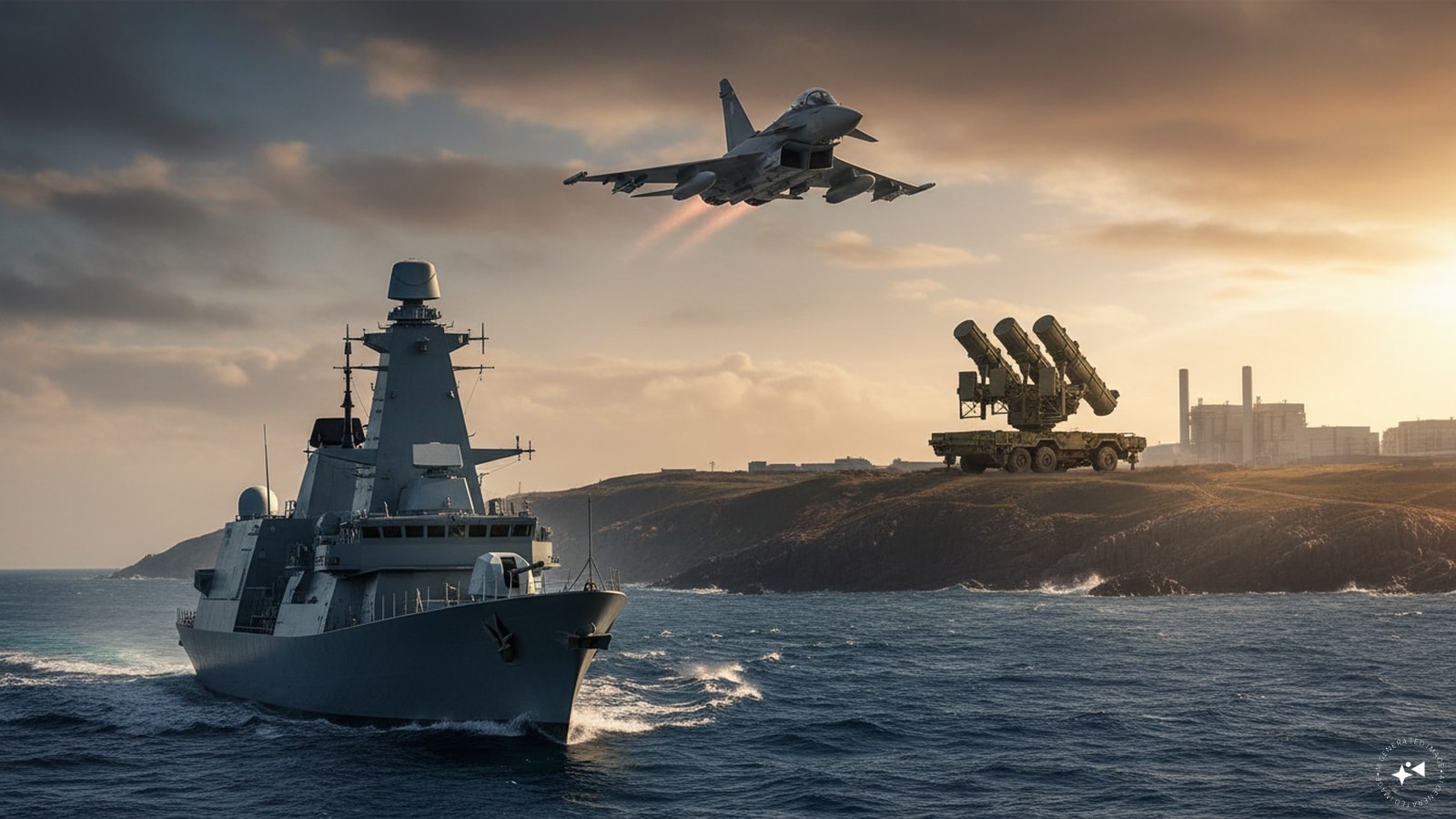
The Ministry of Defence recently directed £790 million toward an updated air and missile defense investment plan. You can expect those deployments to accelerate dramatically around key installations.
For the average citizen, the immediate impacts will show up at the gas pump and in heightened domestic security alerts. With Donald Trump openly discussing a massive attack on Iran and Houthi rebels striking oil tankers in the Red Sea, oil prices have already broken past $100 a barrel.
If you live near or work around major military facilities like RAF Fairford or RAF Akrotiri, expect visible increases in security patrols, airspace restrictions, and drone countermeasure deployments. The UK tried to keep its distance from a volatile shooting war, but by acting as the launchpad, it just walked right onto the battlefield.


