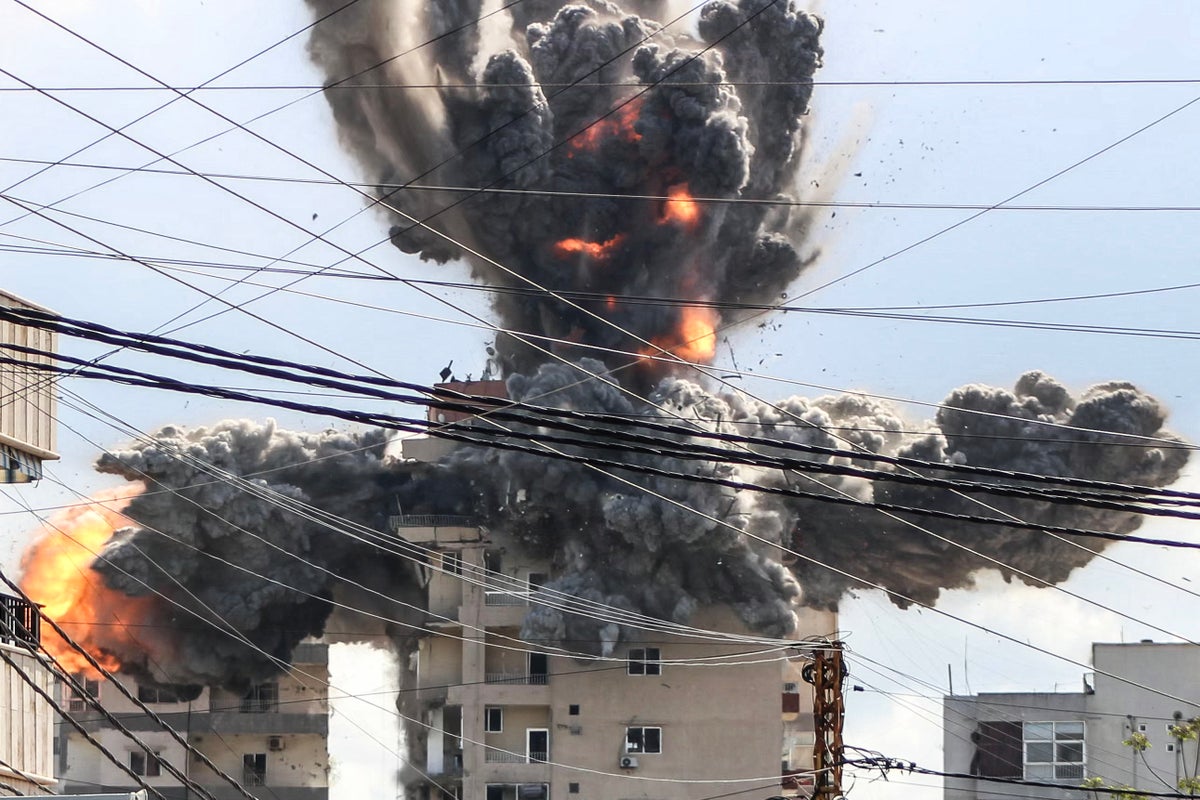
The ink on the two-week ceasefire agreement between the United States and Iran is barely dry, yet the whole deal is already screaming toward a cliff. On Wednesday, Iranian Foreign Minister Abbas Araghchi threw down a gauntlet that the White House can't easily ignore. His message was blunt: Washington has to choose between this fragile peace or "continued war via Israel."
If you're looking for a sign that the Middle East is calming down, this isn't it. The deal, brokered by Pakistan and championed by President Donald Trump, was supposed to be a "workable" path toward ending a conflict that has paralyzed the Strait of Hormuz and sent global energy prices into a tailspin. Instead, it's becoming a masterclass in how regional proxies can wreck high-stakes diplomacy in under twenty-four hours. Meanwhile, you can read related events here: The Nobel Peace Prize Transaction and the 287 Reasons Why Oslo is Bracing for Impact.
The Ultimatum from Tehran
Araghchi didn't mince words on social media. He argued that the terms of the truce are explicit and that the U.S. "cannot have both" a ceasefire with Iran while its closest ally, Israel, continues to hammer Lebanon. This isn't just rhetoric; it's a strategic move to link the direct U.S.-Iran conflict to the wider regional "Axis of Resistance" battle.
Iran's semi-official Tasnim news agency has already signaled that Tehran is ready to walk away from the truce. Their logic? If Israel continues its massive air campaign in Lebanon—which recently saw over 100 sites struck in a ten-minute blitz—then the ceasefire is effectively dead. For the U.S., this creates a massive headache. The Trump administration wants the Strait of Hormuz open and the direct threat to U.S. assets removed, but they don't have a remote control for the Israeli Defense Forces (IDF). To understand the bigger picture, we recommend the detailed article by The Guardian.
Why Israel isn't slowing down
While the U.S. and Iran are talking about a pause, Israel is looking at a different map. For Prime Minister Benjamin Netanyahu’s government, the ceasefire looks like a tactical window for Iran to re-arm its proxies.
- Lebanon remains the flashpoint. The IDF's latest strikes in Beirut and the Beqaa Valley were some of the largest since the offensive began in March.
- The November 2024 precedent. A previous ceasefire in late 2024 failed to stop the cross-border escalation with Hezbollah.
- The "Regional" definition. Tehran claims the ceasefire should cover the entire region. Israel argues it’s a bilateral agreement between the U.S. and Iran that doesn't restrict their right to self-defense against Hezbollah.
The Economic Ghost in the Room
The real reason everyone scrambled to the table in Islamabad wasn't just to save lives—it was to save the global economy. Before the April 7 announcement, Iran had effectively choked off the Strait of Hormuz.
We aren't just talking about a few cents at the gas pump. ACLED experts have pointed out that a continued conflict through April could cause GDP contractions of up to 14% for countries like Qatar and Kuwait. Even the UAE and Saudi Arabia are looking at 3% to 5% hits. When Iran hit the Pearl GTL facility in Qatar in late March, it knocked out nearly 20% of the country’s energy exports.
The U.S. is feeling the heat, too. Cyber threats to U.S. energy infrastructure have spiked, and the Lee government in South Korea is reportedly under immense political pressure because of the war's impact on their supply chains. Trump needs this ceasefire to stick to keep his domestic economic promises, but he’s finding out that "deals" in the Middle East have a very short shelf life.
The 10 Point Proposal vs Reality
President Trump called Iran’s 10-point proposal a "workable basis," but the details are a minefield. Iran wants a permanent end to the war and legal guarantees that they won't be attacked again by the U.S. or Israel. They also want a total lift of sanctions.
On the other side, the U.S. is demanding the permanent reopening of the Strait of Hormuz and a complete halt to Iranian nuclear advancement. It's a classic "unstoppable force meets immovable object" scenario. While Pakistani Prime Minister Shehbaz Sharif is busy preparing to host delegations in Islamabad this Saturday, the actual commanders on the ground—like the IRGC’s Ahmad Vahidi—are already planning the next "kinetic response" if Israel doesn't back off.
What happens if the deal breaks
If Araghchi follows through on his threat to withdraw, we're looking at a rapid return to the "civilization-ending" rhetoric Trump used just days ago.
- Hormuz shuts down again. Iran has already designated "safe passage" routes, but they've made it clear these are only for "friendly countries" and subject to IRGC coordination.
- Proxy escalation. If Iran feels the U.S. can't or won't restrain Israel, expect the Houthis to ramp up pressure on the Bab al-Mandab strait.
- Direct strikes on infrastructure. Iran has shown it can successfully hit desalination plants and data centers in Bahrain and Kuwait. These aren't military targets; they're economic ones designed to force Gulf states to pressure Washington.
Don't expect a smooth transition to peace. The next 48 hours are the real test. If the IDF continues its strikes in Lebanon at the current intensity, Tehran will likely use it as a pretext to resume operations.
Keep an eye on the Islamabad talks scheduled for Saturday. If the U.S. negotiating team, reportedly led by Vice President JD Vance, can't find a way to decouple the Israel-Lebanon front from the U.S.-Iran maritime truce, the "two-week ceasefire" might not even last seven days. Check your local energy prices—they're the most honest barometer of how this is actually going.



