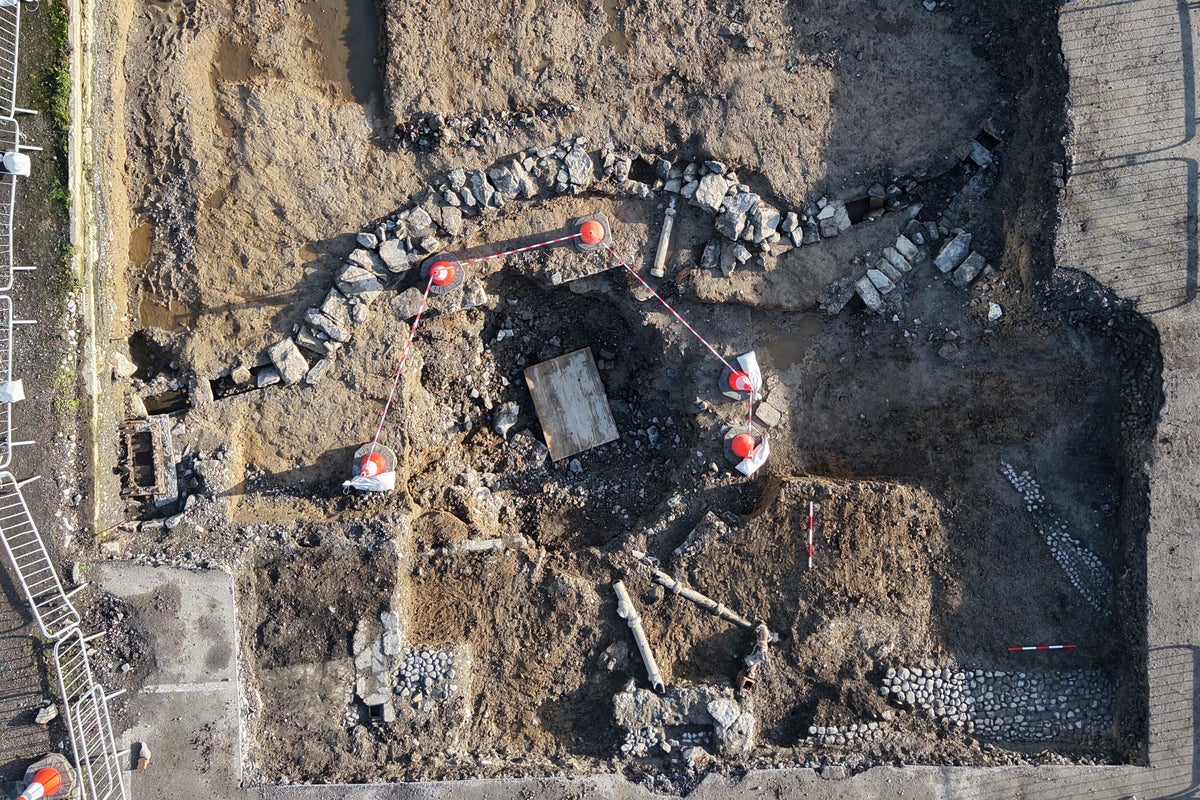
The ground in Ireland is finally yielding its darkest secrets, but the pace of discovery remains a stinging indictment of the state’s relationship with its own history. Recent forensic excavations at the site of a former mother and baby home have uncovered an additional 36 sets of infant remains, bringing the grim tally of unrecorded burials into even sharper focus. These are not merely archaeological findings. They are the physical evidence of a systemic failure that spanned decades, involving the highest levels of church and state authority.
For years, the narrative surrounding these institutions was one of quiet management and social necessity. That facade has shattered. What remains is a complex web of legal hurdles, forensic challenges, and a grieving community demanding more than just an apology. The discovery of these remains underscores a brutal reality. The Irish state did not just fail these children in life; it erased them in death.
The Mechanics of Institutional Erasure
To understand how dozens of infants could be buried without markers or records, one must look at the specific administrative culture of mid-20th-century Ireland. These institutions operated as a shadow wing of the health system. They were funded by the state but managed by religious orders, creating a vacuum of accountability. When a child died, the priority was often discretion rather than dignity.
Burials were frequently conducted in "unconsecrated" or informal areas of the grounds. In many instances, the locations were repurposed utility sites, such as disused sewage systems or forgotten garden plots. This wasn't a mistake. It was a choice made to keep the "shame" of the institutions out of the public eye and away from official parish registers.
Forensic teams now face a monumental task. The soil chemistry in many of these locations is acidic, meaning bone preservation is poor. Every time a new set of remains is found, it triggers a grueling process of DNA sampling and carbon dating. This is slow work. It is also expensive work, and for a long time, the government used that cost as a justification for inaction.
The DNA Bottleneck and the Right to Identity
One of the most significant hurdles in this investigation is the technical difficulty of matching remains to living relatives. Many of the women who survived these homes are now in their 80s and 90s. Time is the enemy. Every year that passes without a definitive identification is a year closer to the permanent loss of a family link.
The science of extracting viable DNA from decades-old infant remains is fraught with difficulty. Unlike adult bones, infant bones are less dense and more prone to environmental degradation. We are witnessing a race against biological decay.
Survivors and family members have been vocal about the need for a comprehensive national DNA database specifically for these sites. While the government has made gestures toward this, the legislative framework is a tangled mess of privacy concerns and jurisdictional disputes. The state often argues that "blanket" testing violates data protection laws, while families argue that the right to know one's kin is a fundamental human right that supersedes administrative red tape.
The Problem of Selective Memory
It is easy to blame the religious orders alone, but the secular authorities provided the funding and the legal cover. Inspecting officers from the Department of Health frequently visited these homes. They saw the overcrowding. They saw the mortality rates, which in some years reached nearly 50 percent in specific institutions.
They looked the other way.
This was a partnership of convenience. The state got a low-cost solution for "problematic" citizens, and the church maintained its moral grip on the social fabric. By analyzing the recently unearthed remains, investigators are piecing together more than just a cause of death. They are documenting a standard of care that was consistently below the minimum required for human survival. Malnutrition, respiratory infections, and a lack of basic medical intervention were the norm, not the exception.
Beyond the Excavation Site
The focus on physical remains, while necessary, sometimes obscures the broader scope of the injustice. For every child found in a hidden grave, there are others whose fates remain entirely unknown. Records were burned, altered, or simply never kept.
The investigative process must extend beyond the shovel and the sieve. It requires a deep dive into the financial ledgers of the orders that ran these homes. Money followed these children. Capitation grants were paid by the state for every mother and child in residence. When a child died, the grant stopped. There was a clear financial incentive to move people through the system quickly, or in darker cases, to not report deaths immediately.
We also have to contend with the issue of illegal adoptions. Some children recorded as "deceased" in institutional logs may have actually been sent abroad, primarily to the United States, in exchange for "donations" to the religious orders. This creates a secondary layer of trauma. Families do not know if they are looking for a grave or a living relative who has no idea of their true origins.
The Cost of Real Accountability
Estimates for the full excavation and forensic analysis of these sites run into the hundreds of millions of euros. For some taxpayers and politicians, this is a hard pill to swallow. They ask if the money would be better spent on current healthcare or housing.
This is a false choice.
A society that refuses to account for its dead cannot fully care for its living. The "brutal truth" is that Ireland’s modern identity is built on the ruins of these institutions. To walk away now, leaving 36 sets of remains—and hundreds more likely still buried—without names or proper burial, is to continue the original crime of erasure.
The forensic teams will continue their work. They will move through the mud and the clay, piece by piece. But the real excavation is happening in the national psyche. We are finally forced to look at the bones of the state.
The Legal Precedent for Restitution
The discovery at this site has reignited calls for a new legal framework regarding "institutional homicide." Currently, the law is ill-equipped to deal with historic neglect on this scale. If a modern daycare center had a mortality rate even a fraction of what was seen in these homes, there would be immediate criminal prosecutions.
Because these deaths happened fifty, sixty, or seventy years ago, the legal system treats them as historical curiosities rather than crime scenes. This needs to change. The families are not just looking for "closure"—a word often used by politicians to shut down debate. They are looking for justice.
Justice in this context means:
- Full access to all surviving records without redaction.
- The state-funded exhumation of all suspected mass burial sites.
- Independent oversight of the forensic process to ensure no conflict of interest.
- A simplified legal pathway for survivors to claim their medical and personal files.
The recent findings are a small fraction of what lies beneath the surface. Each set of remains represents a life that was deemed disposable by a society that prioritized outward piety over inward compassion. The forensic evidence suggests that many of these infants died from preventable causes. They were victims of a culture that viewed poverty and "illegitimacy" as moral failings rather than social conditions.
The physical labor of uncovering these sites is a mirror to the intellectual labor required to dismantle the myths Ireland told itself for a century. We are no longer a country that can claim ignorance. The evidence is out of the ground and in the light.
The next phase of this investigation will likely uncover more sites. Experts suggest that the current location is just one of several high-probability burial grounds. As the maps are redrawn and the ground is broken, the pressure on the state to move beyond rhetoric and toward tangible restitution will only increase.
There is no "moving on" until the last child is accounted for. The 36 infants found this month are a reminder that the past is never truly buried; it is just waiting for someone to start digging. The process of recovery is painful, but it is the only way to ensure that the silence which defined these institutions is finally broken. We owe it to the dead to listen to what their remains are telling us about the world that failed them.
The forensic markers are clear, the historical records are being corroborated, and the witnesses are still speaking. The only thing missing is the political will to see the task through to its absolute conclusion. This is not a chapter of history that can be skimmed or skipped. It must be read in full, no matter how many graves we have to open to find the ending.