Archaeologists slice through dirt and find bone all the time. It is part of the job. But cracking open a mud-caked, 2,600-year-old skull and finding a distinct, yellowish brain still sitting inside is something else entirely. That is exactly what happened during excavations at Heslington in Yorkshire, England. The discovery shocked the scientific community. Usually, soft tissue is the first thing to go after death. It liquefies. It vanishes. Yet, this particular brain survived the collapse of the Roman Empire, the Middle Ages, and the industrialization of Britain.
The immediate reaction from the public was a mix of fascination and mild disgust. How does a brain stay intact for over two millennia without modern embalming fluids? The answer does not lie in a fluke of nature or science fiction. It comes down to a highly specific, brutal historical event and a bizarre biochemical lock. Meanwhile, you can explore similar events here: The Geneva Mirage Why the US Iran Peace Deal Will Spike Oil Prices and Spark Fresh Conflict.
Understanding the Heslington brain requires looking past the sensational headlines. This discovery offers massive insights into how proteins behave over thousands of years. It might even help us understand destructive brain diseases today.
The Brutal Backstory of the Heslington Skull
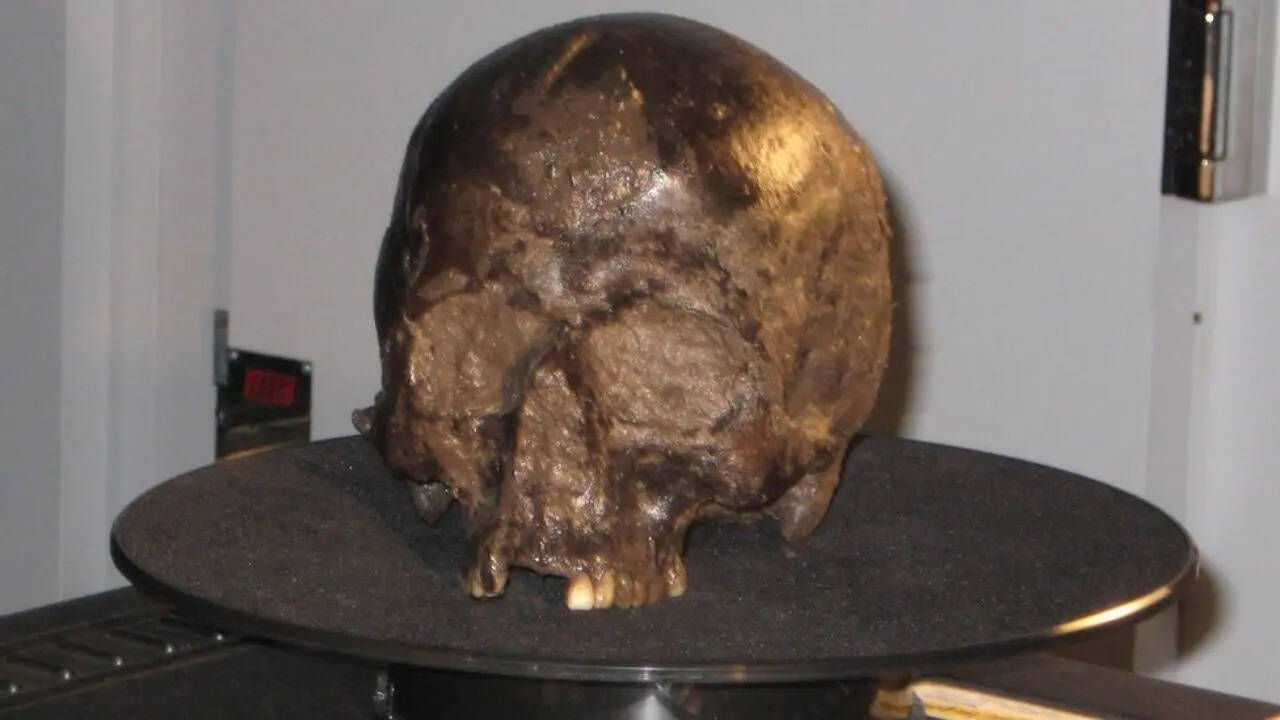
Archaeologists from the York Archaeological Trust found the skull in 2008. It was sitting face-down in a dark, organic rich pit. The rest of the body was entirely missing. This was not a standard burial. To understand the bigger picture, we recommend the recent report by The New York Times.
Examinations of the bone revealed a grim story. The skull belonged to a man, likely aged between 26 and 45. Marks on the vertebrae show he was struck hard in the neck, decapitated, and his head was promptly tossed into the pit. The tight, wet mud sealed the environment almost instantly.
That rapid burial mattered. It cut off oxygen. Without oxygen, the typical flesh-eating bacteria that live inside the human gut and environment could not survive. The man's skin, hair, and muscles rotted away normally before the oxygen ran out, but the brain inside the protective casing of the skull experienced a completely different fate.
Why the Brain Did Not Liquefy
Brain tissue is incredibly fragile. It is mostly fat and water. When you die, your cells break open and release enzymes that digest the surrounding tissue from the inside out. This process is called autolysis. It usually destroys the brain within days.
So what stopped it? A dedicated team of researchers led by scientist Axel Petzold spent years analyzing the tissue samples to find out. They published their extensive findings in the Journal of the Royal Society Interface. The team discovered that two key structural proteins in the brain, neurofilaments and glial fibrillary acidic protein (GFAP), had locked together.
Think of these proteins as the internal scaffolding of the brain cells. In the Heslington brain, these structural elements aggregated into incredibly tight, stable clumps. This process effectively petrified the cellular structure on a microscopic level. The proteins formed a shield that resisted the destructive enzymes.
The environment played a massive role too. The cold, wet, and acidic clay of the Yorkshire pit acted like a natural preservation chamber. It inhibited chemical reactions that would normally break down protein bonds. The chemical compounds inside the brain became highly stable, blocking outside moisture and preventing the tissue from dissolving into a puddle of mush.
Disproving the Mummy Myth
A common misconception is that this brain survived due to some ancient preservation ritual. People think of Egyptian mummies or bog bodies where specific chemicals were applied to keep the tissue intact. That is not the case here.
Chemical testing showed absolutely no evidence of artificial preservatives. There were no traces of pine resin, salt, or embalming oils. The preservation was entirely accidental. It was a perfect storm of environmental conditions and biochemistry.
The state of the brain tissue is also vastly different from what you see in bog bodies. Bog bodies, like Tollund Man, are tanned by the acidic peat moss, turning the skin to leather but often destroying internal organs. The Heslington brain survived while the surrounding skin vanished completely. The skull acted as a tiny, sealed capsule, isolating the brain from the broader chemistry of the bog.
What an Iron Age Brain Tells Us About Modern Medicine
This is not just a quirky historical trivia point. The survival of these ancient proteins has direct implications for modern medical research, particularly regarding neurodegenerative conditions.
Diseases like Alzheimer's and Creutzfeldt-Jakob are characterized by hyper-stable protein aggregates. In these diseases, proteins misfold and clump together in the brain, forming plaques that the body cannot break down. These plaques kill off healthy brain cells.
By studying how the Heslington brain proteins remained stable for 2,600 years, scientists get a unique look at protein aggregation in a hyper-stabilized state. Petzold's research demonstrated that it took specific chemical alterations to finally get these ancient proteins to unwind. Understanding the exact mechanisms that kept these proteins bound together for millennia can provide crucial data points for researchers trying to figure out how to break apart the destructive protein clumps in modern patients.
Tracking the Next Breakthroughs
If you want to follow the latest updates on ancient tissue preservation and its crossover into neurology, you need to look at specific research hubs. The fields of paleoproteomics and bioarchaeology are evolving fast.
Keep an eye on published papers from the University of York's Department of Archaeology. They frequently collaborate on the chemical analysis of regional finds. For the medical side, monitor updates from the UCL Queen Square Institute of Neurology, where researchers track how structural brain proteins deform and stabilize under stress.
The Heslington brain proves that history and modern medicine are deeply connected. A solitary, violent moment in the British Iron Age created a biological time capsule that continues to reshape our understanding of human biology today.