The Sound of Winter
Listen closely.
If you press your ear to the frozen soil of the American Midwest in January, you hear a low, steady thrum. It is not the tectonic groan of the earth, nor is it the heavy rumble of freight trains hauling corn and steel across the plains. It is the rhythmic, pressurized heartbeat of an empire made of coated steel. For decades, millions of homes have drawn their warmth from this invisible network, taking for granted that when the thermostat clicks upward, a roaring furnace will answer. Building on this theme, you can find more in: The Great Shipping Pivot That Just Rewrote Global Trade.
We forget that warmth has a geography.
We treat heat as an elemental right, like water from a tap or light from a switch, ignoring the thousands of miles of subterranean arteries required to deliver it. When those arteries constrict, or when the tollbooths along them change hands, the effects ripple quietly into kitchen tables, factory floors, and municipal budgets. Experts at Bloomberg have shared their thoughts on this trend.
To understand why a Canadian energy giant just wrote a check for two billion five hundred million dollars to buy a massive slice of American pipeline and storage, you have to look past the spreadsheets. You have to look at the cold.
Weight of the Network
Imagine standing in a control room in Ohio.
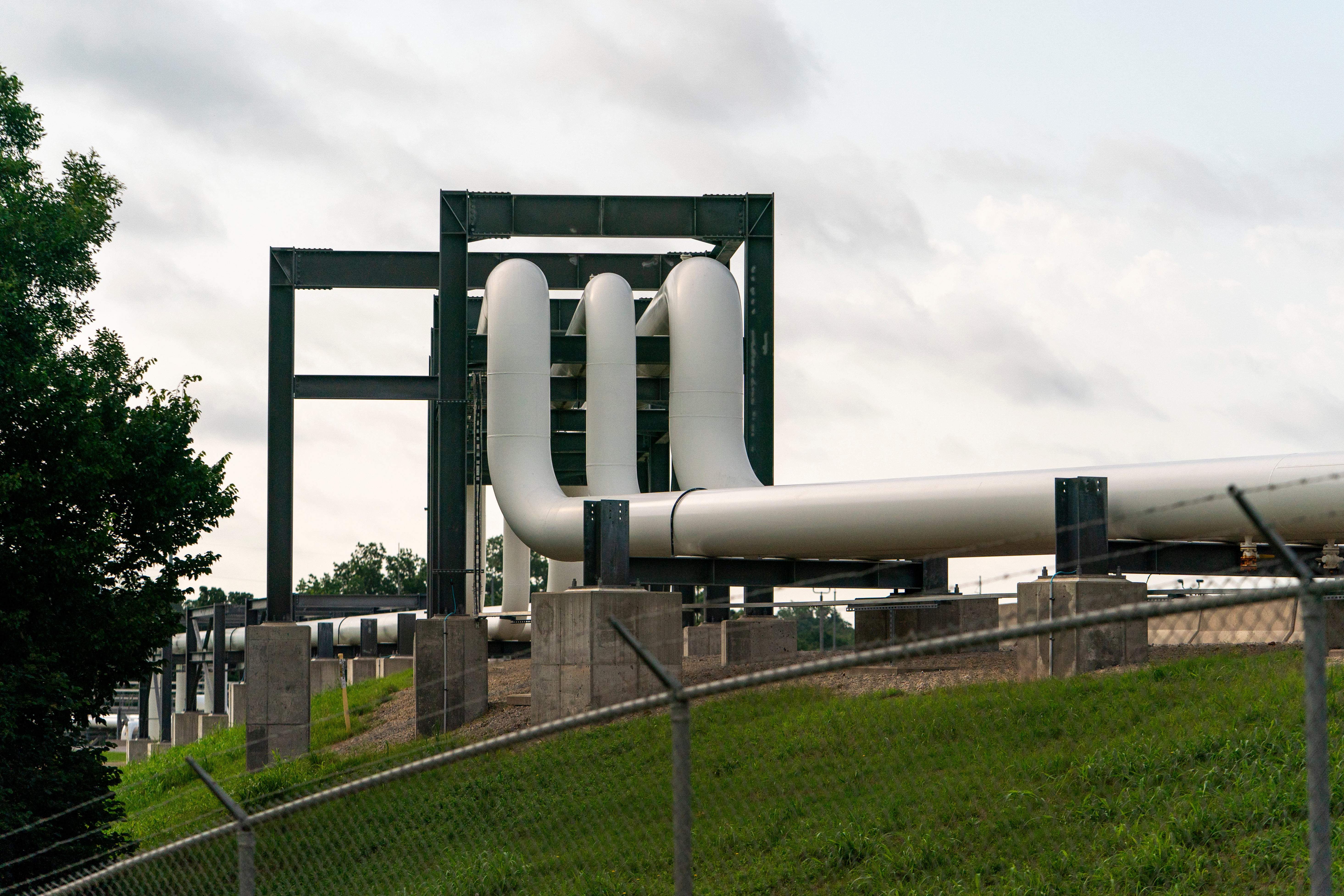
Green and red digital traces pulse across massive monitors, mapping pressure drops, flow rates, and storage inventories across hundreds of miles of steel pipe buried deep beneath farmland and industrial corridors. This is the realm of the operator. A human being whose entire professional life is measured in pounds per square inch and cubic feet per day.
Enbridge has spent decades buying up these subterranean veins, but this particular acquisition represents a massive consolidation of power in the U.S. Midwest. They swallowed up extensive pipeline networks and storage systems in a $2.55 billion transaction designed to lock down energy transit routes.
Let us be completely transparent about the mechanics here. Storage systems are the lungs of the energy grid. When demand plummets in the shoulder months of spring, gas is pumped deep into underground salt caverns and depleted reservoirs. When a sudden polar vortex claws its way down from the Arctic, freezing the Midwest solid, those lungs exhale. Without that localized storage, the pipes choke. Supply halts. Prices skyrocket.
By acquiring these specific assets, Enbridge did not just buy metal and concrete. They bought time. They bought security against the winter.
Consider what happens next when a single corporation controls both the long-haul transit and the localized storage hubs. The calculus of energy delivery shifts. Critics worry about the concentration of monopoly leverage over essential heating fuels, pointing to the undeniable reality that fewer corporate hands mean fewer options for regional distributors. Proponents argue that massive capital expenditure is the only way to modernize aging infrastructure that desperately needs cathodic protection, smart-pig inspections, and structural overhauls.
Both sides are right. And that is where the tension lives.
The Human Equation
Let us introduce a hypothetical character to ground these colossal figures. Meet Thomas.
Thomas is a third-generation pipeline integrity technician in Indiana. His father welded joints on these very lines in the 1970s; his grandfather walked the right-of-ways with a clipboard before helicopters and drones mapped every square foot from the air. Thomas knows the sound of a failing valve seal before the telemetry flags it on a screen. He knows the scent of odorized gas drifting faintly over a sleepy farm field on a humid July afternoon.
When a multi-billion-dollar corporate acquisition happens thousands of miles away in a boardroom, Thomas does not think about stock tickers or EBITDA margins. He thinks about staffing levels. He thinks about whether the new parent company will invest in the expensive sonic testing equipment required to find microscopic cracks in forty-year-old pipe seams before they rupture.
For Thomas, the $2.55 billion headline translates into a very simple, visceral question: Will I have the tools to keep my neighbors safe?
Scale does something strange to human empathy. We read a number like $2,550,000,000 and our brains glaze over. It belongs to the ether of global finance. But scale is merely an aggregation of tiny, mundane details. It is thousands of miles of epoxy coating. It is millions of cathodic rectifiers fighting electrochemical corrosion every single second of the day. It is the quiet dedication of workers who check pressure gauges while the rest of the world sleeps under heavy blankets.
The Changing Terrain
The energy transition is supposed to make these stories obsolete. We are promised a future of decentralized solar arrays, kinetic sidewalk tiles, and frictionless wind farms spinning lazily off coastlines. We are told that fossil fuels are a fading photograph, an era we are gracefully leaving behind.
Yet, reality is stubbornly stubborn.
The physical infrastructure of natural gas remains the backbone of baseload reliability. When the sun goes down and the wind stops blowing across the Midwestern plains, the grid does not collapse into darkness because a battery farm saves the day. It stays functional because massive, pressurized volumes of gas surge through steel pipes into combined-cycle power plants.
This acquisition is a staggering bet that this reality will endure for decades to come, regardless of political timelines or corporate net-zero pledges. Enbridge is doubling down on the physical substrate of traditional energy because they know that transition is not a cliff; it is a long, agonizingly slow slope.
And so the money moves. The lawyers sign. The regulatory bodies review compliance filings. The public scrolls past the headline on their phones, distracted by the next breaking notification, entirely unaware that the price of keeping their living room at seventy degrees just changed hands.
The Silent Current
We walk across these pipelines every day. We drive over them on highways, build strip malls near their easements, and plant gardens directly above their invisible paths. We live our lives balanced precariously on a vast, pressurized web of industrial ambition.
When corporations consolidate control over these vital lifelines, the stakes are not merely financial. They are elemental. They touch the warmth of a child's bedroom on a sub-zero night and the economic survival of rust-belt manufacturers trying to keep their furnaces burning.
The ink is dry on the paperwork. The billions have shifted from one ledger to another. But out there in the dark, beneath the frozen Midwestern mud, the gas still flows. Heavy, invisible, and utterly indifferent to who owns the valve.