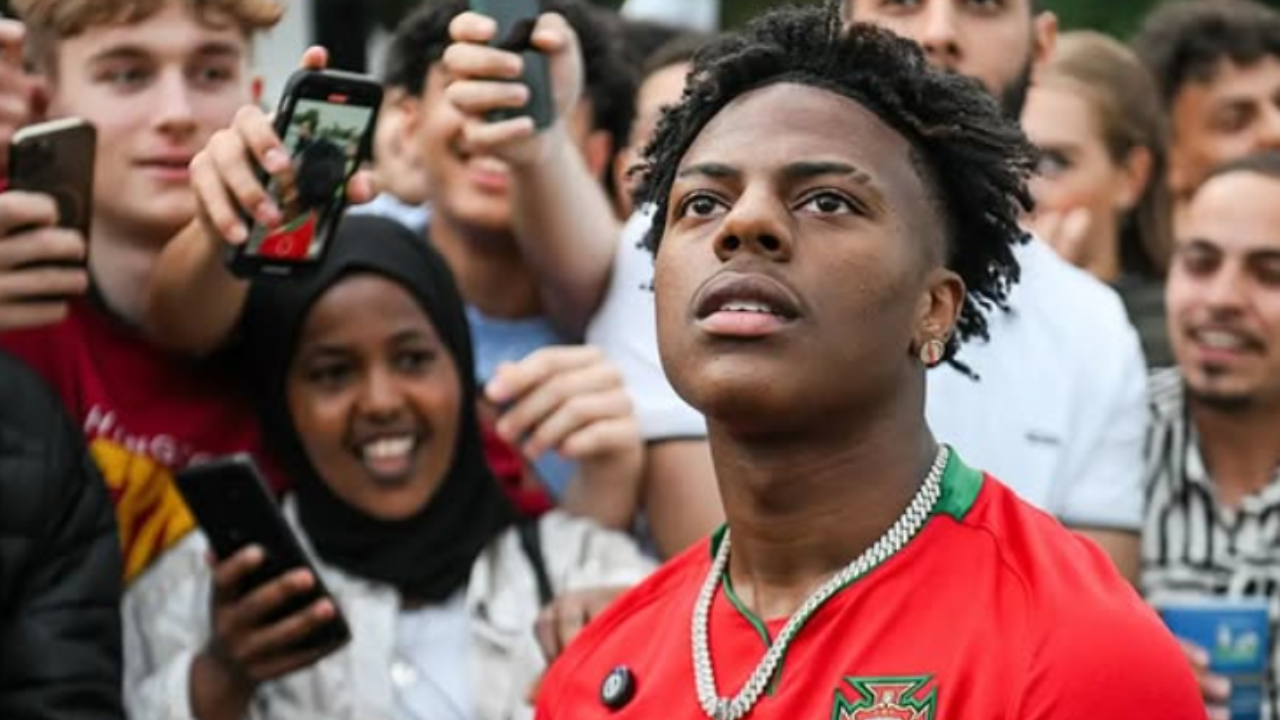
The internet’s most volatile creator is walking back into the squared circle. IShowSpeed, the streaming titan whose unscripted chaos has redefined digital engagement, confirmed on his August 18 broadcast that he is returning to WWE "very soon." While the announcement arrives with the usual performative bravado that defines his brand, the implications go deeper than a simple cameo. This is a cold, calculated business maneuver by a promotion that has learned that viral reach is the modern equivalent of box office drawing power.
Speed is not just a guest. He is a recruitment strategy.
His history with the company reached a fever pitch at WrestleMania 42 this past April. During a high-stakes six-man tag match, Speed found himself betrayed by his own teammates, Logan Paul and Austin Theory. What followed was not a canned celebrity spot but a genuine narrative beat; Speed sent Paul crashing through an announce table, a visual that generated more social media impressions in a single hour than most traditional programs manage in a month. That moment was the proof of concept. WWE does not need Speed to be a technical wrestler. They need him to be a content machine.
Why does this matter? Look at the shift in the wrestling industry. The era of the "territory" icon is long gone. We are in the era of the attention economy. When WWE brings in a creator like Speed, they aren't just selling tickets to a stadium; they are aggressively porting millions of young, digital-native eyes into their ecosystem. The Performance Center, once a strictly guarded sanctuary for aspiring athletes to learn holds and footwork, is now a laboratory where established stars and internet personalities cross-pollinate. Speed has been seen training there, a fact that suggests a level of commitment far beyond a one-off publicity stunt.
The looming question is the status of his rivalry with Logan Paul. It is an obvious, low-hanging narrative thread, yet it serves a functional purpose. WWE thrives on personal animosity that feels authentic. By layering the real-world friction between two massive content creators over a scripted wrestling rivalry, the company creates a meta-narrative that is nearly impossible for the average viewer to ignore. It blurs the line between the performance and the person.
Critics often dismiss celebrity involvements as cheap gimmicks, relics of a bygone time when outsiders were brought in purely for mainstream press. That perspective is outdated. This is not 1985. The "gimmick" has become the primary driver of growth. When a streamer with Speed’s reach integrates himself into a storyline, he provides a bridge to demographics that traditional television marketing cannot reach.
There is also the matter of his long-term ambition. Speed has spoken previously about taking wrestling "more seriously" and eventually immersing himself in the craft. While skepticism is warranted—the physical toll of professional wrestling is unforgiving—the business incentive for both parties is clear. For Speed, it is a diversification of his personal brand, elevating his status from a streamer to a multi-platform entertainer. For the promotion, it is a way to stay relevant with the under-25 demographic that increasingly shuns cable.
This return will likely not be a full-time transition into a career as a professional wrestler. The logistical friction between a grueling road schedule and a high-frequency livestreaming career is substantial. Instead, expect a hybrid role. He will appear when the impact is highest. He will be positioned in spots that maximize social media shareability. He will be the chaotic variable that forces the audience to stay tuned, just in case something unscripted happens.
The landscape is changing. Those who insist that wrestling must be kept pure, defined only by those who spent years in independent rings, are fighting a war against the tide of modern media. The bottom line is simple: eyes follow the creator. WWE knows it. Speed knows it.
He will arrive soon. The cameras will follow. And the transition of wrestling from a niche spectacle to a digital-first entertainment juggernaut will continue, with or without the approval of the traditionalists. The ring is just another stage, and for now, the most effective performers are the ones who already know how to talk to the camera.
The match is already underway, and it was never really about the wrestling. It was about the reach.