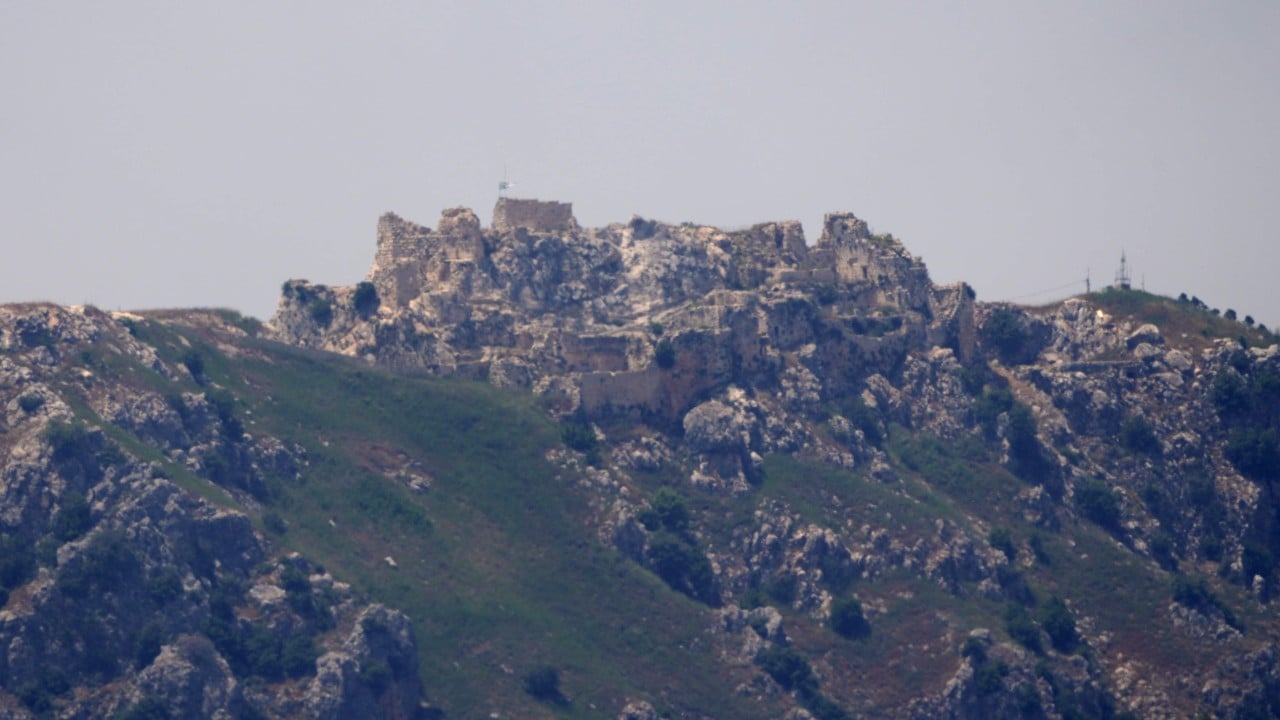
Military forces don't climb rugged Lebanese peaks to capture 12th-century stone fortresses just for the history lessons. When the Israeli army pushed north and secured a strategic Crusader-built castle in southern Lebanon, it wasn't a symbolic stunt. It was a cold, calculated tactical move.
The capture of the historic fort, known locally as Chamaa Castle (or Qalaat Shama), marks a critical shift in the ground offensive. For weeks, analysts wondered how deep Israel would push into Lebanese territory. Taking this specific high ground gives us the answer. This move tells us exactly how Israel plans to control the border zone and neutralize anti-tank missile fire directed at Galilee communities. If you found value in this post, you might want to look at: this related article.
Most mainstream coverage focuses entirely on the cultural loss of a damaged heritage site. That matters, of course. But ignoring the brutal military geography of this position misses the entire point of the operation.
The Brutal Military Geography Behind the Siege of Chamaa Castle
Chamaa Castle sits roughly five kilometers north of the Israeli border, perched on a dominant hilltop in the Western Sector of southern Lebanon. The Crusaders didn't build it by accident. They needed a vantage point that commanded a clear view of the Mediterranean coastline and the rolling hills leading toward Tyre. For another look on this development, check out the recent coverage from NPR.
Today, those same sightlines make it prime military real estate.
From this elevated position, anyone with a pair of binoculars—or a high-tech drone tracking system—can see everything moving across the coastal strip. For months, Western Galilee towns like Rosh HaNikra and Shlomi faced relentless cross-border attacks. By pushing up the ridge and taking the castle grounds, the Israeli military effectively stripped away a key observation and launching zone used by local fighters.
It is about high ground. In hill warfare, if you control the ridges, you control the valleys below.
How the Fight for the Ridge Unfolded
The advance toward the village of Chamaa wasn't a casual stroll. Israeli armored units and infantry encountered stiff resistance as they moved away from the immediate border blue line. Local operational commands used the rugged terrain, thick brush, and concrete bunkers to ambush advancing columns.
According to field reports and satellite tracking from the region, the push involved heavy artillery preparation and air strikes targeting defensive networks around the hill. Once the outer rim collapsed, troops moved into the village, eventually securing the ancient citadel itself.
The immediate aftermath showed significant structural damage to the historic site. The main vault of the castle collapsed during the intense fighting. Some local sources claimed Israeli engineering units intentionally detonated parts of the structure, while military spokesmen pointed to the intense firefights and the secondary explosions of stored weapons cache units inside the ruins.
This isn't the first time history and modern warfare have collided in this exact spot. The castle was heavily damaged during the 2006 war and required extensive restoration work funded by Italian cultural grants over the subsequent decade. Now, those efforts lie in ruins again.
Debunking the Myth of a Symbolic Occupation
A lot of commentators claim that seizing historical landmarks is just about psychological warfare. They say it's about planting a flag on a hill to look good on social media.
That is wrong.
Let's look at what holding Chamaa actually accomplishes for tactical operations on the ground:
- Anti-Tank Guided Missile (ATGM) Suppression: Modern anti-tank missiles require direct lines of sight to hit targets kilometers away. Taking the Chamaa ridge denies the enemy a perfect launching pad aimed at northern Israeli towns.
- Flanking Logistics Routes: The position cuts behind the coastal highway routes, making it incredibly difficult for southern defense cells to get resupplied from the north without driving directly into Israeli crosshairs.
- Artillery Spotting: Even with advanced satellite tech, physical observation posts on high ground remain the most reliable way to direct precise mortar and artillery fire in real-time.
Choosing to hold this ground means the military is preparing for a sustained presence in the second line of Lebanese villages, rather than just conducting quick hit-and-run raids across the border fence.
The Looming Threat to Tyre and the Coastal Corridor
By securing a firm foothold in Chamaa, the military has opened up a clear pathway toward the ancient port city of Tyre, located about 15 kilometers further north. This moves the frontline away from a static border brawl into a dynamic war of maneuver.
If you track the movement of mechanized brigades, they aren't just looking south toward Israel anymore. They are looking north and west. Securing this ridge line protects the eastern flank of any force trying to push up the coast. It creates a buffer zone that pushes tactical rocket launchers further back into the interior of Lebanon, out of range of Haifa's northern suburbs.
What Happens Next on the Ground
If you want to understand where this conflict goes next, stop looking at the political statements coming out of Beirut or Tel Aviv. Look at the engineering corps.
Watch whether the Israeli army begins building semi-permanent dirt berms, defensive outposts, and radar installations around the Chamaa ridge. If they dig in, it means we are looking at a long-term security zone reminiscent of the pre-2000 era. If they blow up the remaining underground infrastructure and fall back to the border, it indicates a strict denial operation meant only to clear out immediate threats before a diplomatic deal takes hold.
The capture of Chamaa Castle proves that ancient topography still dictates modern warfare. Satellites and drones change how we see the battlefield, but at the end of the day, the side that holds the highest stone hill still calls the shots. Keep your eyes on the ridges immediately north of Chamaa; that is where the next defensive line will either hold or break.