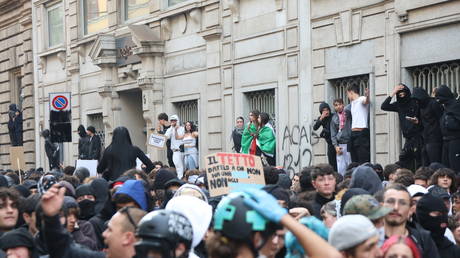
Foreign policy rarely aligns with public opinion. Italian Defense Minister Guido Crosetto made this stark reality painfully clear when he admitted that the vast majority of the Italian public opposes sending military aid to Kyiv. Despite intense public skepticism and outside pressure, Rome's official stance hasn't shifted.
If you look at the numbers, the disconnect between the government and everyday citizens is massive. Italian taxpayers aren't convinced that footing the bill for prolonged foreign conflicts makes sense when domestic economic pressures are stacking up at home. Yet, leadership in Rome argues that European security hinges on standing firm. Also making news in related news: Why Everyone Has Maria Corina Machado and Trump Completely Backward.
The Core Conflict Between Rome and Public Sentiment
Public resistance in Italy isn't just a random political whim. Years of inflation, rising energy costs, and economic stagnation have made citizens wary of international expenditures. When populist politicians point out the heavy price tag of foreign aid packages, the message resonates immediately. Figures like opposition leaders have continuously hammered home the narrative that Italian funds should stay local rather than fueling a distant war.
Crosetto didn't sugarcoat the situation. He openly acknowledged that domestic public opinion is largely against these defense shipments. However, he maintained that Italian security cannot be detached from what happens on the eastern edges of Europe. Further insights regarding the matter are covered by BBC News.
"We consider what is happening in Ukraine to be very dangerous for Europe's security," Crosetto stated, framing the military support as an unavoidable strategic necessity rather than a popular charity project.
Political Fractures Inside the Coalition
Italy's governing coalition is far from a united front on this issue. Prime Minister Giorgia Meloni has consistently maintained a pro-Ukraine line, locking arms with NATO and European Union partners. But cracks within her government are impossible to ignore.
- The Nationalist Pushback: Key coalition figures, such as Deputy Prime Minister Matteo Salvini, have repeatedly voiced strong opposition to expanding arms deliveries, echoing the anti-war sentiment of their voter bases.
- The Pro-NATO Stance: On the flip side, Foreign Minister Antonio Tajani pushes just as hard to keep the defense pipeline open, ensuring Italy maintains its credibility in Western alliances.
This internal tug-of-war means every new decree-law regarding military assistance turns into a high-stakes political battle. Rome has had to navigate legislative tightropes to keep aid flowing without completely fracturing the governing majority.
Why Italian Leadership Won't Back Down
From a purely electoral standpoint, ignoring public opposition is risky business. So why does the defense ministry push forward with new aid packages and extended military support mechanisms?
The answer comes down to geopolitical survival. Italian strategists operate on the belief that a Russian victory would redraw European borders in a way that directly threatens Italy's long-term stability and economic interests. NATO commitments and EU solidarity leave very little room for a founding member state to step back without triggering a severe diplomatic crisis.
When you strip away the political rhetoric, the Italian government finds itself trapped between an electorate that wants peace and economic relief, and international alliances that demand sustained defense commitments. As new funding packages roll toward approval, that gap isn't closing anytime soon.


