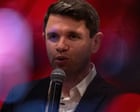
Billionaires love buying things, and Texas has been on the clearance rack for corporate interests for decades. Then a former middle school teacher from Round Rock stepped up to a rally microphone and told the richest man on earth that the Lone Star State isn't on the market.
When Texas State Representative James Talarico targeted Elon Musk at a political rally with the line "Texas is not for sale," he wasn't just tossing out a catchy soundbite for cable news. He was tapping into a massive, simmering frustration that crosses party lines in a state famous for its fiercely independent streak. People here don't like being told what to do by Washington, and they sure as hell don't like being bought out by Silicon Valley transplants who treat public policy like a venture capital portfolio.
I've watched Texas politics shift over the last decade, and the usual playbook rarely works anymore. Democrats usually lose when they run purely on national talking points, while Republicans win when they frame everything as a fight against coastal elites. Talarico flipped that script entirely. By calling out Musk directly, he turned the tables and painted the tech mogul—and the GOP establishment enabling him—as the ultimate out-of-touch elites trying to purchase influence over regular working Texans.
What Happened When James Talarico Called Out Elon Musk
The viral moment came during a high-energy rally where Talarico didn't mince words about the growing intersection of mega-wealth and statehouse politics. Musk, who relocated Tesla's corporate headquarters to Austin and moved SpaceX operations to Boca Chica in South Texas, has poured millions of dollars into national and state-level political action committees, including his high-profile America PAC.
Talarico stood before the crowd and went straight at the billionaire's political spending. He argued that democracy shouldn't go to the highest bidder, declaring plainly that Texas isn't for sale.
It landed because it felt personal. For years, state leaders rolled out the red carpet for Musk, offering massive tax breaks, relaxed environmental oversight, and public land concessions. Meanwhile, everyday Texans watched their property taxes climb, their electric grid fail during winter freezes, and their public schools get starved of funding while Governor Greg Abbott pushed private school voucher schemes backed by out-of-state billionaires.
You don't need a political science degree to see the disconnect. When a guy worth hundreds of billions of dollars starts flexing his financial muscle to shape elections and policy, voters notice. Even folks who drive Teslas or cheer on SpaceX launches get uneasy when one person wields that kind of unchecked political leverage—sorry, political clout—over their local communities.
The Real Reason Billionaire Influence Strikes a Nerve in Texas
Texas has always had big money in politics. Oil barons, cattle kings, and real estate developers have written checks in Austin since the Capitol was built out of pink granite. So why does Musk's involvement feel so different to voters right now?
Scale and visibility.
Old-school Texas donors usually operated quietly behind closed doors, funding traditional business groups and keeping a low profile. Musk does the exact opposite. He uses his social media platform, X, as a personal megaphone to amplify partisan narratives, attack public officials, and inject hundreds of millions of dollars directly into election cycles.
Let's look at the actual numbers and facts on the ground in Texas:
- Massive Corporate Subsidies: Local governments in Texas have granted tens of millions of dollars in property tax abatements to Musk's companies, including significant school district tax breaks for Tesla's Gigafactory near Austin.
- Environmental and Local Pushback: In Cameron County, SpaceX's rapid expansion at Starbase has sparked ongoing tension with local residents, environmental groups, and state regulators over beach closures, rocket debris, and wastewater discharge permits.
- Campaign Finance Floodgates: Unlike many states, Texas has no limits on how much an individual can contribute to state-level candidates, making it a playground for mega-donors looking to buy legislative loyalty.
When Talarico says Texas isn't for sale, he's pointing directly at that structural reality. Because Texas campaign finance laws allow unlimited individual donations, a single billionaire can effectively bankroll entire primary campaigns, ousting moderate lawmakers who dare to vote against pet projects like private school vouchers.
Who Is James Talarico and Why Are Republicans Paying Attention
If you haven't followed Texas legislative politics closely, you might wonder how a relatively young lawmaker from Williamson County became one of the sharpest communicators in the Democratic Party.
Talarico isn't your typical polished, focus-grouped politician. Before winning his seat in the Texas House in 2018—flipping a historically conservative district—he taught sixth-grade language arts on the west side of San Antonio. He also attended Austin Presbyterian Theological Seminary, and he talks openly about his Christian faith as the driving force behind his progressive policies.
That background makes him uniquely dangerous to conservative opponents. Republicans can't easily caricature him as an anti-religious radical when he's quoting scripture on the House floor to argue against cutting food assistance or defunding public schools.
I've seen plenty of rising stars flame out because they sound like they're reading off a teleprompter. Talarico sounds like a teacher explaining a complicated problem to a room full of skeptical people. He uses plain English. He doesn't talk down to voters. And when he goes viral on TikTok or X, it's usually because he's dismantling a bad policy argument step by step in a two-minute committee hearing clip.
The Anti-Corruption Message That Crosses Party Lines
Most political messaging fails because it relies on jargon that normal people ignore. Nobody sits around the dinner table talking about "campaign finance reform" or "oligarchic capture."
People talk about how the system feels rigged. They feel like their taxes pay for corporate handouts while their neighborhood schools can't afford to give teachers a raise.
Talarico's rally speech worked because he translated an abstract systemic issue into a gut-level moral argument. Saying "Texas is not for sale" requires zero explanation. You immediately understand who the buyer is, what's being sold, and who gets screwed in the transaction.
The Hidden Cost of Rolling Out the Red Carpet for Tech Giants
To understand why this message resonates beyond hardcore Democrats, you have to look at what life actually looks like in the places where Musk's empire has landed.
When Tesla announced its massive manufacturing plant in Travis County, state leaders promised an economic boom that would lift all boats. And yes, the factory brought jobs and investment to the Austin area. Nobody is denying that.
But ask someone living in eastern Travis County or Bastrop County how things have changed. Housing prices skyrocketed, pricing out long-time working families. Traffic on local roads turned into a daily nightmare. Meanwhile, Tesla received roughly $60 million in tax breaks from local taxing entities, including the Del Valle Independent School District—a district serving predominantly working-class families that desperately needed every dollar of property tax revenue.
Then look south to Boca Chica. SpaceX has transformed a quiet stretch of the Gulf Coast into a bustling rocket launch site. State officials bent over backward to accommodate the company, even passing legislation allowing local authorities to close public beaches for spaceflight activities, despite the Texas Constitution's Open Beaches Act guaranteeing public access to the coast.
Honest question: if you're a lifelong Texan who can't take your family to a public beach because a billionaire needs to test a rocket, or your property taxes went up while a trillion-dollar company got a discount, wouldn't you feel like your state was being auctioned off?
What Most Political Pundits Get Wrong About This Fight
Cable news commentators love turning everything into a personality clash. They'll frame Talarico versus Musk as just another left-versus-right culture war skirmish. That's a lazy read of what's happening in Texas.
This isn't really about electric cars, space exploration, or even partisan loyalty. It's about populism—specifically, economic populism that challenges concentrated power.
For years, Republicans owned the populist lane in Texas by railing against federal overreach and coastal elites. They convinced working-class voters that Democrats were the party of wealthy corporations and out-of-touch academics.
Now, the richest man on the planet is openly funding conservative political operations, backing primary challengers against traditional Republicans, and enjoying massive state-level subsidies. That creates a glaring contradiction for the Texas GOP. You can't credibly claim to be the champion of the forgotten working man while cashing massive checks from the world's wealthiest billionaire and rewriting state laws to suit his business interests.
Talarico spotted that opening and drove a truck right through it.
Why Democrats Usually Bungle This Opportunity
Historically, Democrats have struggled to capitalize on corporate overreach because their own party takes plenty of money from wealthy donors and tech executives. Voters aren't stupid; they smell hypocrisy a mile away.
What separates Talarico's approach is consistency. He has repeatedly pushed for banning corporate PAC money, capping campaign contributions, and ending corporate welfare programs like Texas's controversial Chapter 313 tax abatement program—which actually expired in 2022 after bipartisan backlash against giving away billions in school district tax revenue to giant corporations.
When your voting record backs up your rally rhetoric, the message sticks. You aren't just attacking a political opponent; you're standing on a principle you've actually fought for in the legislature.
How This Shapes Texas Politics Heading Into Future Elections
Texas isn't flipping blue overnight, and anyone telling you otherwise is selling you something. Republicans still hold every statewide office, majorities in both chambers of the legislature, and a massive structural advantage in voter turnout.
But elections aren't won in sweeping landslides anymore; they're won on the margins, in suburban counties like Williamson, Collin, Fort Bend, and Hays, where independent-minded voters decide who runs the state.
Those suburban voters care deeply about public schools. They care about property taxes. And they're deeply skeptical of extremism and corruption from either side.
When Talarico frames the political battle in Texas as regular citizens versus billionaires trying to buy the government, he's speaking directly to those swing voters. He's giving disillusioned moderates and independents a permission structure to break away from the party in power without feeling like they're signing up for a radical agenda.
Practical Ways Voters Can Track the Money in Texas
If you live in Texas—or anywhere else where mega-donors are reshaping local politics—you don't have to rely on rally speeches or social media hot takes to see who's pulling the strings. You can look up the receipts yourself.
- Check the Texas Ethics Commission Database: Every dollar donated to a state-level candidate or PAC in Texas has to be reported. You can search by donor name or candidate name on the Texas Ethics Commission website to see exactly who is funding your local representative.
- Follow Transparency Watchdogs: Organizations like OpenSecrets and the Texas Tribune regularly break down campaign finance filings, PAC spending, and corporate lobbying efforts in plain English.
- Watch Local Tax Abatement Hearings: Before a city council, county commission, or school board gives away property tax breaks to a major corporation, they have to hold public hearings. Showing up—or just reading the local agenda packets—shows you exactly how much public money is being handed over behind the scenes.
Politics gets noisy fast, especially when social media algorithms reward the loudest, angriest voices in the room. Strip away the viral clips and the partisan yelling, though, and James Talarico's message boils down to a pretty simple question every voter has to answer for themselves. Who should your elected officials actually work for—the people who live in your neighborhood, or the billionaire who can afford to write the biggest check?


