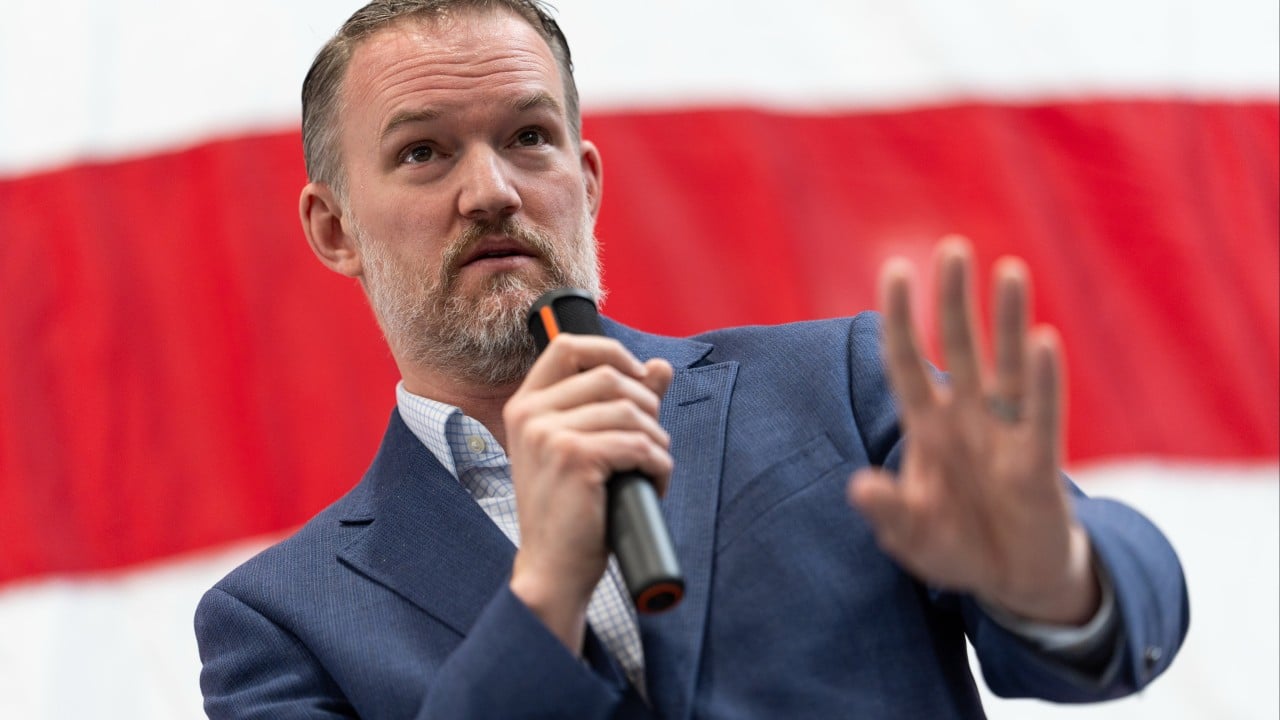
The era of vague promises and handshakes is over. Jamieson Greer isn't just asking for more money for his office; he’s essentially asking for a war chest to redraw the map of global commerce. If you've been watching the headlines, you've seen the United States Trade Representative (USTR) making the rounds on Capitol Hill and at think tanks like the Hudson Institute. He isn't there to play nice. He's there to fund a shift that moves the U.S. away from being a nation of consumers toward being a nation of producers.
For decades, the "experts" told us that bringing China into the global trading system would make them more like us. It didn't happen. Instead, we got hollowed-out towns and a massive dependency on a strategic rival. Greer, a protégé of Robert Lighthizer, isn't about to let that happen again. His latest push for funding isn't about administrative overhead. It's about escalating the pressure until the playing field is actually level—or until we don't need their playing field at all.
The Board of Trade and the End of Investment
One of the most interesting moves Greer's making is the push for a formal "Board of Trade" with China. Don't mistake this for another talk shop like we saw in the Obama years. This isn't the Strategic and Economic Dialogue. Greer's version is about cold, hard logistics. He wants a mechanism to identify "non-sensitive goods" that both sides can actually trade without a national security meltdown.
Honestly, it’s a brilliant way to say, "We’re keeping the high-tech stuff for ourselves."
While he's open to talking trade, Greer’s basically slamming the door on investment. In recent talks in Paris with Treasury Secretary Scott Bessent and China's He Lifeng, the idea of a "Board of Investment" was floated. Greer shot it down. Why? Because he doesn't think the U.S. and China are at a point where we want to encourage more money flowing between us. We're in a "stable" state of high tariffs, and he's perfectly fine with that.
Why the 2026 Budget Matters for Your Business
If you’re running a company that relies on Chinese parts, you need to pay attention to where Greer is putting his money. This isn't a temporary spike. The 2026 Trade Policy Agenda is focused on "Reciprocity and Rebalancing."
The administration’s data shows the trade deficit with China dropped 32% in 2025. That’s huge. For the first time since 2000, China isn't our largest trade deficit partner. Greer wants to double down on that. He’s looking for the resources to:
- Enforce Section 301 Investigations: They're looking at excess capacity and forced labor with a magnifying glass.
- Fund the ART Program: The Agreement on Reciprocal Trade is his primary weapon for forcing other countries to lower their barriers if they want access to the U.S. market.
- Secure Critical Minerals: Greer is pushing for a "plurilateral" agreement. Basically, a club of friendly nations that trade minerals among themselves while keeping out those who don't play by the rules.
The Trump Xi Meeting in Beijing
President Trump is heading to Beijing in May. This trip was delayed because of the geopolitical chaos in the Middle East, but now it’s the main event. Greer is the guy setting the table.
He's been clear: the U.S. is going to keep substantial tariffs on advanced goods and manufacturing. Period. The goal of the Beijing meeting isn't to roll back the trade war. It's to "formalize" it. They want a predictable, managed conflict rather than a chaotic one. It’s about creating a "stable situation" where both sides know where the lines are drawn.
Avoiding the Common Mistakes in Trade Analysis
A lot of people think this is just about "winning" a trade war. It’s not. It’s about reindustrialization. Greer has stated repeatedly that the U.S. should produce more of what it consumes. He views the trade deficit as a structural weakness that makes us vulnerable.
Some critics argue that this will just lead to higher prices. Sure, partial decoupling isn't cheap. It results in higher costs for some goods. But Greer’s stance is that those costs are a small price to pay for national security and higher domestic wages. He's betting that the American voter cares more about a job than a cheaper toaster.
What You Should Do Now
The USTR isn't going back to the old ways. Greer is building a permanent infrastructure for a high-tariff, high-enforcement trade environment. If your supply chain is still heavily weighted toward China, you're living on borrowed time.
- Diversify your sources: Look at the countries Greer is cozying up to: the UK, Kenya, the Philippines, and India.
- Audit your "Sensitive" components: If what you make could even remotely be classified as "advanced manufacturing," expect more hurdles, not fewer.
- Watch the Critical Minerals Pact: If you're in tech or EVs, the plurilateral agreements Greer is drafting will determine who you can buy from without getting hit by massive "access barriers."
Greer’s push for funds is a signal. He’s hiring the lawyers, the investigators, and the negotiators to make the America First trade policy a permanent fixture of the global economy. Don't wait for a "return to normal." This is the new normal.