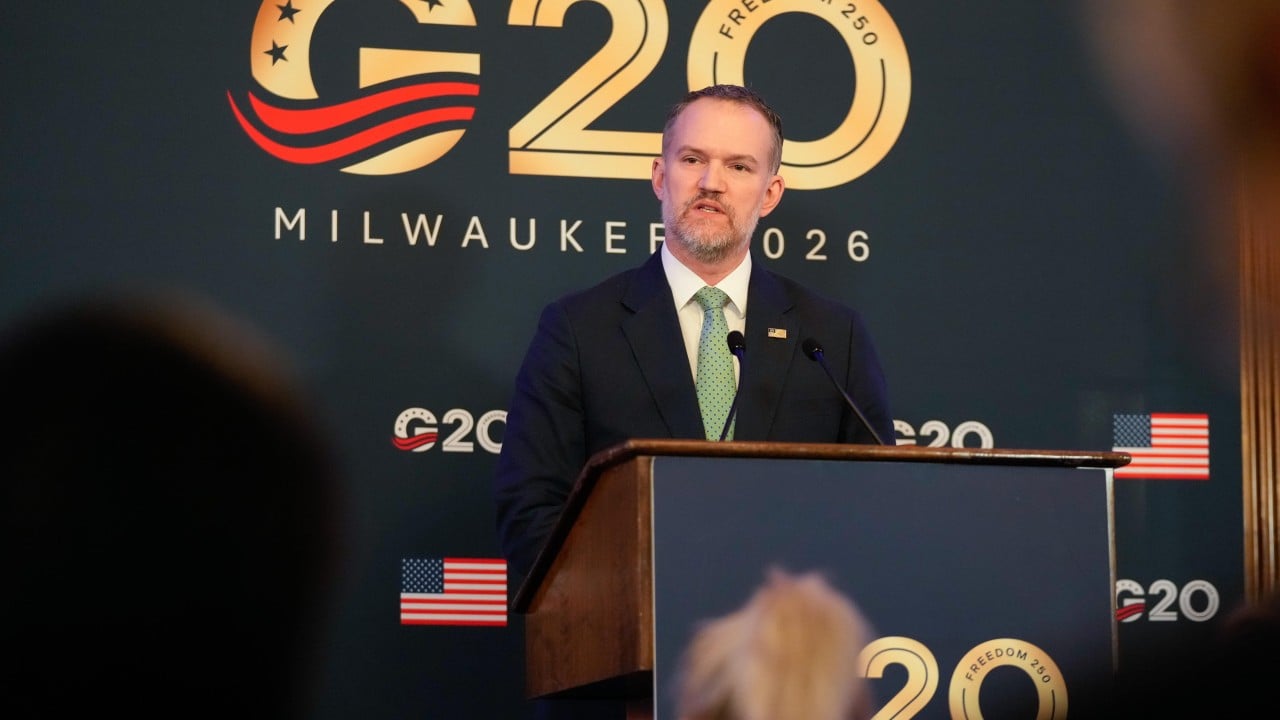
Trade policy moves slowly until it suddenly doesn't. Right now, Washington is hitting the brakes. United States Trade Representative Jamieson Greer recently made it clear that Washington has set no specific timeline for actually enforcing or implementing the recommendations handed down by the newly established US-China Board of Trade.
If you expected high-level diplomatic handshakes to instantly translate into sweeping tariff cuts on billions of dollars worth of consumer goods, you misread the room. The board—spawned as a key economic byproduct of Chinese President Xi Jinping’s state visit to Washington—was designed to manage non-sensitive trade channels. Think agricultural products, energy shipments, medical devices, and select commercial goods. Yet, months after recommendations involving roughly 60 billion dollars of goods hit the desk, there is no hard calendar date for execution. If you liked this piece, you might want to read: this related article.
Why the hesitation? Because trade architecture between the two superpowers is fragile. Greer and administration officials are playing a long game.
The Strategy Behind the Delay
Nobody wants a diplomatic mess. When Greer notes that enforcement timelines remain wide open, it isn't an accident of bureaucracy. It's a calculated pause. For another angle on this development, check out the recent coverage from Business Insider.
Washington wants maximum flexibility. Compartmentalizing ordinary commerce from high-stakes national security tech restrictions is tough. If the White House locks into a rigid enforcement schedule, it loses valuable leverage. Beijing plays the exact same game. Both sides want a predictable lane for soybeans, corn, and medical tools without accidentally handing over advantages in critical minerals, advanced semiconductors, or export controls.
Exporters and agricultural producers are caught in the middle. They hear about bilateral boards and assume relief is right around the corner. They stock up or plan supply shifts based on optimistic headlines. That is a dangerous mistake. Markets crave certainty, but geopolitical trade negotiations thrive on ambiguity. Greer’s refusal to pin down a date signals that structural guardrails must come before any actual tariff reductions.
What Non-Sensitive Trade Actually Means
The core mandate of this board targets items that shouldn't trigger national security alarms. We are talking about everyday commodities and commercial exports.
- American agricultural exporters want stable access back into Chinese markets.
- Energy firms want predictable channels for liquefied natural gas and oil exports.
- Medical device manufacturers need stable cross-border supply lines.
Yet, even within these safe categories, negotiations stall. Beijing has its own domestic economic pressures to juggle, from real estate recovery to local manufacturing overcapacity. When US officials push for market access, Chinese counterparts push back on existing unilateral economic restrictions and export controls.
Every single inch of progress requires a trade-off. If the US lowers barriers on certain low-tech Chinese goods, it demands hard commitments on agricultural purchases. Balancing those scales takes months of quiet backroom discussions, far away from public press conferences.
How Businesses Should Respond Right Now
Stop waiting for a government announcement to adjust your supply chain strategy. If your business relies on cross-border manufacturing or commodity shipping between the US and China, treating the Board of Trade as an imminent fix is a rookie error.
Build your operational models assuming current tariffs and friction points remain active through the near future. Treat any future implementation date as an unexpected bonus rather than a baseline assumption. Watch how Treasury and USTR officials frame their readouts after calls with Chinese Vice Premier He Lifeng. Pay attention to real-world enforcement actions rather than high-level summit communiques.
The framework exists on paper. Translating that paper into reality requires months of hard bargaining. Greer knows it, Beijing knows it, and smart operators are planning accordingly.
Jamieson Greer says China-U.S. Board of Trade will be focused on trade in non-sensitive goods
This interview clip provides direct context on how USTR Jamieson Greer frames the scope and commodities targeted by the bilateral trade board.