Tokyo is throwing out seven decades of constitutional pacifism. The shift is not subtle. Defense budgets are doubling. Strike capabilities are moving from theoretical doctrine to active procurement. Yet the mainstream coverage treats this monumental geopolitical pivot as a routine budgetary adjustment rather than the fundamental rewriting of the East Asian security architecture that it actually is.
Prime Minister Fumio Kishida’s administration committed to spending two percent of GDP on defense, meeting NATO-style metrics long before critics expected. Behind the political rhetoric lies a profound structural panic. Tokyo faces an intersecting arc of pressure from a rapidly modernizing Chinese navy, a nuclear-armed North Korea that treats ballistic missile tests as weekly routine, and a revisionist Russia operating with impunity in the northern Pacific. The Japanese Self-Defense Forces are shedding their strictly defensive posture. They are transforming into a power-projection military capable of striking adversary bases before an incoming attack hits home.
The Constitutional Fiction and the Fiscal Reality
For generations, Article 9 of Japan's post-World War II constitution stood as a symbolic barrier against foreign military entanglement. Tokyo maintained that maintaining an offensive military apparatus was illegal. Governments managed this contradiction through creative legal interpretations. They called aircraft carriers "helicopter destroyers" and labeled long-range cruise missile research as defensive technology.
That semantic gymnastics is ending.
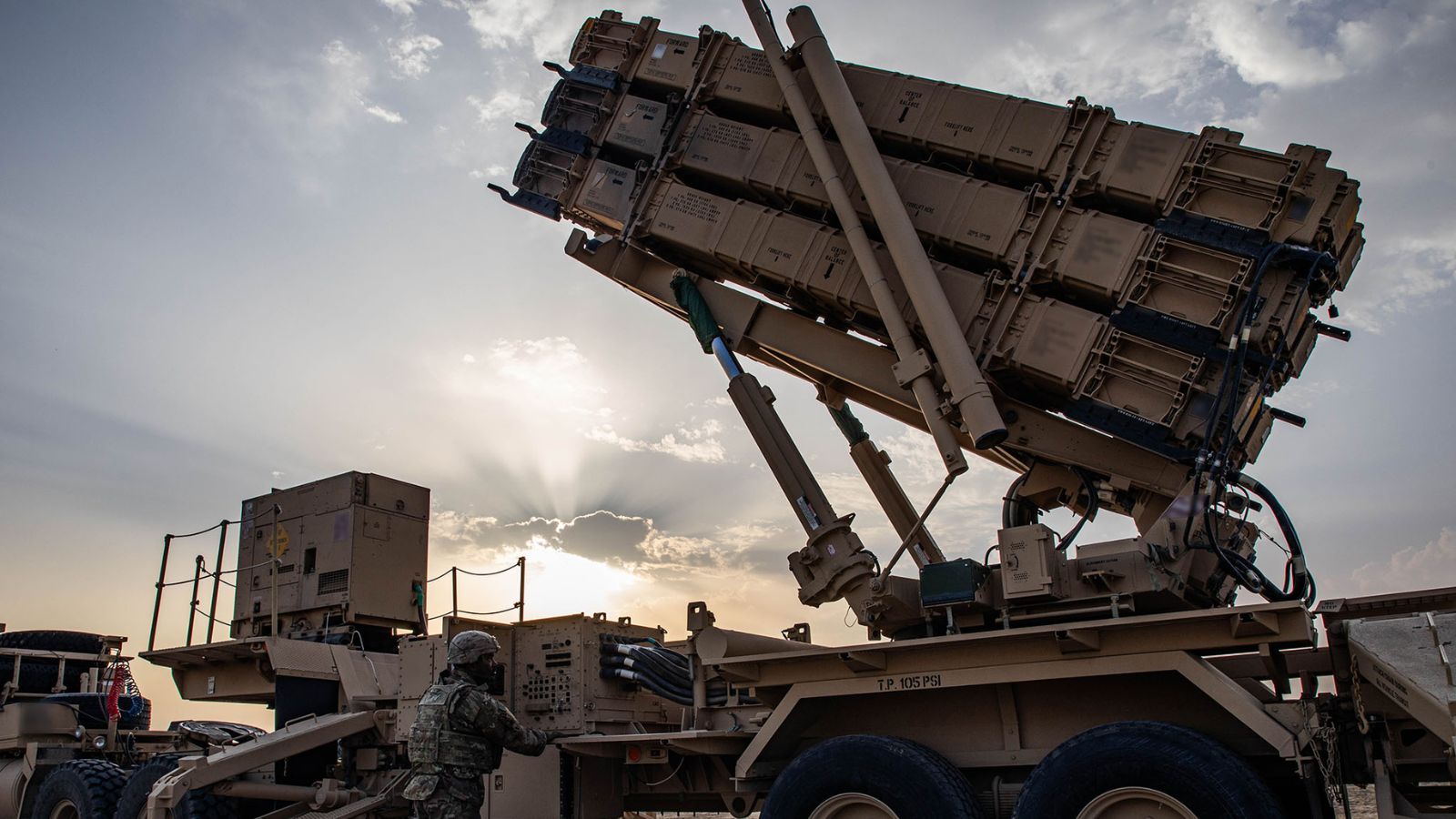
The financial commitments behind the new Japan military build-up dwarf anything seen since the postwar occupation. Tokyo allocated roughly forty-three trillion yen for a five-year defense consolidation plan. That cash injection fixes chronic personnel shortages, bolsters domestic ammunition stockpiles, and secures long-range ordnance like American-made Tomahawk cruise missiles.
Logistical fragility plagued the old model. Japanese defense planners spent decades building a force tailored exclusively to repelling an amphibious landing on their own beaches. They designed zero infrastructure for sustained combat, maintained minimal fuel reserves, and relied entirely on the United States for target acquisition. The current transformation aims to correct every single one of those structural vulnerabilities. Tokyo is buying the capacity to fight independently if American security guarantees stutter under domestic political isolationism in Washington.
The Three-Front Nightmare
Geography dictates strategy. Japan sits at the intersection of three distinct nuclear-armed actors, each with historical grievances against Tokyo and expanding military capabilities.
The Maritime Encirclement from Beijing
China’s People's Liberation Army Navy patrols the waters around the Senkaku Islands with daily persistence. Beijing views these uninhabited islets as sovereign territory unjustly seized. Coast guard cutters cross Japanese territorial waters with mechanical regularity, daring Tokyo to escalate.
Behind the maritime militia and coast guard vessels stands a naval force that now outnumbers the United States Navy in total hull count. Beijing has constructed artificial islands across the South China Sea and militarized them with anti-ship missiles and radar installations. This creates an anti-access area-denial bubble that stretches across the First Island Chain.
Japanese planners know that any conflict over Taiwan immediately implicates Okinawa and the broader Ryukyu island chain. Airbases in southern Japan would serve as primary launchpads for American counter-interventions. Beijing has targeted these exact installations in war games for years. Tokyo's acquisition of counter-strike capabilities is a direct response to this mathematical reality. If China can strike mainland bases from the mainland, Japan must possess the matching ability to disrupt those launch nodes.
The Missile Laboratory in Pyongyang
North Korea no longer experiments quietly. Kim Jong Un's regime tests solid-fuel intercontinental ballistic missiles, hypersonic glide vehicles, and tactical nuclear delivery systems with absolute impunity. Pyongyang routinely fires missiles over the Japanese archipelago into the Pacific Ocean, treating sovereign airspace as a firing range.
The missile threat operates on a compressed timeline. Traditional radar warning systems offer mere minutes of reaction time when dealing with depressed-trajectory ballistic tests. Japan's investment in advanced Aegis-equipped destroyers and the joint development of interceptors with the United States represent a desperate race to patch holes in a missile defense shield that leaks against modern maneuvering threats.
The Forgotten Northern Flank
Moscow’s invasion of Ukraine shattered regional stability in the north. Japan joined Western sanctions against Russia, abandoning years of diplomatic warmth and economic overtures meant to resolve a territorial dispute over the Kuril Islands—known in Japan as the Northern Territories.
Moscow responded by suspending peace treaty talks and conducting joint naval and air patrols with China near Japanese coasts. Russian strategic bombers routinely circle the Japanese islands, forcing scramble after scramble from the Air Self-Defense Force. Tokyo can no longer treat its northern border as a quiet backwater. The Pacific is now an active theater of great power competition on multiple axes.
The Industrial Bottleneck
Money solves many problems, but it cannot instantly manufacture skilled labor or raw materials. The primary constraint on the Japanese military expansion is not political will. It is demographics.
Japan's population is aging and shrinking at a historic rate. The Self-Defense Forces consistently miss recruitment targets. Young citizens face a robust domestic labor market with countless opportunities in the private sector, making military service an increasingly difficult sell despite recent wage bumps.
| Challenge Metric | 1990 Baseline | 2026 Reality |
|---|---|---|
| Defense Budget (% of GDP) | ~1.0% | 2.0% Target |
| Working-Age Population | Expanding / Stable | Contracting Rapidly |
| Missile Doctrine | Purely Intercept | Active Counter-Strike |
| Domestic Defense Industry | Subsidized / Fragmented | Consolidating / Export-Oriented |
The industrial base mirrors this demographic crisis. Decades of strict self-imposed bans on defense equipment exports starved Japanese defense contractors of economies of scale. Major corporations like Mitsubishi Heavy Industries found it difficult to turn a profit building small batches of complex hardware exclusively for the domestic market.
To survive the current build-up, Tokyo relaxed its arms export principles. It now co-develops next-generation fighter jets with the United Kingdom and Italy. It exports completed defense systems to regional partners like the Philippines. Without these international joint ventures, the domestic industrial ecosystem would collapse under the weight of its own high overhead costs.
Washington's Calculated Risk
The Pentagon welcomes the Japanese rearmament with open relief. American defense budgets face immense strain, and the pivot to the Indo-Pacific requires reliable regional allies willing to share the heavy lifting. Washington views Tokyo's new defense posture as a vital multiplier for American deterrence.
Yet this delegation of security carries hidden dangers.
By encouraging Japan to develop long-range strike capabilities, the United States is tethering its own strategic fate to decisions made in Nagatacho. If a crisis erupts over Taiwan or the Senkakus, a heavily armed Japan might preemptively strike adversary missile sites before Washington approves the move. This dynamic introduces severe entrapment risks. The superpower could find itself dragged into a major regional war initiated by an emboldened junior partner attempting to secure its own periphery.
Furthermore, regional memories run deep. South Korea remains deeply sensitive to any expansion of Japanese military power, given the brutal history of colonial occupation in the first half of the twentieth century. While intelligence-sharing agreements persist under American pressure, deep operational integration between Tokyo and Seoul remains politically toxic in Seoul. China leverages these historical fractures aggressively, framing every Japanese defense budget increase as a resurgence of militaristic imperialism designed to destabilize Asia.
The Point of No Return
Tokyo has crossed a psychological rubicon. The era of low-cost pacifism, subsidized by American nuclear umbrellas and sustained by regional stability, is dead.
The politicians driving this transformation understand the stakes. They are betting that an overt, undeniable display of hard power is the only language Beijing and Pyongyang respect. They are also betting that the Japanese public, historically allergic to military adventures, will accept higher taxes and permanent strategic tension as the price of continued sovereignty.
The industrial wheels are turning. The shipyards are expanding. The missiles are being delivered. There is no reverse gear left in the transmission.