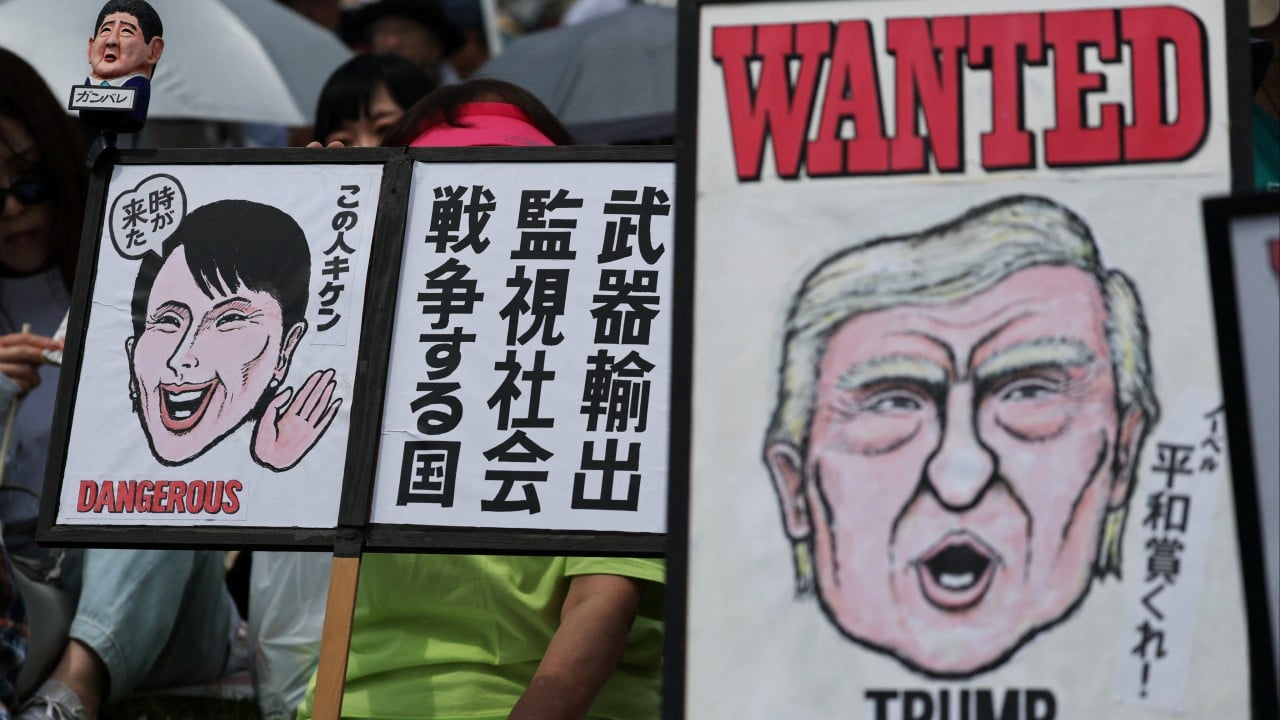
The mainstream narrative is gasping for air. If you read the legacy press, you’re being told that Japan’s "J-MAGA" contingent is vanishing, terrified by the specter of Middle Eastern instability and the erratic nature of a potential second Trump term. They want you to believe that the "diehards" are finally waking up to the reality of a world on fire.
They are wrong. They aren't just wrong; they are fundamentally misreading the psychological and economic architecture of modern Japan.
The "chaos" cited by critics isn't a deterrent for the Japanese right; it is the validation of their entire worldview. While Western pundits obsess over the volatility of the Strait of Hormuz or the shifting sands of Tehran, the Japanese grassroots movement—specifically those aligned with the Trumpian ethos—sees these tremors as proof that the post-war globalist order is a carcass. They aren't losing faith. They are doubling down because, in their eyes, the fire confirms the house was already rotten.
The Myth of the Fainthearted Japanese Conservative
The central fallacy of the "loss of faith" argument is the assumption that Japanese Trump supporters are looking for stability. They aren't. They are looking for autonomy.
For seven decades, Japan has operated as a functional protectorate. The "Peace Constitution" wasn't just a legal document; it was a psychological straitjacket. The J-MAGA movement—composed of small business owners, disillusioned youth, and a surprisingly vocal segment of the tech sector—doesn't view Trump as a source of chaos. They view him as a wrecking ball capable of smashing the dependency trap that has kept Japan subservient to the U.S. State Department’s whims.
When the Middle East erupts, the "lazy consensus" says Japan should be terrified of losing its energy security and its American shield. The contrarian reality? The J-MAGA base sees this as the final bell for Japan to remilitarize and decouple its foreign policy from a Washington that they believe is more interested in ideological crusades than regional stability.
Energy Realism vs. Green Utopianism
Let’s talk about the oil. Critics argue that Iran-aligned chaos makes Trump’s "America First" energy policy a nightmare for Tokyo.
I’ve sat in boardrooms from Marunouchi to Osaka where the "green transition" is treated like a polite fiction for the public, while the actual math of energy density is discussed in hushed tones. Japan is an island nation with zero natural resources. The current global instability makes the Biden administration's focus on long-term carbon neutrality look like a luxury Japan cannot afford.
The Japanese Trumpists understand something the Tokyo elite refuses to say out loud: $100-a-barrel oil is a policy choice. By advocating for "drill, baby, drill," Trump offers a crude but effective hedge against Middle Eastern volatility. The Japanese supporters aren't "losing faith" because of Iran; they are terrified that if the current U.S. trajectory continues, they will be left at the mercy of a global energy market controlled by regimes that don't care if Japan’s lights stay on. They want an American leader who treats energy as a weapon of dominance, not a social experiment.
The Abe Legacy and the Trump Connection
You cannot understand the Japanese diehards without acknowledging the ghost of Shinzo Abe. Abe wasn't just a partner to Trump; he was the architect of the "Free and Open Indo-Pacific."
The media claims the alliance is fracturing. In reality, the J-MAGA crowd believes they are the only ones keeping Abe’s vision alive. They see the Kishida administration as a return to the "wait and see" passivity that led to Japan's "Lost Decades."
To these supporters, Trump represents the "Abe-ism" that the current LDP (Liberal Democratic Party) is too cowardly to execute. This isn't about liking the man’s tweets; it’s about a specific brand of national realism. They want a leader who treats international relations as a series of bilateral transactions because Japan, historically, has been fleeced by multilateral "agreements" that benefit everyone except the Japanese taxpayer.
The Geopolitical Insurance Policy
Imagine a scenario where the U.S. completely pivots its focus to the Middle East, leaving the South China Sea vulnerable.
The mainstream take is that Trump would abandon Japan. The J-MAGA take is that the current establishment has already abandoned them by being spread too thin. They argue that a transactional U.S. president—one who demands payment for protection—is actually more reliable than an ideological one who promises protection but lacks the industrial base to provide it.
It’s a cold, hard calculation of E-E-A-T (Experience, Expertise, Authoritativeness, Trustworthiness) in the geopolitical sphere.
- Experience: They’ve seen "stable" U.S. administrations oversee the rise of a nuclear North Korea.
- Expertise: They understand that a treaty is only as good as the carrier strike group backing it.
- Authoritativeness: They trust the raw power of American isolationism over the soft power of international summits.
The Demographic Rebellion
There is a brewing demographic revolt in Japan that the West ignores. Young Japanese men, in particular, are increasingly drawn to "strongman" politics. They are tired of the "polite decline." They see the chaos in the Middle East and the volatility of the U.S. election as an opportunity to reset the board.
They don't want the "safety" of the status quo because the status quo offers them nothing but a shrinking economy and a geriatric political class. When they look at the J-MAGA movement, they aren't looking for a savior; they are looking for a catalyst.
The idea that they are "losing faith" is a projection of Western liberal anxieties. These supporters are actually energized. To them, the "chaos" is the sound of the old world breaking. They’ve been waiting for the cracks to show.
Why the "Experts" Are Getting It Wrong
The pundits are asking the wrong question. They ask, "How can Japan trust Trump during a war?"
The question they should be asking is: "Why does Japan trust the current global order so little that Trump looks like the safer bet?"
The premise that Japanese fans are "diehards" implies a blind, cult-like following. It’t not. It’s a cynical, calculated preference for a predictable egoist over an unpredictable bureaucracy. In a world of spreading war, a leader who says "I will do what is best for my country" is a baseline they can work with. A leader who says "I will do what is best for the international community" is a wildcard they can no longer afford.
The Real Risk
The real danger isn't that Japanese Trump fans are losing faith. The danger is that they are right about the fragility of the current system, and the Tokyo establishment has no Plan B.
If the Middle East burns and the U.S. remains paralyzed by internal cultural wars, Japan faces an existential crisis. The J-MAGA crowd isn't retreating; they are the only ones preparing for a world where the old rules don't apply. They are building an intellectual and political bunker.
You can call them "diehards" all you want. But when the current security architecture fails, don't be surprised when the rest of Japan starts looking for the exit signs they’ve been pointing to for years.
Stop looking for the "collapse" of Japanese support for the MAGA movement. It isn't happening. The movement is merely shedding its skin, evolving from a fringe curiosity into a hardened core of national survivalists who realize that in a world of wolves, you don't pray for the shepherd—you sharpen your own teeth.
Accept the volatility. The Japanese "diehards" already have.