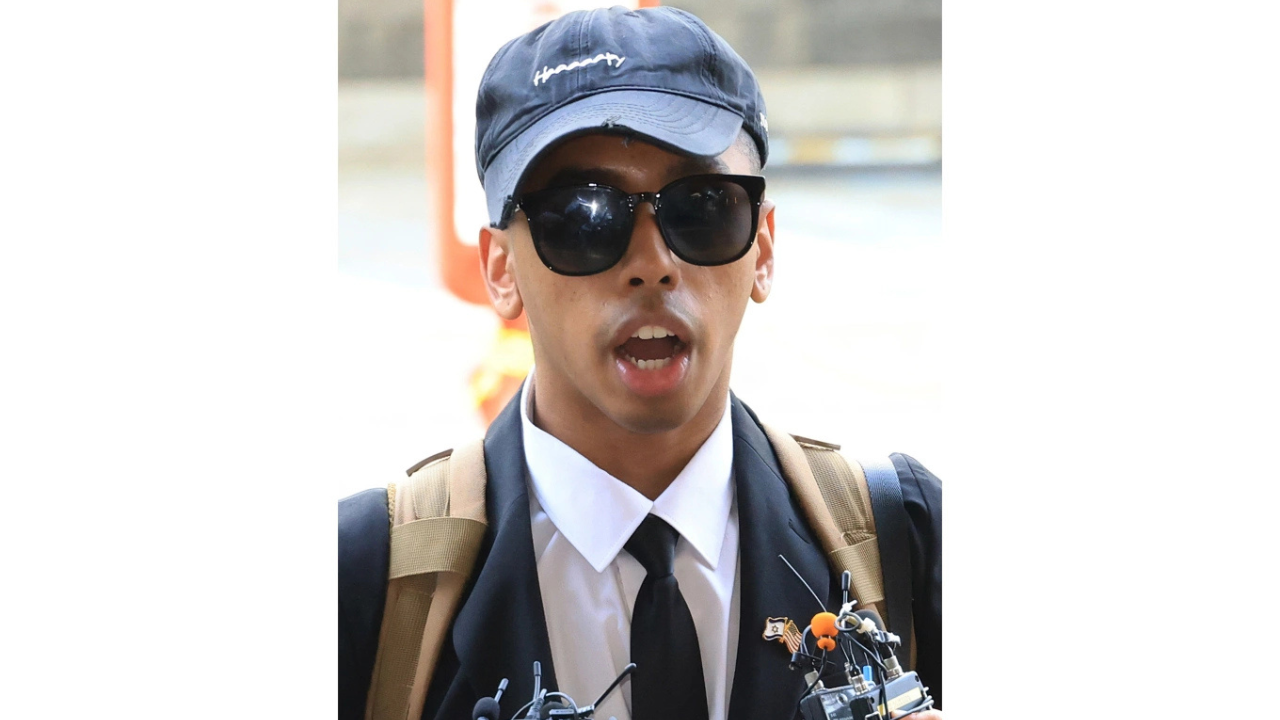
Johnny Somali thought his antics would play the same way in Seoul as they did elsewhere. He was wrong. Very wrong. The viral streamer, whose real name is Ramsey Khalid Ismael, recently learned that the South Korean legal system doesn't care about your follower count or your "it’s just a prank" defense. His attempt to appeal his detention didn't just fail. It essentially cemented his status as a guest of the state for the foreseeable future. If you’ve been following this train wreck, you know it’s about more than just one guy being obnoxious. It’s a case study in what happens when Western "main character syndrome" hits a wall of strict Eastern social and legal standards.
Ismael is currently stuck in a South Korean detention center. He’s facing a mountain of legal trouble ranging from interference with business to drug-related allegations. While his fans might’ve expected a quick deportation or a slap on the wrist, the Seoul Central District Court isn't playing along. They denied his habeas corpus petition, which is basically a formal request to be released from "illegal" or "unfair" detention. The judge looked at the evidence and decided he’s exactly where he needs to be.
The appeal that blew up in his face
When Ismael’s legal team filed for his release, they likely hoped to argue that his detention was excessive. In many Western jurisdictions, you can bail out of non-violent charges pretty easily. South Korea operates differently. Their legal system prioritizes social order and the risk of flight. Given that Ismael is a foreign national with no permanent ties to the country and a history of causing public disturbances, the court saw him as a massive flight risk.
The court's decision to keep him locked up sends a clear message. They aren't just punishing him for a single video. They're looking at a pattern of behavior that includes harassing locals, disrespecting national monuments, and causing chaos in private businesses. By denying the appeal, the judge signaled that the prosecution has a "prima facie" case strong enough to warrant keeping him behind bars until his trial. This isn't a "misunderstanding." It’s a prosecution.
Why the South Korean public wants blood
You can't talk about Johnny Somali without talking about the visceral reaction from the Korean public. This isn't just internet drama. People are genuinely angry. In Seoul, social harmony—often referred to as nunchi in a broader social context—is everything. When Ismael filmed himself pouring ramen over a convenience store table or harassing women on the street, he wasn't just being a jerk. He was violating a deep-seated cultural contract.
The backlash was so intense that "vigilante" streamers started hunting him down. One YouTuber actually located Ismael and punched him during a live stream. Normally, South Korean police are strict about assault, but the public sentiment was so skewed against Ismael that the "hero" who hit him received a wave of support. This pressure matters. Prosecutors and judges are human. They see the public outcry. They see the videos of him mocking the "Comfort Women" statue—a deeply painful symbol of Korean history and suffering during World War II. When you touch those nerves, you don't get the "tourist pass" anymore.
Breaking down the actual charges
Ismael isn't just in trouble for being annoying. The legal reality is much more clinical and dangerous for his future. He’s reportedly being investigated for several distinct crimes.
- Obstruction of Business: This stems from his behavior in convenience stores and pharmacies. In Korea, if you prevent a business from operating normally, it’s a criminal offense, not just a civil one.
- Drug Use Allegations: This is the big one. South Korea has some of the harshest drug laws in the developed world. Even if you consumed drugs outside of Korea, they can technically prosecute you if you test positive while on their soil. If Ismael is tied to narcotics, he’s looking at years, not months.
- Defamation and Harassment: These laws are much stronger in Korea than in the U.S. Truth isn't always a complete defense there. If you damage someone's social standing, you can be held liable.
The harsh reality of Korean detention centers
Don't confuse a Korean detention center with a "cushy" minimum-security facility. It's a grind. These centers are designed for efficiency and discipline. You aren't sitting around playing video games all day. You're in a shared cell, usually sleeping on a floor mat, following a strict schedule that starts early in the morning.
The food is basic—rice, soup, and kimchi. There’s no special treatment for "famous" foreigners. In fact, being a high-profile nuisance probably makes life harder. The guards expect total compliance. If Ismael tries the same "alpha" persona he uses on stream inside those walls, he’ll find himself in solitary confinement or facing disciplinary measures that make his current situation look like a vacation.
What happens when "content" goes wrong
Ismael is part of a growing trend of streamers who think the entire world is a backdrop for their "content." They operate under the assumption that their US passport or their audience size provides a shield. This situation proves that shield is an illusion. Other countries are tired of being used as props for Western influencers who don't respect local laws.
Japan already banned him. He didn't learn. Now, South Korea is taking it a step further by actually putting him through the meat grinder of their criminal justice system. This serves as a warning to the entire "IRL" (In Real Life) streaming community. The days of acting out for donations without consequences are ending. Governments are beginning to treat these streamers as the public nuisances they are.
What you should do if you're traveling
Most people don't go to Korea to start fights, but Ismael's situation highlights some things every traveler should know. First, understand that your rights are different the moment you land at Incheon. You don't have a "right" to film people in public without their consent in the same way you do in the States.
Second, respect the monuments. The "Comfort Women" statues and memorial sites aren't just photo ops. They are sacred ground. Treating them like a joke is the fastest way to get deported or worse. Finally, if you do get into legal trouble, don't expect your embassy to bail you out. They can provide a list of lawyers and make sure you aren't being tortured, but they cannot interfere with the host country's legal process.
Ismael is finding this out the hard way. His legal team is scrambling, his appeal was tossed, and the prosecutor's office is likely building a massive file to ensure he doesn't just walk away with a fine. He wanted the world to watch him. Now they are, but he probably doesn't like what they’re seeing.
If you’re planning a trip to East Asia, take a lesson from this mess. Keep your camera pointed at the scenery, keep your voice down on the subway, and remember that you're a guest. The "unlimited freedom" you think you have ends at another country's border. Don't be the next headline.