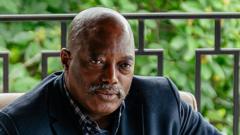
The United States just dropped a massive financial hammer on former Democratic Republic of Congo (DRC) President Joseph Kabila. On April 30, 2026, the Treasury Department’s Office of Foreign Assets Control (OFAC) officially added him to the sanctions list. This isn't just another bureaucratic slap on the wrist. It’s a direct accusation that Kabila is actively trying to burn down the house he used to run.
Washington claims Kabila has been providing "material support"—basically money, influence, and strategic backing—to the Alliance Fleuve Congo (AFC). This is a rebel coalition tied to the notorious M23 group. If you've been following the chaos in eastern DRC, you know M23 has already seized major cities like Goma and Bukavu. Now, the U.S. says Kabila is helping them finish the job by trying to topple the current government in Kinshasa.
The Shocking Return of a Former Strongman
Joseph Kabila hasn't been in power since 2019, but he’s never really left the picture. After years of living in South Africa, he made a bold move back to the DRC in early 2025. But he didn't head back to the capital. He showed up in Goma, a city literally held by rebels. Treasury Secretary Scott Bessent pointed out that Kabila has been living there under the protection of the M23. Imagine a former president living in a city occupied by an invading force—it’s a move that screams "regime change."
The evidence against him isn't just about where he’s sleeping. The U.S. alleges Kabila has been:
- Funding the AFC to manipulate the political chaos in the east.
- Encouraging defections within the Congolese national army (FARDC), telling soldiers to switch sides and join the rebels.
- Planning attacks from outside the country against government forces, though these apparently failed.
Why Washington Is Done Playing Nice
This move is part of a larger push to save the Washington Accords for Peace and Prosperity, a peace deal signed in December 2025. President Trump has been vocal about this deal being his administration's path to stabilizing the region. When Rwanda and the DRC signed it, there was a glimmer of hope. But the fighting didn't stop.
The U.S. isn't just picking on Kabila, either. Just last month, they slapped sanctions on the Rwanda Defence Force (RDF) and top Rwandan military officials. The message is clear: if you’re messing with the peace deal, you're on the list. By targeting Kabila, the Treasury is trying to cut off the domestic political oxygen that keeps these rebel groups alive.
What This Actually Does to Kabila
Sanctions can sometimes feel like a toothless tiger, but for a man like Kabila, they hurt. This isn't just about his travel plans.
- Asset Freeze: Any property or bank accounts Kabila has in the U.S. are now frozen.
- Financial Isolation: No U.S. citizen or company can do business with him. This effectively locks him out of the global dollar-based financial system.
- Secondary Risks: Foreign banks usually drop sanctioned individuals immediately to avoid getting hit by the U.S. themselves.
Kabila’s team and his political party, the FCC, have naturally called this "politicized." They argue the current government is just trying to eliminate a political rival. Honestly, it's hard to ignore that a military court in Kinshasa already sentenced him to death in absentia last year for treason. Whether you believe the charges or think it’s a witch hunt, the reality is that Kabila is now an international pariah.
The Mineral Factor and Regional Fallout
Eastern DRC isn't just a battlefield; it’s one of the most mineral-rich spots on the planet. The conflict there directly affects the supply chains for critical minerals used in everything from electric cars to smartphones. The Washington Accords weren't just about stopping the shooting; they were about creating a "Regional Economic Integration Framework" to secure these minerals.
Kabila’s alleged support for the AFC/M23 isn't just a local power struggle. It’s a direct threat to the transparency and security of those supply chains. If the region stays in a state of permanent war, the "blood mineral" trade continues to thrive, and legitimate investment stays away.
Taking Action on the News
If you're an investor or work in international trade, you can't ignore these shifts. The DRC is increasingly becoming a litmus test for U.S. foreign policy in Africa.
- Audit Your Partners: If you have business interests in the Great Lakes region, check your "Know Your Customer" (KYC) protocols immediately. Anyone tied to Kabila or his associates is now a massive compliance liability.
- Watch the Gold and Coltan Markets: Expect volatility. Sanctions usually lead to a crackdown on informal trade routes, which can tighten supply in the short term.
- Monitor the Washington Accords: The success or failure of this U.S.-led peace process will dictate the risk profile for the entire region for the next decade.
The days of Kabila operating in the shadows are over. Whether he can survive this kind of international pressure while living in a rebel-held city remains the big question. One thing is certain: the U.S. has decided that for peace to happen, the former president has to be sidelined for good.


