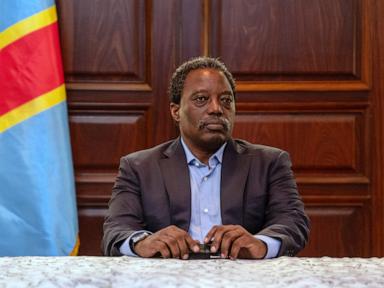
Western media is losing its collective mind over reports that former Congolese president Joseph Kabila has supposedly aligned himself with the M23 rebel coalition to launch an anti-government front against Felix Tshisekedi. Analysts sitting in air-conditioned offices in London and Washington are drafting breathless memos about shifting alliances, sudden betrayals, and the destabilization of the Great Lakes region.
They are missing the entire point because they refuse to look at the mechanics of power in Kinshasa.
This is not a sudden ideological pivot. It is the logical, mathematically predictable endgame of a transactional political elite that treats the Democratic Republic of Congo as a private extraction corporation rather than a functioning nation-state. If you are shocked by Kabila hedging his bets against Tshisekedi, you have spent the last two decades reading press releases instead of balancing ledgers.
The Myth of the Outsider Rebel
Let us dismantle the foundational lie of the current geopolitical narrative: the idea that insurgent groups like M23 exist in a vacuum, driven purely by localized ethnic grievances or foreign machinations from Kigali.
I have spent years tracking supply chains and security apparatuses across Kivu. The reality on the ground is far more mundane and much more brutal. Rebel groups in eastern Congo do not operate despite the political establishment in Kinshasa; they operate as a franchise of it. They are the violent external arm of domestic political bargaining. When a Congolese head of state or an ousted potentate loses formal control over state coffers and mining concessions, the gun becomes the primary renegotiation tool.
Kabila did not wake up last week and decide to throw his lot in with the very insurgents his administration fought for years. He is protecting a sprawling network of economic assets, land titles, and political patronage networks that the current administration is systematically dismantling or redirecting toward its own inner circle. Tshisekedi’s fatal mistake was not that he governed poorly—that is practically a baseline expectation in Congolese politics—but that he tried to monopoly-game the spoils without leaving enough scraps for the old guard.
When you squeeze an autocrat out of the inner loop, you should not be surprised when he funds the battering ram at the gate.
The Kinshasa Monopoly Game
To understand why this alliance happens now, you have to look at how power is actually priced in Central Africa. Western democracies love to talk about elections, parliaments, and democratic transitions. These are nice talking points for diplomatic cocktail circuits. On the ground in the DRC, power is held through control of logistics corridors, custom checkpoints, and mineral export monopolies.
Kabila spent nearly two decades building a web of overlapping authorities. When he handed over power to Tshisekedi in 2019—in what was always a power-sharing compromise rather than a genuine democratic handover—the unspoken agreement was that Kabila’s economic empire would remain untouched. Families, cronies, and military commanders loyal to the old regime retained their grip on cobalt, copper, and gold.
Tshisekedi spent his first term consolidating his position, cutting off the financial oxygen lines of his predecessor, and courting international backing by painting himself as the sole reformer standing against the old regime. But reform in Congo is rarely about clean government; it is about changing who signs the checks.
Once Kabila realized his political immunity and asset protection were expiring, his options narrowed. You do not retire quietly to a farm when your wealth is tied to state capture and your successors want to rewrite the ledger. You find muscle. And in eastern Congo, M23 has always been the most efficient contractor in the market.
Why the International Community Keeps Getting Played
Foreign diplomats love simple narratives because simple narratives fit into quarterly reports for donor governments. They want heroes and villains. They want Tshisekedi to be the plucky reformer and Kabila to be the fallen dictator.
This binary thinking is why Western foreign policy in the Great Lakes region has been a disaster for thirty years.
When you frame every conflict as a simple battle between democracy and authoritarianism, you ignore the internal market dynamics of violence. M23 is sustained not because Rwanda or any single neighbor possesses magical powers of destabilization, but because the local war economy is wildly profitable for everyone involved—from low-ranking army officers who trade rations for ammunition to senior politicians who use insecurity as an excuse to suspend democratic checks and balances.
Tshisekedi uses the eastern crisis to justify crackdowns on domestic opposition, muzzle journalists, and delay security sector reform. Kabila uses the eastern crisis to remind Kinshasa that peace is contingent on his inclusion. The rebels use the chaos to extract territorial rents and smuggle minerals across borders. It is a closed-loop ecosystem. Everyone has a
The Congo Alliance Myth That Masks Kinshasa Power Games
news
Every desk in every newsroom from London to Washington just published the exact same copy-paste panic. Joseph Kabila allegedly linked arms with the M23 rebels, creating an existential threat to the current administration in Kinshasa. The lazy consensus writes itself. Dictator-turned-statesman breaks silence, joins forces with the perennial eastern insurgents, and the Great Lakes region stands on the precipice of another regional collapse.
It is a neat narrative. It is also entirely wrong.
Strip away the geopolitical theater and look at the actual incentives of the actors involved. Kabila has spent the last five years executing a masterclass in political ghosting. He retreated to his farms, avoided direct confrontation, and watched Félix Tshisekedi absorb the crushing weight of governance without a functional state apparatus. Why would a man who values institutional survival suddenly blow up his own quiet retirement to back a deeply toxic, Rwanda-backed rebel coalition that the average Congolese citizen despises?
He wouldn't. This entire alignment is a phantom constructed by Kinshasa's spin doctors to justify sweeping domestic crackdowns against legitimate political opposition.
Let us define what is actually happening. When Tshisekedi's inner circle talks about a unified anti-government front, they are lumping every domestic critic, legal opposition figure, and skeptical civil society leader into the same basket as armed militias. It is an old authoritarian trick. If you can paint a peaceful politician holding a press conference with the same brush as a rebel commander holding a rifle, you can arrest the politician without trial and call it counter-terrorism.
Western think tanks and foreign desks fall for this every single time because they suffer from a fundamental misunderstanding of central African political structures. They treat Kinshasa as a functioning Western democracy facing an insurgency, when in reality, it is a fragile extraction hub managing a patchwork of localized fiefdoms.
Look at the mechanics of the M23 movement itself. They are not ideologues looking for national redemption or partners for retired presidents. They are a tactical military asset primarily sustained by cross-border dynamics, resource smuggling, and localized security vacuums. To believe that Kabila—who spent his entire presidency managing a complex, delicate balance of regional military commanders and mining concessions—would hand his political legacy to a proxy force that alienates the western and central voting blocs is to misunderstand his entire political DNA. He is a survivor, not a kamikaze pilot.
What the mainstream media misses is that this alleged alliance is a smoke screen for governance failures in Kinshasa. When inflation surges, when the currency wobbles, and when promises of basic infrastructure evaporate outside the capital's wealthy neighborhoods, the regime needs a boogeyman. And nothing rallies urban populations faster than the specter of eastern instability and foreign-backed invasion.
The real story in the Democratic Republic of Congo is not a grand coalition of exiled power-brokers and rebels. The real story is the systematic constriction of political space under the guise of national security. Tshisekedi's administration is using the M23 crisis as a blank check to silence dissent, neutralize opposition parties, and militarize the judicial system.
When you hear analysts warn that Kabila's return to active politics spells doom for the central government, ask yourself who benefits from that panic. It is not the citizens of Goma caught in the crossfire. It is not the opposition leaders facing arbitrary detention. It is the ruling elite in Kinshasa who need an external enemy to distract from their own catastrophic mismanagement of the state's budget and security apparatus.
Stop buying the Hollywood script of political masterminds orchestrating grand rebellions from luxury villas. Congolese politics is far more transactional, far more chaotic, and infinitely more cynical than a simple battle between heroes and villains.
The next time a headline warns you about an unholy alliance threatening the heart of central Africa, look past the names of the old guard. Follow the money, look at who is signing the mining contracts while the borders burn, and ask yourself who really profits when the nation is terrified into silence.


