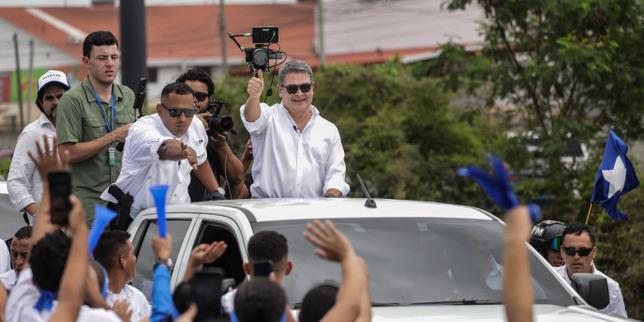
Geopolitics rarely makes sense until you look at the raw power dynamics behind closed doors. Juan Orlando Hernandez, the former president of Honduras, found himself walking free after a pardon from Donald Trump. Now, he's back on home soil. That kind of turnaround shakes up regional politics overnight. Most people look at high-profile pardons as simple acts of political charity or favor-trading. They miss the deeper structural shockwaves hitting Central America right now.
Let's cut through the noise. You need to understand why this specific return matters so much for the future of international relations and domestic stability in Honduras. It's messy. It's controversial. It forces us to look hard at how global superpowers interact with smaller sovereign nations.
The Weight of the Pardon
Trump's decision to grant clemency caught international observers completely off guard. Hernandez had previously faced heavy drug-trafficking charges and a lengthy prison sentence in the United States. When a former head of state gets pulled out of federal custody and sent home a free man, the diplomatic ripple effects are instant.
You have to ask yourself what went on behind the scenes. Deals like this don't just happen because someone felt nostalgic. They happen because strategic alliances shift. Washington wanted a specific outcome, or perhaps certain regional security arrangements required a new chess piece on the board. Whatever the exact motivation, Hernandez's return injects massive uncertainty into Tegucigalpa.
Political opponents are furious. Supporters are celebrating in the streets. The polarization in Honduras just hit a boiling point, and the current administration has to scramble to respond.
What the Media Misses About Regional Power
Mainstream coverage usually focuses entirely on the legal drama. Was the trial fair? Was the pardon legal under US law? Those questions matter, but they distract from the ground reality in Central America.
Honduras operates under intense economic and political pressure from external actors. When a heavy-hitting political figure like Hernandez re-enters the local ecosystem, existing power structures tremble. Business elites, cartel remnants, and local law enforcement all recalculate their loyalties.
- Power shifts happen fast when exiled figures return with US backing.
- Local institutions struggle to maintain authority against external diplomatic interventions.
- Public trust in the judicial system takes another brutal hit.
If you think this is just about one man, you're missing the bigger picture. This sets a dangerous precedent for how foreign leaders view accountability. It tells powerful individuals that prison sentences abroad might just be temporary inconveniences if the political winds shift back home in Washington.
The Immediate Fallout on the Ground
Back in Honduras, the atmosphere is electric and tense. You can feel the anxiety on the streets. People know that Hernandez carries immense inside knowledge about state operations, corruption networks, and drug corridors operating during his tenure.
His presence acts as a permanent pressure valve on current politicians. Will he launch a political comeback? Can he rebuild his base after everything that happened? Honestly, a full political resurrection seems unlikely given the hostility he faces from current leadership, but in Latin American politics, you should never count anyone out completely.
Local civil society groups are demanding transparency. They want to know what conditions, if any, were attached to the release. Governments rarely give something for nothing.
Reading Between the Lines
To make sense of international news today, stop reading the official press releases. Look at who benefits from the chaos. By dropping Hernandez back into the middle of Honduran politics, external players have successfully complicated the current government's agenda. It forces local leaders to spend all their energy managing internal security threats rather than pushing independent economic policies.
Keep a close eye on upcoming election cycles in the region. The return of Juan Orlando Hernandez isn't a closed chapter. It's the opening salvo of a brand-new political conflict. Watch how local alliances shift in the coming months, because the real impact of this pardon is only just beginning to unfold.