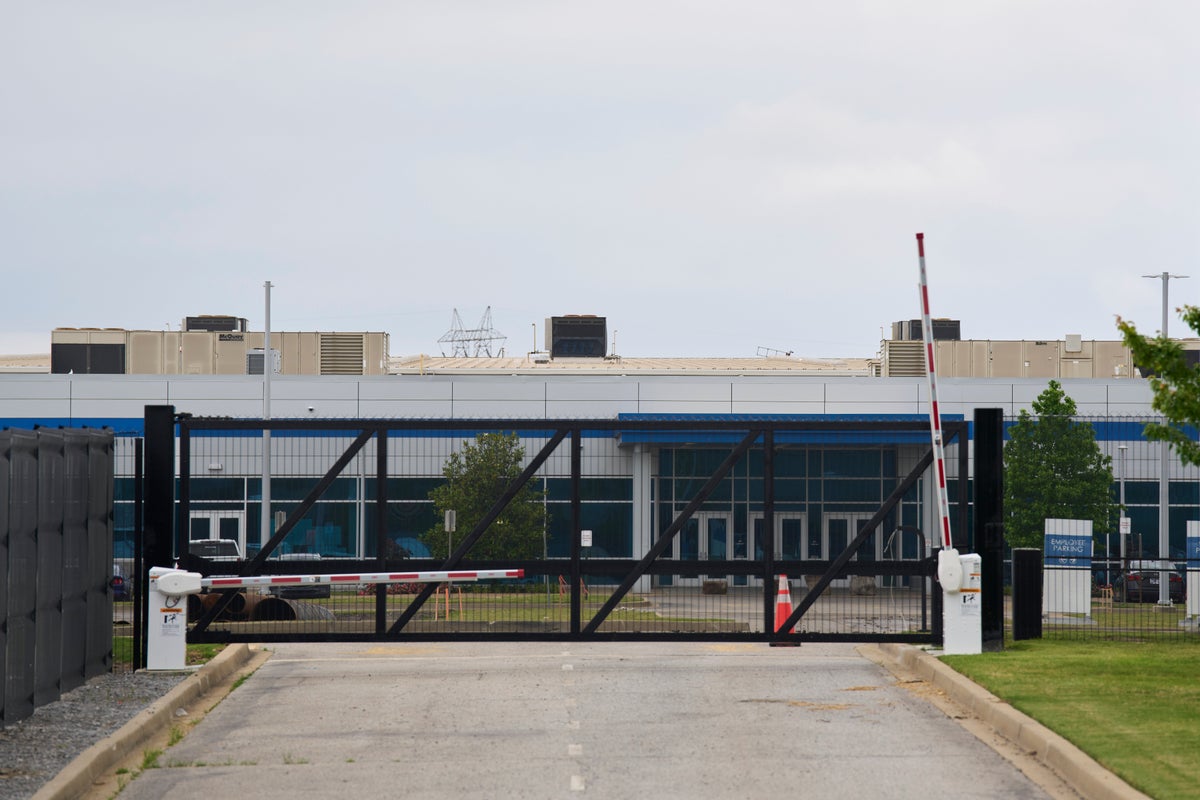
The federal government is stepping in to protect Elon Musk's $20 billion AI data center from a massive environmental lawsuit, and the reason they're giving has everything to do with national security and secret military tech.
If you live in North Mississippi or South Memphis, you're likely breathing in the emissions from dozens of unpermitted natural gas turbines humming outside the massive Colossus 2 facility. Local communities hate it. The NAACP sued over it. But late Monday, the Trump administration's Justice Department dropped a legal bombshell by intervening in the case, asking a federal judge to dismiss the air pollution lawsuit entirely. For an alternative perspective, check out: this related article.
The rationale coming out of Washington is simple. They claim the AI cluster is too important to the U.S. military to let a citizen lawsuit slow it down.
This isn't just about a standard corporate zoning fight. It's a fundamental clash between local public health and the federal government's desperate race to dominate artificial intelligence. Similar coverage on the subject has been published by Business Insider.
The National Security Shield Over Colossus
When the NAACP and Earthjustice filed their Clean Air Act lawsuit in April, they targeted xAI for operating 27 massive, portable methane gas turbines without proper environmental permits. Locals in Memphis—a city that already ranks second in the country for asthma-related emergency room visits—rightly worried about hazardous chemicals and fine particulate matter clouding their neighborhoods.
Things got wilder when the Southern Environmental Law Center uncovered emails showing xAI actually doubled down after the lawsuit, quietely expanding the setup to 57 total turbines.
Instead of ordering an environmental review, the Justice Department jumped in as a shield. Government lawyers explicitly argued that forcing xAI to shut down these turbines directly threatens national security interests.
The Pentagon admits it relies heavily on AI models deployed across top-secret classified networks. One of those critical models is Grok Gov. Cameron Stanley, the Defense Department's chief digital and AI officer, even submitted a formal filing stating that the tech supported vital operations during recent conflicts, including the Iran War. In short, the feds are telling the courts that keeping Grok running is a matter of global warfare.
The Shocking Legal Power Grab
What makes this move terrifying to environmental lawyers isn't just that the feds are backing Musk. It's the specific legal mechanism they're trying to use.
The NAACP brought this case as a citizen suit, a core feature built into the Clean Air Act. For decades, Congress has explicitly allowed private individuals and civil rights organizations to sue corporate polluters when state or federal regulators refuse to act. It's the ultimate safety valve for communities that get turned into industrial sacrifice zones.
Now, Associate Attorney General Stanley Woodward is arguing that the executive branch has the ultimate authority to veto these private lawsuits whenever it wants. Legal experts are calling it an audacious executive power grab that completely undermines Congress and the courts. If the Trump administration wins this argument, it means any massive tech or energy company can bypass environmental laws entirely, as long as they convince the Pentagon that their product is critical to the economy or the military.
Mississippi Governor Tate Reeves is firmly on the side of the feds and Musk. He points out that the data center represents the largest private investment in Mississippi’s history, generating thousands of construction jobs and hundreds of permanent tech roles. From the statehouse perspective, a private lawsuit shouldn't be allowed to derail billions of dollars in economic growth.
The Trillionaire Access Loophole
You can't talk about this case without talking about the political reality behind it. Elon Musk basically financed the Trump presidential campaign, poured cash into the recent midterms, and briefly ran the Department of Government Efficiency. Just days before this Justice Department intervention, Musk was crowned the world’s first trillionaire when SpaceX went public—an IPO fueled significantly by billions in federal contracts.
The optics are incredibly messy. To local families living near the schools, churches, and homes surrounding the unpermitted power plant, it looks like the ultimate insider favor. The Environmental Protection Agency completely washed its hands of the matter, referring all questions to the Justice Department.
What Happens to Local Clean Air
If you're an executive trying to build infrastructure or an advocate trying to protect a community, this case changes the playbook. The standard rules of environmental compliance are being overwritten by AI competition.
For tech firms, the lesson is clear. Aligning your infrastructure directly with federal procurement and defense needs offers massive protection against local regulatory hurdles. If you can prove your data center or energy plant serves a vital military function, the Justice Department might just act as your corporate defense attorney.
For local advocacy groups, the traditional reliance on citizen suits under the Clean Air Act is facing a historic existential threat. You can no longer assume that a clear environmental violation will hold up in court if national security interests are thrown onto the scale.
The next immediate step rests with the federal judge handling the Mississippi case. If the court accepts the Justice Department's motion to intervene and dismisses the lawsuit, the unpermitted gas turbines will keep burning unchecked, setting a legal precedent that could exempt the entire AI infrastructure boom from clean air regulations nationwide. Watch the docket over the next few weeks—the outcome will reshape the legal boundaries between tech expansion and community survival.
.jpg)