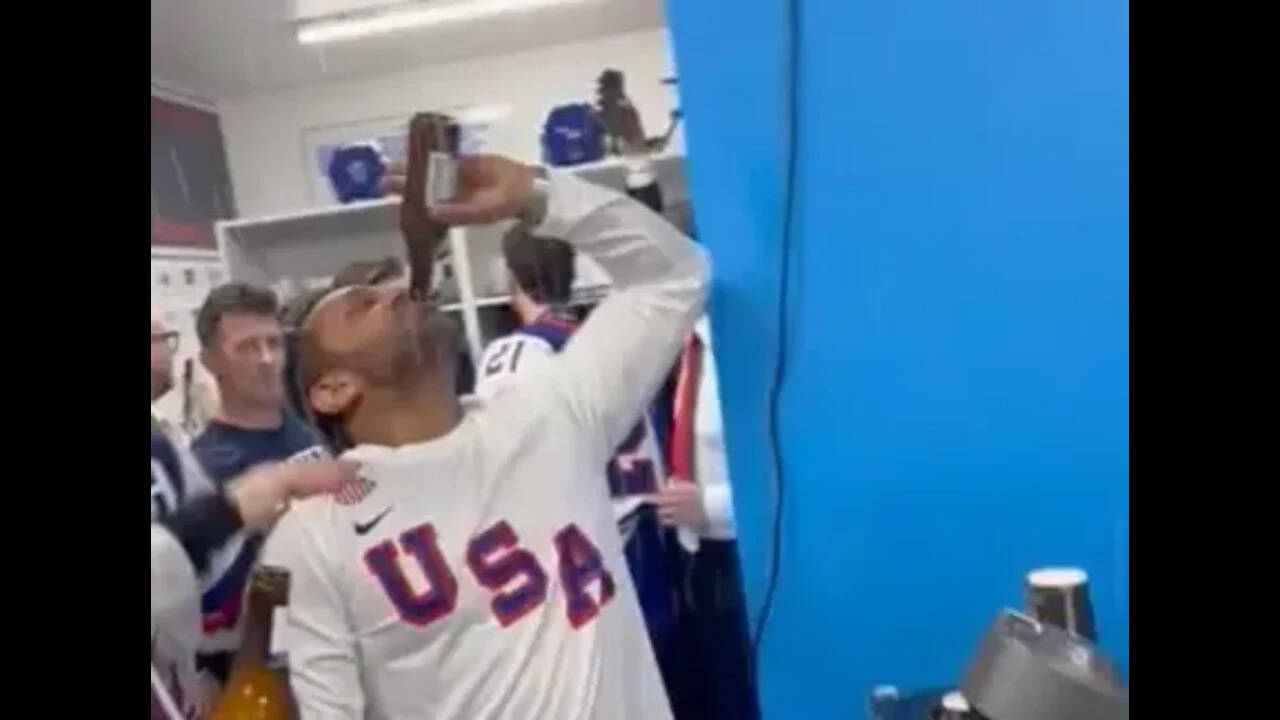
Political optics usually feel like a staged play. You see a candidate in a crisp suit pretending to enjoy a county fair or awkwardly holding a corndog like it's a foreign object. Then Kash Patel shows up on social media chugging a beer. It wasn't a slow sip at a fundraiser. It was a full-on, competitive-style guzzle that racked up millions of views and left the beltway pundits scratching their heads. If you're wondering why a guy touted for high-level intelligence and DOJ roles is leaning into "everyday American" tropes, you're looking at the new playbook for political survival.
People crave authenticity. Even if that authenticity comes with a side of foam and a loud cheer from a crowd. Patel isn't trying to be the most polished guy in the room anymore. He's trying to be the guy you actually want to grab a drink with on a Friday night.
The Strategy Behind the Suds
Washington D.C. is a town of masks. Everyone is trying to look smarter, richer, or more important than they actually are. When Kash Patel released that video of him guzzling a beer, he broke the fourth wall of political branding. He knows his critics will call it "unprofessional" or "unbecoming." He doesn't care. In fact, he's counting on it.
The divide in American politics isn't just about policy. It's about vibes. By acting like a regular guy at a tailgate, Patel creates a sharp contrast with the "elites" he spends his days criticizing. It's a calculated move. He's signaling to the base that he hasn't been swallowed by the swamp. He's still a guy from Queens who knows how to have a good time. That's powerful currency when voters feel like their leaders are out of touch.
I’ve seen this before with other populist figures. They use these moments to humanize themselves. It’s hard to stay mad at a guy who just finished a beer in three seconds flat. It makes him approachable. It makes him seem real. In an era of deepfakes and AI-generated speeches, seeing a man physically interact with his environment in a messy, human way carries a lot of weight.
Why the Everyday American Label Sticks
Patel keeps saying he's just an "everyday American." On paper, that's a bit of a stretch. The man has held some of the highest clearances in the United States government. He's been in the room for some of the most sensitive national security discussions of the last decade. But identity is about more than a resume. It's about how you carry yourself and who you choose to associate with when the cameras are off.
The "everyday American" isn't a job description. It's a set of values. It’s the idea that you can work a high-pressure job but still remember where you came from. For Patel, that means showing he hasn't traded his rough edges for a mahogany desk.
- He speaks bluntly.
- He doesn't use the jargon of the deep state.
- He engages with people on social media like a real person, not a press secretary.
This isn't just about a beer. It's about the broader "Kash" brand. He’s positioned himself as the ultimate outsider-insider. He knows how the machine works, but he claims he isn't part of the machine. The viral video is just the visual proof of that claim. It's the "receipt" for his populist credentials.
Breaking Down the Viral Moment
Social media rewards the unexpected. A video of a politician giving a speech gets ten thousand views. A video of that same politician doing something "normal" or slightly wild gets ten million. Patel understands the algorithm better than most of his peers. He knows that to stay relevant, you have to feed the beast content that people actually want to share.
Think about the mechanics of that video. It’s fast. It’s loud. It has a clear beginning, middle, and end. It’s perfect for the short-form video era. But beyond the technical aspects, there’s the psychological impact. It creates a "one of us" moment.
Most Americans don't spend their time reading white papers or scrolling through the Federal Register. They spend their time at work, with family, and occasionally at a bar with friends. When they see a public figure doing exactly what they do, it builds a bridge. It’s a shortcut to trust. You might not agree with every legal theory he has, but you think, "Well, at least he isn't a robot."
The Risks of Leaning Into the Persona
Is there a downside? Sure. You don't get to be a serious legal mind and a viral beer-chugging star without some friction. There are plenty of people in the legal community who think this kind of behavior damages the prestige of the offices he's held or might hold again. They think it's a race to the bottom.
But the "prestige" argument is losing its grip on the American public. People are tired of prestige. They’ve seen "prestigious" people get things wrong for thirty years. To Patel's supporters, his willingness to look "unprofessional" is actually a sign of his honesty. It shows he isn't trying to hide behind a title.
Critics will point to this as evidence of a lack of gravity. They’ll say he isn't serious enough for the roles he seeks. But in the current political climate, "serious" is often a synonym for "boring" or "part of the problem." Patel is betting that the public prefers a guy who can handle a beer over a guy who can only handle a teleprompter.
Beyond the Glass
If you want to understand what's happening here, look past the pint glass. This is about the democratization of political influence. You don't need a million-dollar ad buy on prime-time TV if you can get people to click "share" on their phones for free.
Patel is using his personal brand to bypass traditional media filters. He isn't waiting for a Sunday morning talk show to invite him on so he can explain his views. He's going straight to the people, one viral moment at a time. It’s aggressive. It’s loud. It’s very 2026.
The next time you see a clip like this, don't just roll your eyes. Ask yourself what it’s communicating to the millions of people who feel ignored by the traditional power centers. It’s communicating that there’s someone who talks like them, eats like them, and drinks like them in the halls of power. That is a message that resonates far longer than the buzz from a single beer.
Watch how other politicians try to copy this in the coming months. Most will fail because they’ll look like they’re trying too hard. The reason Patel’s video worked is that it didn't look like a focus-grouped campaign ad. It looked like a guy having a drink. In politics, that's the hardest thing in the world to fake.
Stop looking for the policy platform in a thirty-second clip and start looking at the culture. That's where the real battles are being won. If you want to stay relevant in this environment, you have to be willing to get your hands—and maybe your shirt—a little dirty. Whether you love the guy or hate him, you can't deny that he knows his audience. He isn't playing for the approval of the New York Times editorial board. He's playing for the people in the stands.