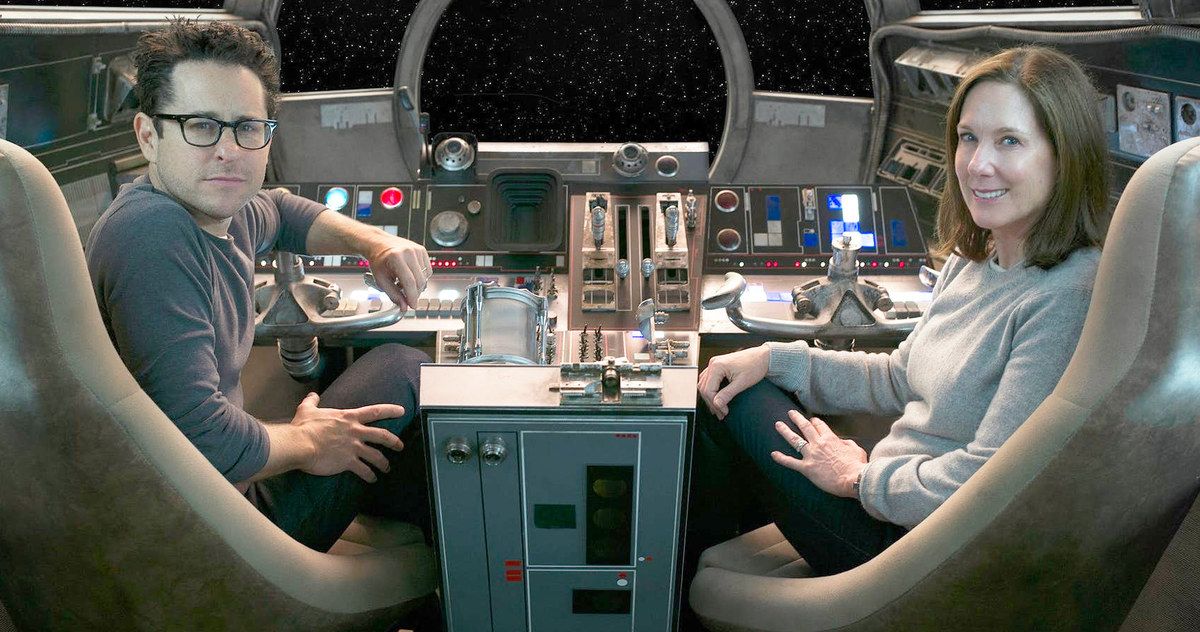
The rumors finally turned into a reality. Kathleen Kennedy is stepping down as the President of Lucasfilm. For some fans, this feels like a long-awaited victory lap. For others, it's the end of an era that, despite the internet's loudest voices, brought Star Wars back from a decade of cinematic dormancy. She isn't just a studio head; she's a titan who has produced some of the most iconic films in history, from E.T. to Jurassic Park. But managing a galaxy far, far away is a different beast entirely. It’s a job that requires balancing billion-dollar corporate expectations with a fanbase that treats lore like holy scripture.
The news doesn't just mean a change in the office directory. It means the entire creative strategy of Disney’s most expensive acquisition is about to pivot. We’ve seen the highs of The Mandalorian and the divisive lows of the sequel trilogy. Now, the board is being cleared. If you've been tracking the production delays, the revolving door of directors, and the shift toward Disney+ saturation, you knew this day was coming.
The Weight of the Lucasfilm Crown
Running Lucasfilm isn't like running Marvel Studios. Kevin Feige had a massive library of comics to adapt, but Kennedy inherited a finished story and a creator, George Lucas, who left a shadow longer than a Star Destroyer. Her tenure began with the monumental task of launching a new trilogy. The Force Awakens was a massive financial hit, pulling in over $2 billion. It felt like Star Wars was back.
But then the cracks started to show. The lack of a unified plan for the sequels led to a creative tug-of-war between J.J. Abrams and Rian Johnson. Fans felt the whiplash. By the time The Rise of Skywalker limped into theaters, the brand felt exhausted. Kennedy’s biggest hurdle wasn't just making movies; it was maintaining a "creative North Star." When you fire directors like Phil Lord and Chris Miller mid-production on Solo, or see projects from Patty Jenkins and Rian Johnson vanish into development hell, the industry notices. It signaled a lack of confidence in the very talent she hired.
Television Saved the Brand While Movies Stalled
While the film side of the house struggled to find its footing after 2019, Kennedy oversaw a massive expansion into streaming. This is where her legacy gets complicated. The Mandalorian didn't just succeed; it became a cultural phenomenon. It proved that Star Wars could live on the small screen with high production values.
The Success of the Mando-Verse
Under Kennedy, Lucasfilm embraced the Volume technology—that massive LED screen setup that replaced green screens. It changed how shows are made. Andor showed us a gritty, sophisticated side of the rebellion that many didn't think Disney had the guts to produce. These weren't just "content"; they were high-quality dramas.
The Dilution Problem
However, the push for "more" eventually led to "too much." Shows like The Book of Boba Fett and Obi-Wan Kenobi received mixed reviews for their pacing and visual effects. The brand started to feel diluted. When every character gets a spin-off, nothing feels special anymore. Kennedy’s successor will have to decide if Star Wars stays an "event" or becomes a background noise on a streaming app.
The Search for a Unified Visionary
Whoever takes the seat next has a mountain to climb. The names being tossed around aren't surprising. Dave Filoni, the protégé of George Lucas, is the fan favorite. He understands the "vibe" of Star Wars better than anyone. Then there’s Jon Favreau, who brought the technical innovation and the "Grogu" factor.
But being a great director doesn't make you a great executive. Kennedy’s job involved brutal contract negotiations, theme park integrations, and managing the delicate relationship with Bob Iger and the Disney board. You need someone who can speak "CFO" and "Jedi" fluently. The next president needs to stop the cycle of announcing movies that never happen. We’ve heard about projects from Taika Waititi, Kevin Feige, and Shawn Levy for years with almost zero footage to show for it.
What This Change Means for Upcoming Projects
Don't expect your favorite announced projects to disappear overnight, but do expect a "refinement" period. The James Mangold "Dawn of the Jedi" film and Sharmeen Obaid-Chinoy’s New Jedi Order movie are likely still on the books, but they’ll be under intense scrutiny. A new leader often wants to put their own stamp on the slate.
- Project Audits: Every script currently in development will get a fresh set of eyes. If it doesn't have a 10-year viability, it's gone.
- Theatrical Priority: Disney wants Star Wars back in theaters. The "straight to streaming" era for big franchises is cooling off. They want those $1 billion box office weekends again.
- Creative Freedom vs. Mandates: The next era will have to find a way to let directors have a voice without breaking the internal logic of the universe.
Kennedy’s departure marks the end of the "transition" phase. She moved Lucasfilm from a private kingdom into a corporate powerhouse. She deserves credit for the sheer volume of work produced under her watch. You don't get Rogue One or The Clone Wars finale without her greenlight. But the energy in the fandom has shifted. People want a cohesive story again. They want to feel like someone is at the helm who knows where the ship is going before they jump into hyperspace.
If you’re a creator or a business lead, watch how Disney handles this transition. It’s a masterclass in brand management under fire. The next step for anyone following this story is to look at the upcoming Disney earnings calls. That’s where the real "successor" talk will leak. Keep an eye on Dave Filoni’s promotion status—if he moves into a more formal corporate role, the "Filoni-verse" is officially the future of the franchise. For now, take a breath. The galaxy is changing, and for once, that change feels like it has a purpose.