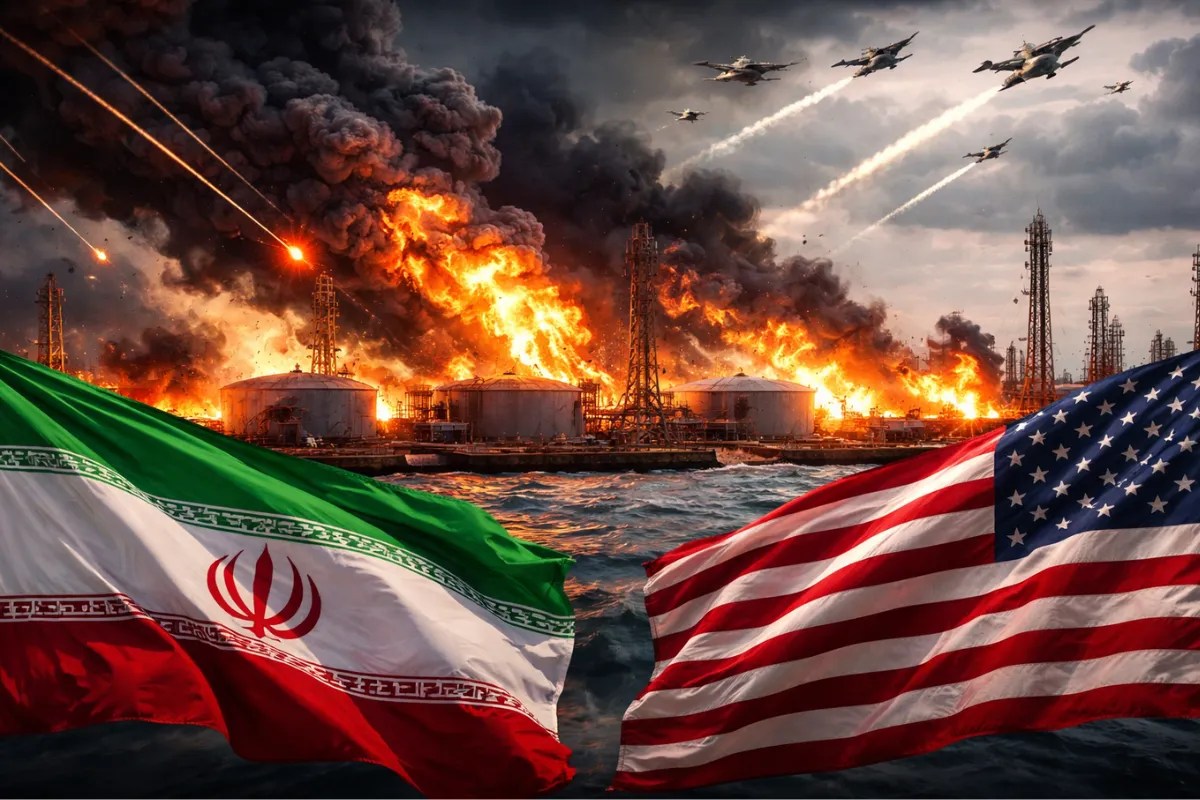
Geopolitics is often a theater of the absurd where the loudest explosions are frequently the least significant. The mainstream narrative surrounding the recent strikes on Iran’s Kharg Island suggests a decisive blow to the Islamic Republic's economic jugular. Headlines scream about deadlines being cut short and oil infrastructure in ruins. They are wrong.
This is not a knockout punch. It is a predictable move in a stale playbook that ignores the physical and digital realities of modern energy warfare. If you think blowing up a loading arm at a terminal stops the flow of global crude or topples a regime, you are playing checkers while the house is playing a high-stakes game of energy shell games and cyber-obfuscation.
The Myth of the Unreplacable Hub
Kharg Island handles roughly 90% of Iran’s oil exports. On paper, it looks like the ultimate "single point of failure." Military analysts love these targets because they make for great satellite imagery. You see smoke, you see fire, and you assume the economy follows suit.
But geography is not destiny in 2026.
I have spent years watching energy markets react to kinetic strikes. Here is what the armchair generals miss: redundancy is built into the shadows. While the world watches Kharg, Iran has spent a decade perfecting "ship-to-ship" (STS) transfers in the Gulf of Oman and beyond. They have mastered the art of the ghost fleet—dark tankers that turn off transponders and move oil through back-alley maritime routes that no missile can effectively shut down.
Striking Kharg is an exercise in optics. It raises insurance premiums for a week, spikes Brent crude for a few trading sessions, and gives politicians a chance to look "tough." It does not stop the oil. It just makes it more expensive to track.
Infrastructure is More Resilient Than Your Portfolio
People underestimate how hard it is to actually "destroy" oil capacity. You can damage a jetty. You can incinerate a storage tank. But the crude is still in the ground, and the pipes are largely buried.
Consider the math of repair. In previous conflicts, similar facilities were operational within weeks, if not days, using "jury-rigged" solutions that bypass charred infrastructure. Unless you are prepared to station a carrier group over the terminal 24/7 to sink every repair barge that approaches, a kinetic strike is a temporary inconvenience, not a strategic shift.
- The Cost of the Strike: $2 million per cruise missile.
- The Cost of the Damage: A few million in steel and concrete.
- The Result: A 5% increase in global oil prices that actually helps the target's remaining inventory value.
It is a circular logic of failure. We are subsidizing the enemy’s remaining exports by attacking their most visible ones.
The Intellectual Laziness of the "Deadline" Narrative
The media is obsessed with the idea that America acted "before the deadline." What deadline? In the world of international sanctions and shadow wars, deadlines are arbitrary markers used to manage domestic expectations.
By framing this as a "pre-emptive" strike, the press is falling for a classic misdirection. The timing isn't about military necessity; it’s about signaling. The real war isn't happening on the docks of Kharg. It’s happening in the code of the SCADA systems that control the pressure in those pipes and the banking backdoors that allow the money to move through Beijing and Moscow.
If you want to dismantle an energy giant, you don't use Tomahawks. You use the SWIFT system, or you deploy logic bombs that make the valves turn the wrong way until the pipes burst from the inside. Kinetic strikes are for people who want to win an election; digital and economic strangulation is for people who want to win a war.
The China Factor No One Admits
We need to address the elephant in the room: China doesn’t care about your strikes.
Beijing is the primary customer for Iranian "SITS" (Special Interest Technical Sales). When we hit Kharg, we aren't just hitting Iran; we are poking the world’s largest manufacturer. China has already integrated Iranian crude into its strategic reserves via small, independent refineries known as "teapots." These refineries are insulated from the global financial system.
When you disrupt the main terminal, you simply push the trade further into the dark. You lose visibility. You lose leverage. You lose the ability to monitor the very flow you claim to be stopping.
Stop Asking if the Strike Worked
The question "did the strike work?" is the wrong question. It assumes the goal was to stop oil.
If the goal was to stop oil, we would be seeing a blockade, not a localized bombing run. The strike happened because the policy of "strategic patience" has failed, and the current administration needed a kinetic event to reset the narrative. It’s a PR stunt with a high explosive yield.
Here is the unconventional truth: The most effective way to neutralize Iran’s energy influence isn't to blow up their islands; it's to make their product irrelevant. Every dollar spent on a missile hitting a tank at Kharg is a dollar that could have been spent on domestic energy independence or advanced modular reactors (SMRs). We are fighting a 20th-century war over a 19th-century fuel source while the 21st century passes us by.
The Failure of Kinetic Deterrence
I’ve seen this movie before. In 2019, the Abqaiq–Khurais attack in Saudi Arabia was supposed to change the world. It didn't. Production was back up faster than the news cycle could keep up.
Military force is a blunt instrument in a world governed by high-frequency trading and decentralized logistics. When you hit a node in a network, the network reroutes. Kharg is just a node. The network of the "Axis of Resistance" is far more fluid than a static map of the Persian Gulf suggests.
We are currently witnessing the "Sunk Cost Fallacy" in real-time. We have invested so much in the idea of Kharg as the "center of gravity" that we cannot admit it is actually a distraction. The real gravity is in the tankers floating off the coast of Malaysia, rebranded as "Middle Eastern Blend" and heading straight for Chinese ports.
The Actionable Reality
If you are an investor or a policy wonk, stop looking at the fire. Look at the insurance rates and the "dark fleet" tracking data. That is where the truth lies.
The strike on Kharg Island didn't end a crisis; it just moved the crisis to a place where we have even less control. It signaled a lack of creative options. When you run out of ideas, you start blowing things up. It's the hallmark of a declining strategy.
The real winners of the Kharg Island strike?
- Defense Contractors: Who get to replenish the stockpiles.
- Oil Traders: Who thrive on the volatility of "geopolitical risk" premiums.
- The Regime: Which now has a perfect excuse for its failing domestic economy.
The losers? Anyone who thinks this moves the needle toward a stable Middle East.
Stop cheering for the explosions. Start looking for the reroute. The oil is already moving. It just has a different name now.



