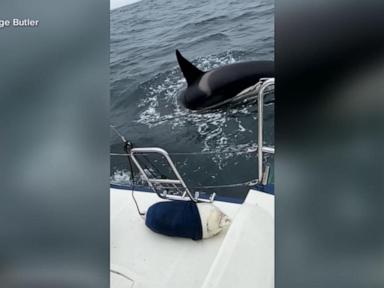
You are sailing peacefully off the coast of Spain when a heavy jolt shatters the quiet. It feels like hitting a submerged rock, but your depth sounder shows deep water. Seconds later, the steering wheel spins violently out of your hands with enough force to dislocate a shoulder. You look over the stern and see the unmistakable black-and-white flash of an apex predator.
This isn't a scene from a disaster movie. It's the reality facing hundreds of skippers navigating the Iberian Peninsula. Since 2020, a distinct subpopulation of killer whales has made international headlines by ramming medium-sized sailboats, chewing on fiberglass rudders, and occasionally sinking vessels. While media outlets love to frame these encounters as a calculated marine uprising, the truth is far stranger, more nuanced, and deeply tied to the social behavior of intelligent cetaceans.
The Anatomy of an Iberian Orca Encounter
When a pod decides to interact with a vessel, the playbook is almost always identical. The animals typically approach stealthily from the stern, focusing entirely on the boat's rudder and keel.
In a typical encounter, like the one captured by racing crews off Galicia, juvenile and adult orcas take turns bumping, shoving, and biting the fiberglass structure. They often use their bodies as levers, rotating the rudder until the steering quadrant snaps or the blade splits clean in half.
- The Primary Target: Monohull sailboats with spade rudders traveling at moderate speeds are overwhelmingly favored over catamarans or large commercial ships.
- The Duration: Most interactions last anywhere from ten minutes to an hour, depending on whether the pod loses interest or manages to disable the vessel's steering.
- The Human Toll: Despite hundreds of recorded interactions and multiple sinkings—including yachts like the Alboran Cognac—no human has ever been injured or killed by these wild orcas.
Playful Fad or Targeted Revenge?
Internet commenters are quick to point to anthropomorphic theories, suggesting an orca matriarch named White Gladis started a localized war against humanity after a boat collision. Marine biologists who study the Strait of Gibraltar population reject this narrative entirely.
Instead, experts classify the behavior as a learned social fad. Killer whales possess complex cultures, passing down localized hunting techniques, vocal dialects, and peculiar habits through generations.
Think of it like a teenager trend that went viral across pods. The orcas discovered that a boat's moving rudder creates heavy pressure, responsive feedback, and an interesting hydrodynamic game. Younger whales, in particular, treat the fiberglass blades like floating toys. Unfortunately for sailors, a playful juvenile orca weighs thousands of pounds and possesses enough jaw strength to turn a multimillion-dollar yacht into a drifting hazard.
What Scientists and Authorities Recommend
If you find yourself sharing the water with these animals along the Atlantic coast of Spain or Portugal, standard advice focuses on de-escalation rather than fighting back.
Researchers working with organizations like the Atlantic Orca Working Group urge skippers to drop sails, turn off the engine, and disengage the autopilot to make the vessel as uninteresting and quiet as possible. Throwing things at the animals or attempting to strike them is illegal, dangerous, and likely to increase their aggressive curiosity.
Authorities regularly issue real-time VHF radio warnings when pods are spotted moving along migratory paths tracking bluefin tuna. Checking local maritime safety feeds before setting sail from ports like Vigo, Baiona, or A Coruña can save your rudder.
The behavior might eventually fade away just as quickly as it started, or it might remain a permanent fixture of sailing the Iberian coast. Until then, respect the wildlife, secure your insurance, and keep your hands away from the spinning wheel.