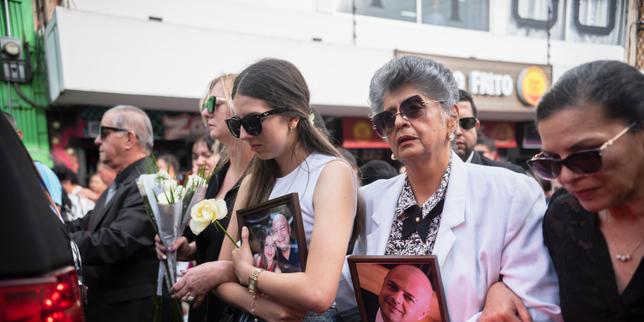
Two gunmen on a motorcycle pulled alongside a car in Heredia, Costa Rica, and fired roughly nine to ten shots. Inside was 50-year-old journalist and writer Camilo Rodríguez Chaverri, a man who had spent years blasting allegations of ties between drug traffickers and politicians across social media.
The attack happened on November 16, 2026. Just like that, Costa Rica's reputation as a peaceful exception in Central America took another heavy hit. Also making headlines in related news: When Parliament Demands the Delete Button on Russell Brand.
If you've followed the region from afar, you probably still picture Costa Rica as the quiet, eco-friendly democracy that abolished its army decades ago and stayed out of the cartel wars tearing up its neighbors. Honestly, that image is outdated. It's a comforting story, and it's also a trap that blinds people to what's actually happening on the ground.
Rodríguez's killing marks the first known murder of a media worker in Costa Rica in roughly 25 years. The last major case was radio broadcaster Parmenio Medina in July 2001, gunned down in the same general Heredia area. Having a quarter-century gap between killings used to feel like proof that Costa Rican institutions held firm. Now, it feels more like the end of a grace period. More insights regarding the matter are detailed by Al Jazeera.
Why drug trafficking and politics collide in Costa Rica
For years, analysts described Costa Rica mainly as a transit corridor. Cocaine moved north from South America toward the United States and Europe, passing through without turning the whole country into a war zone. That description doesn't hold up anymore.
Costa Rica has shifted into a logistics and storage hub for transnational trafficking networks. Traffickers use local front companies, maritime containers, and coastal routes to move shipments. In June 2025, for instance, Europol highlighted an investigation into a network using Costa Rican companies to receive cocaine from Colombia and hide it inside frozen yucca shipments headed for Europe.
When serious money moves through a small country, politics rarely stays clean. Cartels don't just buy boats and warehouses; they buy silence, favors, local access, and political protection. Even when politicians aren't directly running trafficking cells, weak oversight around ports, procurement, or campaign money creates openings that organized crime loves to exploit.
Rodríguez had publicly claimed he handed reports linking crime and politics to the U.S. Drug Enforcement Administration and had spoken openly about receiving death threats prior to the shooting. Police and judicial authorities have been investigating the case, including searching his residence hours after the attack. President Laura Fernández called the murder a stain on freedom of expression, while the Association of Journalists of Costa Rica warned it pointed toward silencing a dissenting voice.
Still, let's be careful not to jump ahead of the evidence. Investigations into political-criminal collusion are messy, and not every allegation published online has the same verification standard as a traditional newsroom investigation. What matters right now is that a vocal critic accusing powerful actors was shot dead in broad daylight, and the state has to prove it can solve the crime without fear or favor.
The homicide spike nobody can ignore anymore
You can't separate a journalist's murder from the broader violence wave hitting the country. Costa Rica's homicide rate doubled between 2013 and 2023, easing only slightly afterward rather than snapping back to old lows. By 2023, record homicide tallies forced the government into declaring a national security emergency as rival criminal groups fought over territory and routes.
Here's where people often get the story wrong. They assume violence in Costa Rica looks like street-level chaos everywhere, all at once. In reality, much of the bloodshed comes from turf clashes among criminal factions, port and logistics corridors, and local micro-trafficking networks.
Yet turf wars don't stay neatly quarantined. They corrode neighborhoods, strain police and courts, and test whether democratic institutions can keep pace. A country with a strong constitutional tradition and high literacy can still get overwhelmed when multi-billion-dollar illicit markets collide with local enforcement budgets.
What press freedom numbers tell us about the slide
Press freedom doesn't collapse overnight. Usually, it erodes in steps, often long before a gun is fired.
Look at Reporters Without Borders (RSF) rankings. Costa Rica stood at 8th out of 180 countries in the 2022 World Press Freedom Index, then slipped to 36th in 2025 and 38th more recently. Finishing inside the top 40 still beats plenty of places around the world, sure. Dropping 30 spots in just a few years, though, is a flashing warning light.
Why does a respected democracy slide like that? Several pressures stack up at once:
- Threats and intimidation: Reporters covering organized crime, corruption, or cartel disputes face harassment, online smears, and direct threats that push some toward self-censorship.
- Polarized rhetoric: When public debate turns combative and journalists are cast as enemies rather than watchdogs, physical risk tends to rise alongside verbal hostility.
- Economic fragility: Smaller outlets and independent reporters often lack legal shields, digital security tools, or physical protection plans when a story hits a nerve.
Also, there's an awkward question media watchers have been wrestling with for years: how does digital-era reporting fit into traditional press protection? Rodríguez built visibility sharing allegations on social media rather than working from a legacy newsroom desk. Whatever formal label someone uses, anyone reporting on public corruption and organized crime faces real danger—and treating digital communicators as second-class when it comes to safety is a mistake.
Common misconceptions about covering cartel corruption
People outside journalism often imagine investigative reporting on crime and politics like a movie scene. Someone drops a manila folder, a reporter publishes a bombshell, and reforms follow the next morning.
That's basically fantasy. In real life, covering drug money and political influence is slow, grinding work with plenty of dead ends.
First, not every tip is a smoking gun. Traffickers and corrupt actors plant false leads all the time to smear rivals, settle scores, or bait reporters into printing something defamatory. A good journalist checks documents, cross-examines sources, and knows what they can't prove yet.
Second, publishing a story doesn't automatically trigger prosecution. Even in countries with independent courts, prosecutors need admissible evidence, chain-of-custody records, and protected witnesses—not just a compelling social media post.
Third, safety isn't just about bodyguards. Digital hygiene matters just as much. If a source or reporter uses insecure messaging apps, reuses passwords, or leaves location trails exposed, criminal networks with technical muscle can track movements and connections fast.
Practical steps for reporters, editors, and readers
If you work in media, support press freedom, or simply follow Latin American politics and security closely, you don't have to just watch from the sidelines. Here are concrete steps that actually make a difference:
- Audit your digital and physical security habits: If you cover crime or corruption, switch to encrypted communications, enable hardware keys or strong multi-factor authentication, separate personal and reporting devices where possible, and vary daily routines—especially if you've ever received a threat.
- Back solo or independent reporters: Press freedom groups like the Committee to Protect Journalists (CPJ) and Reporters Without Borders document attacks and help fund emergency assistance, legal defense, and relocation when threats escalate. Supporting credible independent outlets gives reporters resources beyond a single phone and a social media account.
- Demand follow-through from officials: Condemnations after a killing are easy. Real accountability means transparent investigation updates, witness and prosecutor protection, and concrete anti-corruption measures around ports, contracting, and campaign finance.
- Read past headlines and single-source claims: When a sensational accusation breaks involving cartels and politicians, look for corroboration, official filings, and careful distinction between proven facts, sworn allegations, and unverified claims.
Camilo Rodríguez's death won't be the last test of Costa Rica's democracy. It's a wake-up call that peaceful history doesn't immunize a country against transnational crime—and protecting the people who ask uncomfortable questions is now a core survival test for the republic.