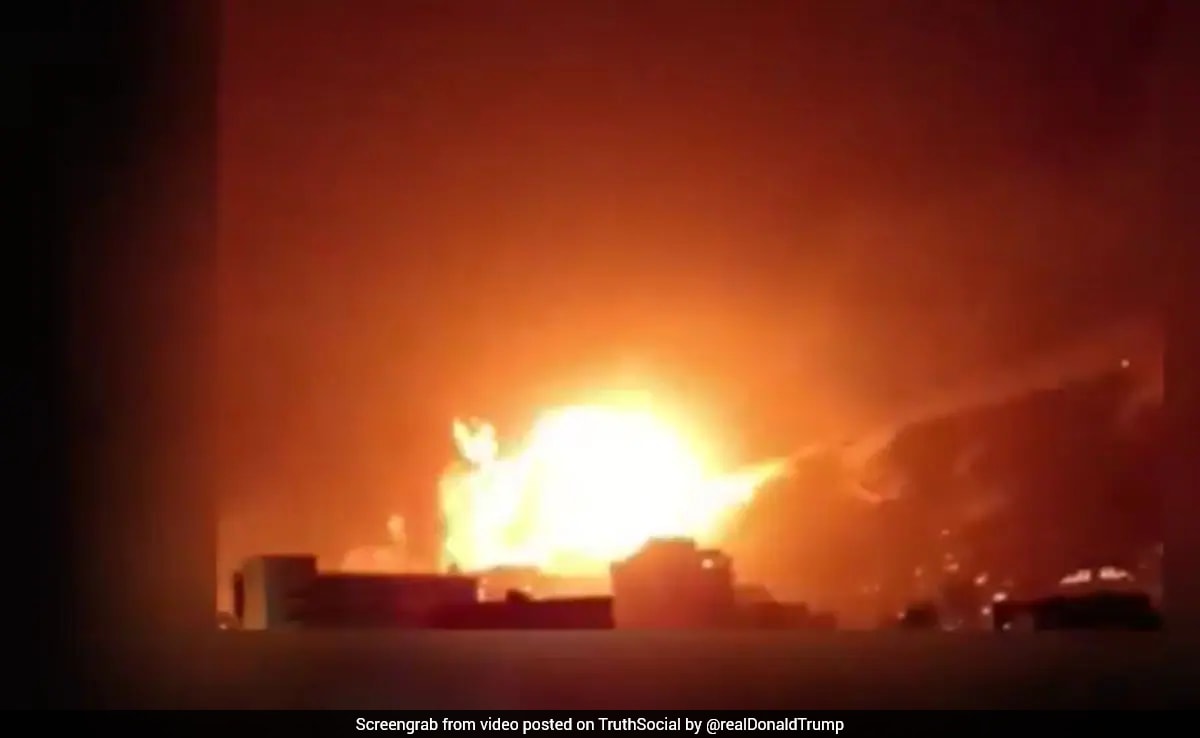
The utilization of precision kinetic action against high-value military targets functions as a forced recalibration of regional power dynamics, shifting the cost-benefit analysis of state-sponsored proxy warfare. When leadership nodes are eliminated within a sovereign capital, the objective transcends the immediate tactical removal of personnel. This strategy targets the Command and Control (C2) integrity of the adversary, forcing a transition from offensive posturing to internal preservation and succession management.
The recent dissemination of footage detailing strikes against Iranian military leadership serves as a psychological operations (PSYOP) multiplier, signaling to the remaining hierarchy that the geographic and defensive barriers of the capital have been compromised. This creates a state of informational asymmetry where the defender must assume every communication channel and physical location is a potential targeting vector.
The Triad of Operational Attrition
To understand the impact of targeted strikes in Tehran, one must evaluate the three primary layers of institutional damage inflicted upon the Islamic Revolutionary Guard Corps (IRGC) and its auxiliary networks.
1. The Erosion of Institutional Memory
Military organizations of this scale rely on informal networks and decades of personal rapport between commanders and proxy leaders in the Levant and Yemen. When a senior leader is "terminated," the organization loses more than a decision-maker; it loses a repository of trust. The replacement process introduces a friction coefficient where the new appointee must re-establish legitimacy, often resulting in a temporary paralysis of the "Axis of Resistance."
2. Signal Intelligence (SIGINT) Dominance and Paranoia
The success of a strike within a heavily defended urban center like Tehran confirms a systemic failure in the target’s counter-intelligence (CI) apparatus. This creates a feedback loop of suspicion. Leadership must divert resources from external operations toward internal purges and the auditing of their own security protocols. Every successful strike suggests the presence of human intelligence (HUMINT) on the ground or a compromise of the technical infrastructure, rendering the state’s internal security "blind" to the true source of the leak.
3. The Decoupling of Proxy Control
The IRGC operates on a model of decentralized execution but centralized intent. Precise strikes on the "centralized intent" nodes—the generals—sever the umbilical cord between Tehran and its regional assets. Without direct, authoritative guidance from seasoned commanders, proxy groups often default to more erratic or more conservative behaviors, both of which decrease the strategic utility of the proxy network to the Iranian state.
Quantifying the Escalation Ladder
The decision to share footage of such attacks is a calibrated move within the framework of Coercive Diplomacy. Standard geopolitical theory suggests that escalation is a ladder; however, strikes within the capital represent a "leap" across several rungs.
- The Sovereignty Tax: By striking inside Tehran, the attacking force imposes a massive political cost on the regime. It demonstrates that the regime cannot fulfill the basic social contract of protecting its own elite in its most secure enclave.
- Deterrence via Transparency: Sharing the video evidence removes the veil of "strategic ambiguity." It forces the adversary to acknowledge the loss publicly, which complicates their ability to respond with a face-saving, low-stakes retaliation.
- Resource Reallocation: The Iranian military must now harden its domestic infrastructure, moving assets from the borders and foreign theaters back to the interior. This "inward pull" reduces their capability to project power externally.
The Mechanism of Targeted Assassination as a Cost Function
From a consultant’s perspective, these strikes are not isolated events but entries in a long-term cost function. The cost for Iran to maintain its current regional posture increases exponentially with each high-level loss.
If $C_{op}$ represents the cost of maintaining regional operations and $L$ represents the loss of senior command personnel, we see a relationship where $C_{op}$ rises as the efficiency of command diminishes.
$$C_{total} = C_{fixed} + \frac{C_{variable}}{Efficiency(L)}$$
As $L$ increases, the efficiency of the network drops, forcing the state to spend more to achieve the same tactical outcomes. Eventually, the cost of the regional strategy exceeds the survival benefit to the regime.
Internal Destabilization and the Succession Crisis
The IRGC is a meritocratic-ideological hybrid. Promotions are based on both loyalty and a proven track record of "exporting the revolution." When the top tier is thinned out rapidly, the organization faces a succession bottleneck.
Younger officers, while ideologically fervent, lack the deep-seated connections with foreign militias that their predecessors spent thirty years building. This generational gap creates a vulnerability. The "new guard" is more prone to operational errors and is more susceptible to intelligence recruitment, as they have not been vetted through the same decades-long crucible as the founding generation of the IRGC.
Furthermore, the public nature of these terminations creates a rift between the military elite and the political leadership. If the military feels the political wing cannot provide adequate security or diplomatic cover, internal friction grows. This creates a "cracked monolith" effect, where the unified front of the state begins to splinter under the pressure of external precision.
The Tactical-Strategic Gap
A common critique of targeted strikes is that they are "mowing the grass"—a temporary solution to a persistent problem. However, this misses the structural degradation that occurs over time. While the "grass" grows back, the "soil"—the underlying organizational structure—is eroded.
The strategy is not to win a single battle but to render the organization's current operating model unsustainable. By targeting the architects of the regional strategy, the attacking force is effectively "de-platforming" the Iranian military from the regional stage.
- Logistical Disruptions: Senior leaders are often the primary fixers for complex logistical chains involving illicit weapons transfers.
- Financial Bottlenecks: Many commanders personally oversee the shadow banking networks that fund operations. Their removal disrupts the flow of capital to proxy groups.
- Psychological Paralysis: The "wait and see" approach adopted by subordinates following a commander’s death creates windows of opportunity for opposing forces to seize the initiative on the ground in Syria, Iraq, or Lebanon.
The Credibility of the Threat
The sharing of strike footage by a world leader, such as Trump, serves to cement the credibility of the threat. In game theory, a threat is only effective if the opponent believes the actor has both the capability and the will to execute it. By broadcasting the results of an attack on Tehran, the administration eliminates any doubt regarding capability. This is a move toward "Open-Source Deterrence," where the evidence of the adversary’s vulnerability is used as a tool to prevent future escalations without needing to fire another shot.
The operational reality has shifted: the "red lines" have been redrawn from the borders of the nation to the desks of its highest-ranking officials.
The immediate requirement for regional actors is a shift from reactive defense to proactive hardening. However, for the Iranian command, no amount of physical hardening can compensate for the breach of their internal communications and the loss of their most experienced strategic minds. The path forward dictates a forced contraction of Iranian influence as the regime prioritizes the survival of its core leadership over the expansion of its peripheral proxies. This contraction provides a strategic window for regional competitors to dismantle proxy infrastructures that are currently operating without their central nervous system.



