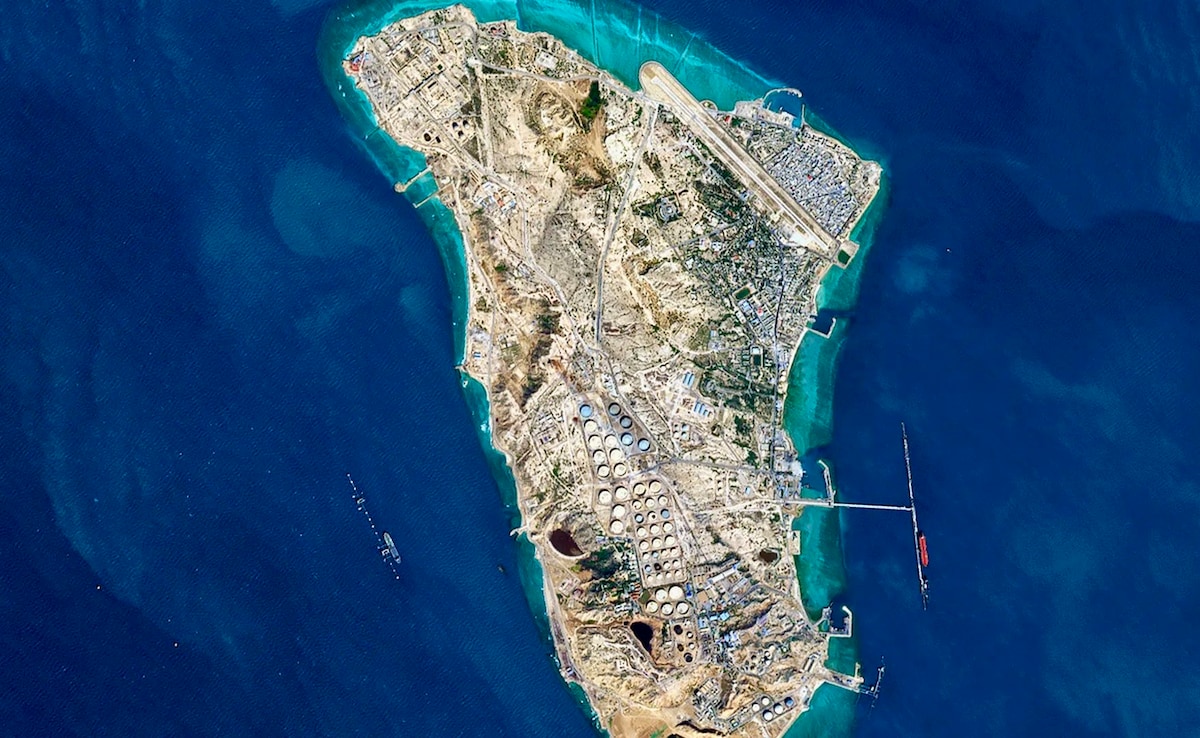
The surgical degradation of Iran’s primary maritime export node, Kharg Island, represents a fundamental shift from economic containment to active kinetic interdiction. By targeting both the loading infrastructure of the terminal and the critical bridge connectivity, the strike operates as a dual-mode disruptor. It simultaneously halts the physical flow of crude oil and severs the land-based logistical chain required to maintain operations. This action establishes a high-stakes baseline for the incoming administration, effectively front-loading the geopolitical risk before a single policy change is signed in Washington.
The strategic logic follows a "Choke Point Multiplier" framework. Kharg Island handles approximately 90% of Iran’s crude exports. By neutralizing this single point of failure, the strike achieves a disproportionate impact on the Iranian fiscal position without necessitating a wider theater of war. The removal of the bridge infrastructure further complicates the recovery timeline, as heavy repair equipment cannot reach the damaged terminal berths.
The Three Pillars of Iranian Maritime Vulnerability
The efficacy of the Kharg Island strike rests on three structural weaknesses within the Iranian energy export model.
- Geographic Concentration: Iran’s reliance on a singular offshore hub creates an extreme vulnerability. Unlike the United States or Russia, which utilize diverse pipeline networks and multiple port outlets, the Iranian state is tethered to the Persian Gulf's deep-water access.
- Technological Obsolescence: The Kharg Island facility utilizes legacy infrastructure. Interdicting specialized loading arms and pumping stations creates a replacement crisis, as these components are often subject to international sanctions, making rapid procurement nearly impossible.
- Fiscal Monoculture: The Iranian budget operates on an oil-dependent revenue stream. Disrupting the export volume at the source creates an immediate liquidity crisis, forcing the state to prioritize domestic stability over proxy funding or nuclear enrichment programs.
The Cost Function of Infrastructure Interdiction
Calculating the impact of the strike requires a breakdown of the recovery mechanics. The damage to the terminal is not a simple binary of "functional" or "non-functional." Instead, it creates a tiered degradation of capacity.
- Flow Rate Suppression: Damage to the manifolds and pumping systems reduces the volume of oil that can be moved per hour. This forces tankers to stay at berth longer, increasing their exposure to further kinetic action and raising the cost of maritime insurance for the remaining fleet.
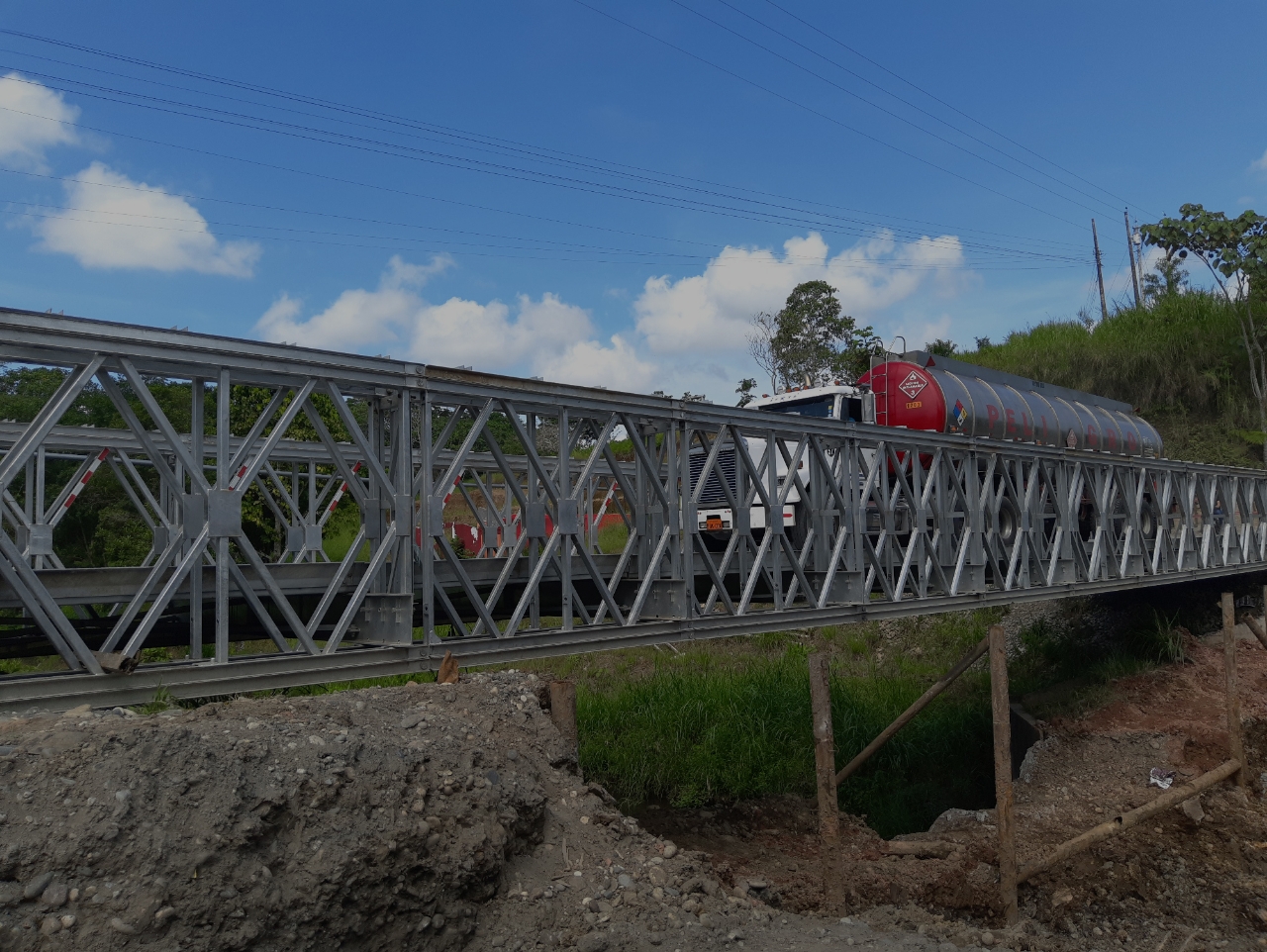
- Logistical Isolation: The destruction of the bridge is the critical variable. In traditional industrial repair, specialized cranes and heavy machinery are moved via land to reach the site. With the bridge gone, all repair materials must be ferried via barge, which is slower, more expensive, and highly visible to satellite surveillance.
- The Insurance Premium Spike: The strike effectively closes the "Shadow Fleet" loophole. While Iran uses unregistered tankers to bypass sanctions, these vessels cannot operate if the physical loading infrastructure is compromised. Furthermore, the risk of total hull loss due to kinetic activity makes the cost of operating in the northern Persian Gulf prohibitive for even the most risk-tolerant captains.
Escalation Dominance and the Trump Deadline
The timing of this strike—arriving hours before a self-imposed deadline by the incoming Trump administration—functions as a psychological lever. It signals that the previous era of "maximum pressure" via sanctions has evolved into "maximum friction" via kinetic disruption.
Escalation dominance is achieved when one party can increase the stakes of a conflict in a way that the opponent cannot match without risking total systemic collapse. By hitting Kharg Island, the strike targets the Iranian regime's wallet without hitting its urban centers or nuclear facilities directly. This creates a dilemma: Iran can retaliate and risk a full-scale regional war it cannot win, or it can absorb the blow and enter negotiations from a position of profound economic weakness.
Global Market Absorption and Supply Elasticity
Market analysts often assume that a hit to Kharg Island would trigger an immediate and permanent oil price spike. However, structural changes in the global energy market have altered the supply elasticity.
The United States has emerged as the world’s largest oil producer, providing a buffer against Middle Eastern supply shocks. When Iranian exports drop, the market looks to OPEC+ spare capacity—specifically in Saudi Arabia and the UAE—to fill the void. The strike on Kharg Island, therefore, does not just hurt Iran; it strengthens the market position of its regional rivals.
The risk of a "Strait of Hormuz Closure" remains the primary counter-move. However, this is the "nuclear option" of maritime trade. Closing the strait would alienate Iran’s primary customers, including China, who rely on the free flow of energy through the region. Iran cannot afford to burn its bridge to Beijing to spite the West.
The Bottleneck of Port Recovery
Recovering from a kinetic strike on a specialized energy terminal involves a four-stage process that is now hindered by the loss of land-based access.
- Assessment and De-mining: Before repairs begin, the area must be cleared of unexploded ordnance or secondary devices.
- Structural Stabilization: The integrity of the piers must be verified. If the strike caused deep-water structural damage, the repairs require specialized underwater welding teams.
- Component Replacement: This is where the strike’s impact is most durable. Loading arms are bespoke pieces of engineering. If the control systems were destroyed, the software and hardware integration can take months to synchronize.
- Security Hardening: Any attempt to rebuild must include new air defense assets, further draining the Iranian military budget and diverting resources from other fronts.
The Strategic Shift from Sanctions to Kinetic Denial
For a decade, the primary tool of Western policy was the SWIFT ban and the freezing of assets. These are digital barriers. The Kharg Island strike is a physical barrier.
Digital barriers can be bypassed through cryptocurrency, gold bartering, or clandestine banking. Physical barriers cannot be bypassed. If the oil cannot get onto the ship, the payment mechanism is irrelevant. This represents a return to classical realism in geopolitics, where the physical control of energy nodes dictates the limits of a nation’s power.
The destruction of the bridge serves as a metaphor for the broader diplomatic situation. The path to the "old way" of doing business is severed. The Iranian state must now decide if it will rebuild its infrastructure under a new set of international constraints or watch its primary economic engine slowly rust in the Gulf.
The immediate strategic play involves a rapid deployment of maritime monitoring assets to ensure no temporary offshore loading buoys are established. This prevents Iran from using "Ship-to-Ship" (STS) transfers to circumvent the damaged terminal. By maintaining a total denial of the Kharg Island zone, the international community locks in the economic loss, forcing the regime into a corner where its only viable move is a total recalibration of its regional and nuclear ambitions.