Every time a British royal steps off a plane in the Caribbean, the welcome mat comes with a heavy, unspoken bill. King Charles III knows this better than anyone. When you represent an institution that once profited directly from the transatlantic slave trade, a polite wave and a speech about "shared history" just doesn't cut it anymore.
Let's be honest about what's happening here. The days of glossy royal tours filled with flag-waving crowds and zero political friction are dead. Across the Commonwealth, nations are demanding more than warm words about regret. They want accountability, constitutional independence, and hard conversations about reparations.
You can't separate the British monarchy from the history of Caribbean slavery. Not when the Crown itself backed the Royal African Company, and not when the fallout of that era still shapes the economies and legal systems of the region today.
The Royal Family's Direct Ties to the Slave Trade
Most people assume the British monarchy was just a passive observer while private merchants got rich off enslaved labor. That's completely false. The Crown wasn't sitting on the sidelines; it was actively investing in the business.
Back in 1660, King Charles II and his brother James, the Duke of York, founded the Company of Royal Adventurers Trading to Africa. Later rebranded as the Royal African Company, this enterprise held a state-backed monopoly on English trade along the West African coast. Under its charter, the company branded enslaved people with the initials "DY" for Duke of York before shipping them across the Atlantic to British colonies in the Caribbean.
Historical records show that between 1672 and 1731, the Royal African Company transported more enslaved Africans to the Americas than any other single institution in the history of the transatlantic slave trade. Estimates put that number at roughly 150,000 people, with tens of thousands dying during the brutal Middle Passage.
King Charles III has actually acknowledged some of this dark history. In 2023, Buckingham Palace confirmed that the King supported independent academic research into the monarchy's historical links to slavery, following the discovery of a 1689 document showing the transfer of £1,000 in Royal African Company shares to King William III.
Opening up the Royal Archives to researchers was a significant move. Still, historians and activists point out that access to documents is only the absolute bare minimum. You don't get a gold star for admitting what your own ledgers already prove.
Why Expressions of Sorrow Aren't Enough Anymore
If you look at the speeches delivered by senior royals over the last few years, you'll notice a very careful, lawyer-approved pattern. They express "sorrow." They acknowledge "appalling atrocities." What they never do is issue a formal apology.
Why? Because in international law and diplomacy, a formal apology opens the door to legal liability and financial reparations.
During the 2022 Commonwealth Heads of Government Meeting in Rwanda, Charles—then still the Prince of Wales—told leaders that he could not describe the depths of his personal sorrow at the suffering of so many. He even admitted that the roots of the Commonwealth's contemporary structure were tangled in the pain of the slave trade. Earlier, during a 2022 tour of the Caribbean, Prince William used almost identical phrasing, calling slavery abhorrent and saying it should never have happened.
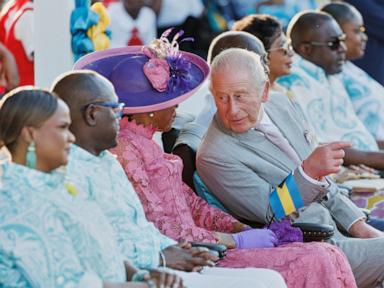
To Caribbean leaders and citizens, this carefully scripted empathy feels hollow. When Barbados officially removed Queen Elizabeth II as its head of state in November 2021 to become a republic, Charles attended the ceremony in Bridgetown. He spoke openly about the "appalling atrocity of slavery" that forever stains British history. Yet even on that historic night, the word "sorry" remained conspicuously absent.
People in Kingston, Bridgetown, and Castries aren't stupid. They can hear the difference between a genuine reckoning and a PR strategy designed to protect royal assets from legal claims.
The Growing Push for Republicanism Across the Region
The debate over Britain's slavery legacy isn't just a history lesson. It's actively dismantling the Commonwealth realms right in front of King Charles III's eyes.
For decades, the British monarch remained the ceremonial head of state for several independent Caribbean nations. Today, that arrangement looks increasingly bizarre to younger generations. Why should a white king living in a London palace serve as the constitutional head of a predominantly Black nation whose ancestors were enslaved under his predecessors' flags?
Barbados broke the seal in 2021, and the dominoes are lining up fast:
- Jamaica: Prime Minister Andrew Holness didn't mince words when Prince William and Kate Middleton visited Kingston in 2022. Standing right next to the royal couple on camera, Holness stated plainly that Jamaica was "moving on" and intended to become a republic. The Jamaican government has already established a Constitutional Reform Committee to guide the transition away from the monarchy.
- Belize: Following the messy optics of the 2022 royal tour—where protests forced William and Kate to cancel a visit to a cacao farm in Indian Creek—Belizean officials announced plans to review their constitutional ties to the Crown.
- The Bahamas, Antigua and Barbuda, and St. Kitts and Nevis: Leaders in all three nations have publicly stated that referendums on becoming republics are on the table during Charles's reign. Gaston Browne, the Prime Minister of Antigua and Barbuda, explicitly told reporters shortly after Queen Elizabeth II's death that he planned to call a referendum within a few years, framing it as the final step in completing their circle of independence.
Charles has publicly stated that whether a country chooses to become a republic is a matter entirely for its people to decide. Privately, watching the realm shrink so quickly at the start of his reign is a massive blow to royal prestige.
Reparations Are Moving From Fringe Idea to Mainstream Policy
Not long ago, British politicians and palace aides could brush off demands for slavery reparations as a radical talking point. That's impossible now. The movement has organized, professionalized, and gained serious international traction.
At the center of this push is the CARICOM Reparations Commission, established by Caribbean governments to build a unified legal and moral case for reparatory justice. They aren't asking for giant checks handed out to individuals. Instead, their ten-point action plan focuses on structural investments to repair centuries of deliberate economic underdevelopment.
Their demands include:
- A full formal apology, rather than vague statements of regret.
- Debt cancellation for Caribbean nations trapped in cycles of borrowing that trace back to post-emancipation economic neglect.
- Targeted investments in public health and education systems to address generational disparities.
- Technology transfers and cultural institution funding to restore stolen heritage.
The hypocrisy of the financial history makes their argument almost impossible to defeat on moral grounds. When Britain abolished slavery across most of its empire in 1833, it didn't pay a single penny to the people who had been enslaved. Instead, the British government borrowed £20 million—an astronomical sum representing roughly 40% of the national budget at the time—to compensate the slave owners for their "loss of property."
British taxpayers didn't finish paying off that massive government loan until 2015. Let that sink in. Descendants of enslaved people living in the UK were literally paying taxes well into the 21st century to pay off the debt used to compensate the families who owned their ancestors.
When Caribbean leaders bring this up during royal visits, there's no good counterargument. You can't spin a £20 million payout to slaveholders.
How Royal Tours Have Changed Forever
If you compare footage of Queen Elizabeth II's Caribbean tours in the 1950s and 1960s with royal visits today, you're looking at two completely different worlds. Back then, the monarchy projected unchallenged authority and glamour. Today, every step is scrutinized through the lens of colonial history.
The 2022 tour by the Prince and Princess of Wales was a turning point. Critics hammered the optics of the couple shaking hands with Jamaican children through a wire fence in Trench Town, or riding in the back of an open-top Land Rover in military-style uniforms—a direct visual echo of Queen Elizabeth II's colonial-era tours in the 1950s.
The backlash was brutal, and Buckingham Palace clearly took notes. Since taking the throne, King Charles III has tried to adopt a more serious, listening-first posture. During his 2023 visit to Kenya—another former colony with a brutal history of British rule—Charles acknowledged the "abhorrent and unjustifiable acts of violence" committed against Kenyans during their struggle for independence.
Yet even in Kenya, protesters and descendants of victims pointed out that Charles stopped short of a formal apology. The palace playbook remains fundamentally unchanged: acknowledge the pain, praise the resilience of the local people, emphasize modern partnerships like climate change action, and dodge any legal admissions of guilt.
What Actually Happens Next
King Charles III loves the Commonwealth. By all accounts, his commitment to the organization is genuine, and he has spent decades championing environmental causes that directly affect small island nations in the Caribbean. When he talks about rising sea levels threatening Barbuda or hurricane recovery in Dominica, he isn't faking his concern.
Here's the problem: climate change advocacy doesn't erase colonial debt. In fact, Caribbean leaders constantly link the two issues together. They argue that the same Western industrialization fueled by Caribbean plantation wealth is now causing the climate crisis that threatens to sink their islands. To them, climate finance and slavery reparations are two sides of the exact same coin.
If you want to follow how this story unfolds over the next few years, watch three specific pressure points:
- The Royal Archives research findings: The academic study backed by King Charles III into the monarchy's links to the Royal African Company is expected to publish its findings in the coming years. When those numbers and documents go public, pressure on Buckingham Palace to take concrete financial action will spike dramatically.
- Jamaica's constitutional timeline: Watch whether Jamaica successfully holds its referendum to remove King Charles III as head of state. If Jamaica drops the Crown, the remaining English-speaking Caribbean realms will likely follow within a decade.
- Commonwealth Summit confrontations: At upcoming Commonwealth Heads of Government Meetings, Caribbean prime ministers will continue forcing reparations onto the official agenda, regardless of how hard British prime ministers try to block the discussion.
King Charles III can't escape Britain's role in slavery because the evidence isn't buried in the past—it's written into the constitutions, economies, and coastlines of the very countries he visits. Until the British state and the Crown move beyond carefully worded sorrow toward real structural accountability, every royal flight across the Atlantic will land in the middle of a storm.