The rain in Manchester does not fall; it crowds you. It clings to the brickwork of old cotton mills and slickens the pavement outside Victoria Station, a relentless, heavy mist that smells vaguely of diesel and old stone.
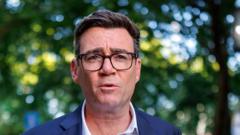
For nearly a decade, a man in a dark unbuttoned overcoat and a worker-bee lapel pin walked these streets with a specific kind of gravity. He spoke in the cadences of a region that felt it had been left to rust by a distant capital. They called him the King of the North. It was a title born of affection, a bit of regional swagger, and a deep-seated frustration with the status quo.
Now, that man is packing his bags.
The Makerfield by-election changed everything. The ballot papers are counted, the victory speeches are delivered, and Andy Burnham is no longer just a regional figurehead fighting for bus routes and rail funding. He is an MP once more, standing at the very threshold of 10 Downing Street. Following a period of intense political pressure and the ultimate departure of Keir Starmer, Burnham finds himself as the presumptive heir, the front-runner to become Britain’s next prime minister.
But moving from the mayor’s office in Manchester to the apex of British power is not a simple geographic shift of two hundred miles south. It is a psychological transformation.
The Soft Left and the Hard Math
Politics is often a conflict between what feels good in a crowded room and what looks real on a spreadsheet.
In Manchester, Burnham mastered the politics of proximity. He was the guy who fought the Whitehall bureaucrats during the pandemic, the leader who integrated the city's fragmented transport network into a unified system. He understood that to an ordinary family, a bus fare that costs three pounds instead of five is not a minor policy detail; it is the difference between visiting a grandparent or staying home.
Consider a hypothetical commuter—let's call her Sarah—who works a retail job in Salford. For years, Sarah navigated three different private bus operators, paying separate fares just to get across town. When the system was overhauled, her daily commute became cheaper, simpler, and human. That is the essence of what some call "Manchesterism": a business-friendly, municipal socialism that focuses on the basic machinery of daily life.
But Westminster is a different beast entirely.
The national ledger is bleeding. The public services Burnham inherits are not just frayed; they are snapping. Child poverty is rising, and the cost-of-living crisis has turned basic grocery shopping into an exercise in high-stakes math for millions of households.
National Priorities vs. Economic Constraints:
┌──────────────────────────────────────┐
│  • Rebuilding Public Services       │───► Requires Massive Funding
│  • Easing the Cost of Living         │
├──────────────────────────────────────┤
│  • Restrained Borrowing Pledges      │───► Limits Available Capital
│  • Reassuring Global Markets         │
└──────────────────────────────────────┘
Burnham has promised to revive a sluggish economy without tearing up the existing government’s strict spending and borrowing guidelines. It is a tightrope walk over an abyss. If a leader from the soft left of the Labour party signals even a slight willingness to print money or run up massive debts, global financial markets react with immediate skepticism. The ghost of Liz Truss’s disastrous 49-day tenure still haunts the corridors of the Treasury.
He must convince a cynical public that he represents a profound change, while simultaneously convincing international investors that everything will remain entirely predictable.
The Battle for the Essentials
The true test of this impending premiership will not be found in the grand speeches delivered from a podium in London. It will be decided by how the new government handles the unglamorous, vital monopolies that dictate British life: water and energy.
For years, the British public has watched private utility companies extract billions in dividends while raw sewage pumped into historic rivers and bills soared. It is a systemic failure that feels less like capitalism and more like extortion. Allies of the incoming leader have long argued for a ten-year program to bring these "essentials of life" back under public control.
But how do you take back a water network without triggering a multi-billion-pound legal war with international consortiums?
One approach is full, aggressive nationalization—buying out shareholders at market value. The problem is the price tag, which critics estimate could approach £100 billion. In an economy already choking on debt, that kind of spending is a political impossibility.
The alternative is more subtle, a lesson imported directly from the streets of Greater Manchester. When Burnham fixed the buses, he didn't buy the vehicles or hire the drivers directly; he took control of the planning, the pricing, and the standards, leaving the actual operations to private franchises. You don’t need to own the pipes to control what flows through them.
This hybrid approach—muscular, uncompromising regulation rather than outright state ownership—is the likely blueprint for the next era. It lacks the ideological purity that the hard left craves, but it has the distinct advantage of being achievable without bankrupting the state.
The Weight of the Inevitable
There is a distinct curse attached to prime ministers who take power mid-term without the explicit mandate of a general election. They are caretakers by definition, operating in the shadow of their predecessor's triumphs and failures.
Burnham is entering Downing Street with a massive parliamentary majority, but the coalition of voters who built that majority is fragile, fractured, and deeply impatient. The public did not fall in love with Labour; they simply grew exhausted with what came before.
Every day, the pile of crises on the prime minister’s desk grows taller. There are decisions to be made about defense spending in an increasingly volatile world, arguments over wealth taxes on million-pound mansions, and the immediate, heartbreaking reality of over a million children losing access to free school meals during the holidays.
The man who built his reputation by being the approachable outsider, the politician who felt like an actual human being rather than a focus-grouped hologram, is about to become the ultimate insider. The unbuttoned coat will likely be replaced by a more structured suit. The direct, blunt language of regional defiance will be tempered by the diplomatic necessities of international summits.
But as the removal vans pull up to Downing Street, the central question remains unanswered. Can a leader rewire a centralized, broken state from the top down, or will the sheer inertia of Westminster swallow the King of the North whole?
The answer will not be found in the polling data or the market reactions. It will be written in the cold reality of whether ordinary people notice a difference when they open their utility bills, look for an affordable home, or wait for a bus in the rain.